0
0

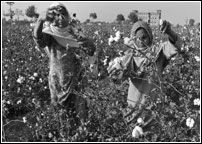 RURAL women play a significant role in almost all farming activities, right from sowing of seeds to harvesting of crops and handling of livestock. Their role in managing farming system is very important in contributing to agricultural output and achieving food security.
Contribution of rural women in agricultural work is almost 60 per cent. Farming mostly needs jobs like sowing of crops, harvesting, cotton picking, fodder cutting, feeding livestock, milking of herds etc, which are carried out mostly by women. In some jobs, they support their counterparts such as transportation of seed from home to field and fertilisation of fields.
In rural areas, women farmers are considered the right hand of their men counterparts. It is difficult for farmers to manage farm activities without women’s support.
The rural women though involved in all sorts of farm activities, due to their poor education, lack of proper technical skill and least know-how about agriculture, lag behind in their work, and their participation is not as effective as it ought to be.
Despite a majority of the population being engaged in agriculture, no effort has ever been made to train our womenfolk to enhance their skill in farming and livestock rearing. Still they contribute significantly in boosting agriculture production.
If proper attention is paid to improve their skill and policies are made to ensure their participation in farm training, it will help boost production and will be helpful in achieving food security and alleviation of rural poverty.
To make an effort in this direction, it is needed to assess the type of skill and know-how the womenfolk need to increase their efficiency and formulate relevant policies.
Seeds for crops like wheat, rice, maize etc., are stored in farm houses a year before their cultivation. If these seeds are prepared properly before sowing by adopting a process of selection, purification, washing and coating it with pesticides, they can be saved from pests and diseases, certainly resulting in better germination, as quality seed is mandatory for good yield.
These responsibilities may be entrusted to women farmers. If they are trained to prepare and preserve seeds and protect them against diseases, it would certainly protect the plant against diseases, pests and weeds and result in better germination and ultimately in enhanced yield. Agricultural centres can play an important role in training rural women in agricultural skill.
During their work, the female farm workers have to handle different types of chemicals like pesticides and sprays. Sometimes due to lack of information while working in fields freshly sprayed with insecticides and weedicites, or while mixing these chemicals, they mishandle them and suffer harm. If they are educated about the toxicity of these chemicals and trained how to use them, they may tackle them effectively and avert accidents.
Further the female workers do not have technical knowledge how to deal with electrical machinery such as fodder cutter, water pump etc. which may result in accidents. There is a need to acquaint them with simple electric machines to make them more useful and save them from accidents.
There is lack of technical institutions for women in the country. It is not only affecting agriculture but all other industrial sectors also. The country can not be developed without women participation as they constitute more than 50 per cent of the population. It is, therefore, necessary to make arrangements for their technical education and skill development.
Normally, most activities concerning handling of livestock like feeding, milking, etc are carried out by female farmers. Due to lack of knowledge and training, proper handling can not be possible for them. Most of the time the female farmers are unaware of the breakout and spread of diseases among livestock and poultry. As a result not only do they fail in saving their livestock but they also get contaminated with such diseases.
Awareness to boost production, knowledge about budgeting techniques to reduce unproductive expenditures and reinvestment of savings is necessary. A women farmer if trained in this field will be more rational and able to better use her farm income. For this it is necessary to enhance strength of agriculture centres by adding more field women.
The women farmers are already doing a lot for agricultural production. If they are granted access to resources, they would make significant inroads in achieving the desired production goal and providing food security. The government should take steps in this regard at the earliest.