0
0

KARACHI, May 9: Improvement in Pakistan’s relations with the European Union are dependent on the transparent and enduring restoration of democratic dispensation in the country. The consensus emerged during a seminar on Thursday during which the participants also deplored Wednesday’s suicide bombing incident in the city and termed it as an attempt to destabilize Pakistan.
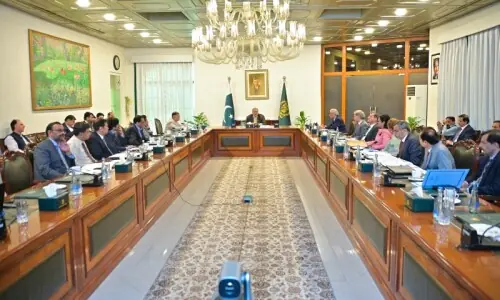
The seminar on “European Union-Pakistan Relations: Prospects and challenges for the 21st century”, was organized under the Jean Monnet Project to mark the 52nd anniversary of the Schuman Declaration (Europe Day) by the Area Study Centre for Europe, Karachi University.
It was also emphasized that the countries of South Asia could take lead from what erstwhile rivals in Europe, France and Germany had done under the Schuman Declaration 53 years ago.
Professor Angelo Santagostino commenced by expressing concern over the terrorist attack in which French nationals were killed, and said it was an attempt to destabilize Pakistan.
He said that after the Second World War, Europe had understood the fatality of destructive wars and the importance of mutual cooperation which had led to the formation of the EU.
He said that the countries of South Asia (Pakistan and India) should also work for cooperative relations, specially in the nuclearized environment.
Prof Talat A. Wizarat expressed the apprehension that as a result of Wednesday’s terrorist attack, Pakistan’s efforts for defence modernization and other relations could be affected and investment could shy away.
She said that Pakistan’s relations with the EU could progress if its concerns on democracy and child labour were addressed. She referred to Islam’s principles for human rights and stressed strict adherence to them. Unlike the US, whose adherence to democracy had been shaky and tailored to its own vested interests, EU’s track record had been better, she stated.
She also referred to the freezing of EU’s relation after the military takeover, but the situation changed after the Sept 11 attacks, she added.
She was of the view that the outcome of the referendum, as a result of which General Pervez Musharraf claimed validation for Presidency for another five years, did not contribute to the return to democracy.
She also expressed concern over the discriminatory treatment of Muslims in some western countries.
Dr Shaista Tabassum dealt with Pakistan’s economic relations with the EU. She also referred to the situation after nuclear testing and human rights’ issue, and its impact on Pakistan’s textile quota, sportswear, fish and anti-dumping policies.
She referred to the freezing of progress on the Nov 2001 agreement for boosting Pakistan’s exports to the EU, until the outcome of October elections. She said that Europe wants to monitor Pakistan’s return to democratic dispensations.
Tasneem Sultana dealt with the EU’s assistance to Pakistan for various projects.
M.B. Naqvi, who chaired the seminar, emphasized upon South Asian nations the need to take cue from Franco-German people-to- people commitment to do away with wars and shun narrow and chauvinistic nationalism.
He said that both India and Pakistan were nuclear powers and the notion of war would be disastrous for both, specially for Pakistan. There was a need to replicate the EU’s experience, he said.
Earlier, Director ASCE, Dr Naveed Ahmed Tahir, who is also Jean Monnet Professor, said democracy and issues of human rights were the areas where Pakistan and Europe have serious differences, to the detriment of European trade and investment in Pakistan.
Europe would watch with interest and concern how Pakistan develops socially and politically. If bad governance, mismanagement of resources, extremism and fanaticism and human rights’ abuses prevailed in Pakistan’s polity, it would almost certainly have an impact on Pakistan’s relations with the EU. However, the latter must also give sympathetic consideration to the gargantuan problems this country faced, and which could not just disappear a wave of the magic wand.