0
0

UNITED NATIONS, May 15: World economic growth will drop steeply to 1.8 per cent this year, from 3.8 per cent in 2007, according to the baseline projection of the UN’s mid-year economic report.
Growth in developing countries should manage to reach 5 per cent, as compared to a robust 7.3 per cent in 2007, and is projected to decline further to 4.8 per cent in 2009.
This baseline scenario is subject to revision depending largely on developments in the United States, which remains a prime driver of the global economy and where a crashing housing market and finance and credit weakness set off the global downturn, according to the advance edition of World Economic Situation and Prospects as of mid-2008.
If monetary and fiscal stimuli recently instituted in the US take hold, the world is likely to experience only a moderate slowdown, to 2008 growth of 2.8 per cent, the UN projects.
The UN economists argue that a more aggressive expansion of demand in the rest of the world is needed to support US efforts, and to achieve a beneficial outcome for the global economy as a whole. Such action by countries with savings surpluses in Europe, the Arabian Gulf and East Asia would also foster a smoother realignment of exchange rates with the deficit-weakened US dollar.
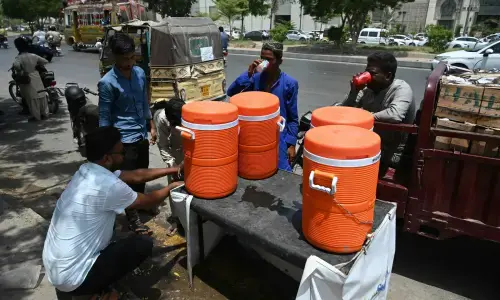
The tenuous state of the world economic environment is compounded by steeply rising costs of food and energy.
“The food crisis is not only of great humanitarian concern, but is also posing a threat to social and political stability,” the report says.
The recent sharp rise in commodity prices, especially relating to food and energy, seems to be the single most important factor affecting headline inflation around the world, according to the UN’s mid-year report. Global inflation is expected to accelerate to 3.7 per cent in 2008, posing a challenge for policy makers also facing slowing growth.
The UN report recommends that it is better to counteract inflation by addressing supply constraints in the specific commodities that are fuelling price increases.
Countries in Europe, Japan, as well as China and other emerging-market economies in East Asia and the main oil exporters have a decisive role in engineering a more balanced and sustainable path of global growth.