ABU DHABI: The growing concern of Emiratis about being a minority in their own country surfaced again last week, with a senior official warning that it could lead to the collapse of the regime.
“I’m afraid we are building towers but losing the Emirates’,” said outspoken police chief General Dhahi Khalfan Tamim, referring to a construction boom in the emirate which is being fuelled by foreigners buying property there.
Dubai is one of the seven members of the oil-rich United Arab Emirates, the number of whose citizens dwindled to just 15.4 per cent of the 5.6 million population at the end of 2006, according to a recent study by the government advisory body, the Federal National Council (FNC).
The “demographic imbalance,” as it is euphemistically called, also plagues Qatar and Kuwait, two other energy-rich Gulf Arab monarchies that rely heavily on cheap imported Asian labour for their development.
Tamim, who was addressing a “national identity conference” attended by senior officials in the capital Abu Dhabi, hailed UAE President Sheikh Khalifa bin Zayed al-Nahayan’s decision to declare 2008 “national identity year”, but said Emiratis have been late in tackling the demographic problem.
“If the children of incumbent crown princes (of the seven emirates) manage to rule the Emirates, we should be thankful for that,” he said.
The veteran police commander warned that unless the problem is resolved, the UAE’s hereditary monarchy will not survive and this will lead to the collapse of Emirati society.
A disaster will befall the UAE if the government does not take measures to redress the demographic imbalance, he said.
Tamim has proposed establishing a union of Gulf Arab states that would grant a common citizenship, putting a ceiling on the size of expatriate communities and restricting foreign ownership of property.
He also urged Emiratis to have more children.
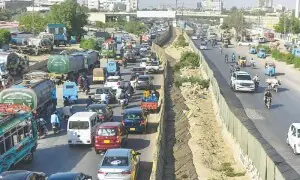
To drive home his point, Tamim accompanied his address by video footage of cars torched and shops damaged during recent riots by foreign workers, as well as clips of streets in Dubai packed with Asian expatriates.
“They blocked roads and destroyed facilities, and (human rights groups) speak of workers’ rights,” the general said.
He was referring to reports by such organisations as New York-based Human Rights Watch critical of the working and living conditions of hundreds of thousands of mostly Asian labourers in the country, which also has sizeable Arab, Iranian and Western communities.
While acknowledging that the imbalance is dangerous, Foreign Minister Sheikh Abdullah bin Zayed al-Nahayan said: “The UAE is a tolerant, open and wealthy country” which should not shut out foreigners.—AFP