0
0

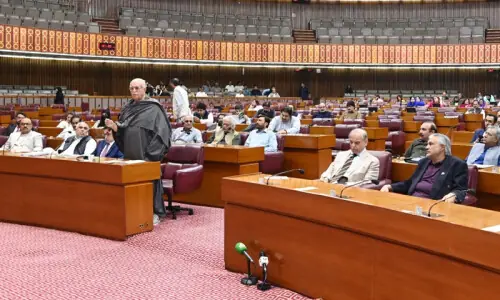
BAGHDAD, Jan 12: Iraq’s parliament adopted legislation on Saturday on the reinstatement of thousands of former Baath party supporters to government jobs, a key benchmark sought by the United States as a step towards national reconciliation.
The bill was approved by a unanimous show of hands on each of the law’s 30 clauses. Titled the Accountability and Justice law, it seeks to relax restrictions on the rights of members of Saddam Hussein’s now-dissolved Baath party to fill government posts.
It is also designed to reinstate thousands of Baathists in government jobs from which they had been dismissed because of their ties to the party.
The dismissal of thousands of Baath Party supporters from these jobs after Saddam was toppled in 2003 reportedly deepened sectarian tensions in the country.
The strict implementation of so-called de-Baathification rules also meant that a lot of senior bureaucrats who knew how to run ministries, university departments and state companies ended up out of work in a country where 35 years of Baath party rule and extensive government involvement in the economy had left tens of thousands of party members in key positions.
That, coupled with the disbanding of the Iraqi army, threw tens of thousands of people out of work at a critical time in Iraq’s history and fuelled the insurgency.
The Bush administration initially supported the rooting out of Baathists from important jobs, but claimed that Iraqi authorities went beyond even what the Americans had contemplated for de-Baathification measures.
With the insurgency raging and the government making little progress in reconciling Shia, Sunni Arab and Kurdish communities, the Americans switched positions and urged the dismantling of de-Baathification laws.
Later, enacting and implementing legislation on de-Baathification became one of 18 so-called benchmark issues the US sought as measures for progress in national reconciliation.
The draft law approved on Saturday is not a blanket approval for all former Baathists to take government jobs. The law will allow low-ranking Baathists not involved in past crimes against Iraqis to go back to their jobs.
High-ranking Baathists will be sent to compulsory retirement and those involved in crimes will stand trial, though their families will still have the right to pension.—AP