0
0

KARACHI, Nov 8: Besides better resource management and departmental supervision, it is due to the commitment of the Punjab government that Mayo Hospital has become one of the best hospitals of the country in the public sector. Today, it offers the most modern treatment to all its patients irrespective of their economic status, a rare instance at any government hospital.
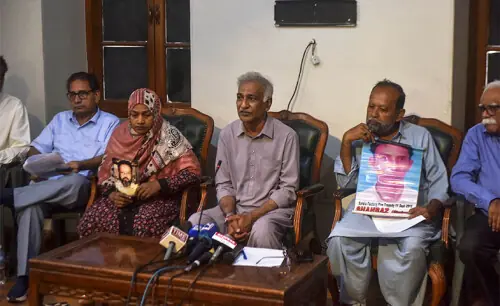
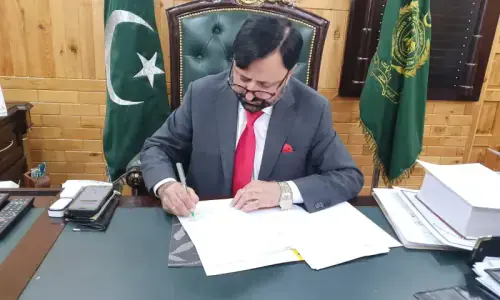
These observations were made by the medical superintendent of Mayo Hospital, Dr Fayyaz Ahmed Ranjha, while speaking at the PMA house here on Thursday.
He was invited to share his experiences about the transformation of Pakistan’s oldest and South Asia’s largest hospital into an improved health facility providing free treatment and, that too, relying completely on government budget, which is even slightly less than the funds being provided to Civil Hospital Karachi and other tertiary care public health facilities in the country. Starting off with the history of the hospital, Dr Ranjha said that Mayo Hospital established in 1871 was named after the Earl of Mayo, the then viceroy and governor-general of India.
The 2,399-bed hospital having 4,300 staff members, comprised 43 departments that included a modern accident and emergency unit, tuberculosis and chest diseases wards, pediatric surgical ICU, diabetic clinic, radiotherapy and oncology wards, he said.
Dr Ranjha informed the audience that with the exception of only one department, treatment at all the departments was free of cost.
“This was done gradually so that lessons learnt from initial experiences could be employed in other cases. Every death is evaluated and meetings are called to address lapses in the treatment. The hospital’s per day per bed cost is Rs400 which is a little less than what the Civil Hospital Karachi gets. Efforts are still on to further reduce the cost,” he said.
He said that the nominal charges received on account of lab tests were included in the hospital budget. One of the key factors to the hospital’s success, he pointed out, was better resource and financial management, supervision, delegation of powers to the lowest level and a communication system in place to know patients’ grievances.
Dr Ranjha said that the hospital had saved Rs110 million on account of economised use of gas and electricity and purchase of equipment. He said that the hospital also provided free food and shelter to the attendants.
Earlier, Pakistan Medical Association members, including Dr Qaiser Sajjad, Dr Samrina Hashmi and Dr Habibur Soomro, appreciated the hospital’s services.