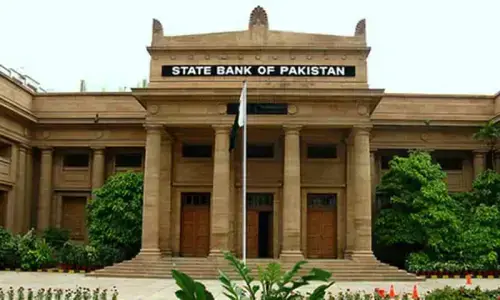
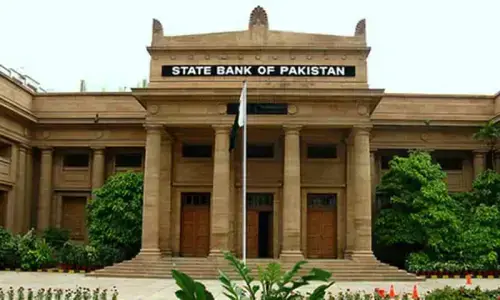
KARACHI, Oct 31: Leaders of the Federation of Pakistan Chambers of Commerce and Industry (FPCCI) are surprised to know from the SBP’s annual report for 2006-07 released on Monday that investment ratio to GDP has increased, but private credits from banks have fallen.
The overall growth in economy is good at seven per cent but the real commodity sectors’ performance is unimpressive.
President of the FPCCI Tanvir Ahmad Sheikh in his statement lauded the seven per cent GDP growth in 2006-07, but pointed out that “this growth has no consistency within the economic sectors.’’
He expressed the view that the seven per cent growth was achieved because of the services sector.
“Growth in non-commodity sector always leads to inflation,’’ he stressed while pointing out that the tight monetary policy has failed to contain inflation.
He reminded that the FPCCI had always been advocating a liberal monetary policy, which was not heeded to.
As against a target of Rs390 billion, the banks provided Rs365 billion. One consequence of fall in private sector credit is the failure of large scale manufacturing sector to achieve target of 13 per cent growth against which actual growth was only 8.8 per cent.
High cost of industrial financing, the FPCCI chief said, pushed up production cost and made exports uncompetitive, increased fabulously the profits of the banks and has widened to alarming levels the rich poor gap in the country.Mirza Ikhtiar Baig, the vice-chairman of the FPCCI standing committee on Banking Credit and Finance expressed his concern on rising inflation and expanding current account deficit.
These two factors are serious challenge to the government in face of soaring oil prices, sluggish export growth, mounting import demand and increase in domestic and foreign debt burden.
Current account deficit in 2006-07, according to annual report of SBP, is $7 billion or five per cent of the GDP, he said while pointing out that the current account deficit of over four per cent is an alarm bell that needs to be addressed instantly.
Another point of concern is the 10 per cent increase in debt burden of which domestic debt grew by 12 per cent and foreign debt by eight per cent. Mr Baig warned of increase in debt servicing liability in the future because of Eurobond.
He predicted mounting inflationary pressures in coming days as food prices were all set to rise. The production cost of industry is also rising that makes Pakistan’s products uncompetitive in world market.