0
0

 Pakistan’s import bill of petroleum products slipped 17 per cent in July-August FY07. This happened not due to a fall in prices but in import volumes. It indicates that the refining capacity of local petroleum companies has increased as is clear from a growth in the import of petroleum crude. But it also points to a slowdown in the economic activity.
The Asian Development Bank recently estimated 6.5 per cent growth in Pakistan’s GDP for FY08 against the official target of 7.2 per cent.
This low growth forecast takes into account “the tightening of the monetary policy; the impact of high international oil prices; declining growth in exports and expected slower growth in the US economy, Pakistan’s largest trading partner, in July–December 2007.”
That the monetary tightening would impede industrial growth is fast becoming evident. Industrialists including those in textiles sector say higher input cost including higher interest rate has robbed them of their competitive edge in international market.
Textile exports fell 5.2 per cent in August 2007 and showed a negligible growth of 1.2 per cent in July-August combined. Overall exports, however, grew 4.3 per cent to $2.96 billion. This suggests that Pakistan may miss the export target of $19.2 billion for this fiscal year.
However, remittances from overseas Pakistanis continue to rise.
In July-August remittances grew over 21 per cent to $985 million. The ADB says the remittances might reach $6.2 billion at the end of the fiscal year in June next.
But as exports are unlikely to reach the targeted level, a jump in remittances would contribute much towards balancing the current account. The ADBP projects that the current account deficit would rise to 5.5 per cent of GDP in FY08 from 3.9 per cent in FY07.
For the time being, strong inflows of remittances have kept the foreign exchange reserves intact at $16 billion and firmed up the rupee.
Forex inflows through remittances, exports or other channels have also raised the rupee liquidity levels in the inter-bank market.
But as individuals and corporates make large withdrawals from bank deposits for spending in Ramazan, banks are experiencing a liquidity crunch. So strong has been the liquidity shortage that banks resorted to heavy discounting from the State Bank several times during the week ending on September 21. This kept overnight lending rate tied to 9.9 per cent, slightly below the discount rate of 10 per cent, most of the time during the week.
Bankers anticipate that the liquidity shortage would continue throughout Ramazan and ease off in the middle of October.
They say it is not only Ramazan spending spree that has taken so much cash out of the banking system. “The presidential elections next month and general elections due afterwards also explain large withdrawals from deposits recently,” said treasurer of a local bank.
A leading moneychanger said that branches of foreign exchange companies in the Punjab and NWFP have also reported large selling of dollars, sterling and euro in the last few weeks. “Part of this selling could be linked to political activity ahead of elections.”
In July-August CPI inflation rose 6.4 per cent year-on-year but food inflation increased 8.5 per cent.
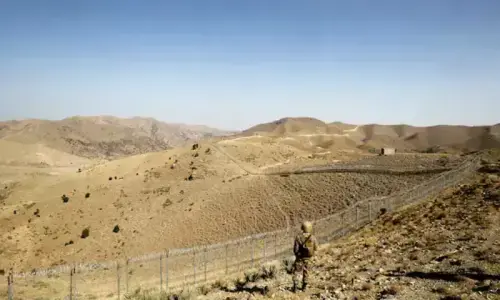
Growing incidence of hoarding and smuggling of food items like wheat and wheat flour makes it difficult to rein in food inflation. The price of wheat has soared to the highest level last week despite the fact that the country has 1.5 million surplus grains. In the past few weeks, the government repeatedly promised to launch a crack down against hoarders and smugglers but that is not in sight. On the contrary, it shot down a proposal from the directorate of customs intelligence to employ helicopters to check smuggling on Pakistan-Afghanistan borders.
For those who think that overall inflation would continue to fall even if food inflation remains higher, some reality checks might be in store. Already, the Ramazan-related price hike is yet to show in CPI inflation of September.
Besides, prices of a variety of items from fertilisers to furnace oil to liquefied petroleum gas to steel products have been on the rise. The international oil prices have touched $84 per barrel with prospects of rising further. Besides, the fiscal deficit is set to rise beyond the targeted level due to an increase in pay and pensions, larger subsidies announced ahead of elections and a 20 per cent increase in budgeted development spending. The ADB says it might touch 4.2 per cent of GDP against the target of four per cent. All this point to the possibility of inflation exceeding the target of 6.5 per cent.—Mohiuddin Aazim