0
0

KARACHI, Sept 6: Federal Minister for Health Mohammad Naseer Khan has said that the implementation of the newly promulgated Transplantation of Human Organs and Tissues Ordinance 2007 will begin soon, adding that a national monitoring authority will be established.”
Speaking at a press conference here on Thursday at the National Institute of Cardiovascular Diseases (NICVD), Mr Khan said that his ministry was giving due importance to the set of new laws and to begin with a meeting of stakeholders had been convened at Islamabad on Sept 10, following which a monitoring authority, which would keep an eye on the process of transplantation of human organs or tissues and other relevant matters, would be notified by the government.
He said that the authority would be based at Islamabad with a nationwide jurisdiction and would first enforce the prescribed standards for recognised medical institutions, hospitals and surgeons for the transplantation of human organs in the country. The authority would not only inspect the recognised medical institutions for ensuring the quality of transplantation and follow-up medical care of donors and recipients, but would also maintain a national registry of outcomes and transplantation of the recognised transplant centres, among other tasks, he added.
He said that various evaluation committees would also be formed on a priority basis, initially in the four provincial capitals under Section 5 of the ordinance. The evaluation committees have been tasked with ensuring that no organ or tissue is retrieved from non-related living donors without their prior approvals.
He said that the introduction of transplantation laws was a big breakthrough in the medical history of the country, which would end the curse of “kidney bazaars” attracting largely foreigners, save the poor from exploitation and cause an increase in transplantation activities in the country.
He said the government, while making efforts to develop more transplantation centres in the public sector, also intended to regulate the transplantation activities by the private health establishments.
“The costs of various transplantations in the private sector should also go down,” the minister said in reply to a question.
Mr Khan also appreciated the role of kidney disease experts, including Prof S. Adibul Hasan Rizvi, and the media in the formulation of transplant laws and hoped that the government would be guided in the future as well.
NICVD renovation
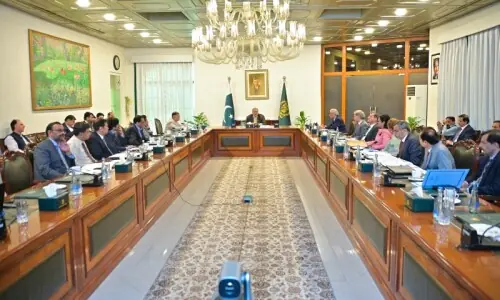
Earlier, the minister chaired a meeting of the board of governors of the NICVD, which approved Rs793 million projects for the institute. The projects are targeted to be completed by the end of the ongoing financial year.
The meeting was attended by Federal Secretary for Health Khushnood Akhtar Lashari and Executive Director of the NICVD Prof Azhar Masood Farooqui, among others.
Highlighting the projects, the health minister said that the decisions were taken to get the entire equipment of the NICVD overhauled and make a substantial reduction in the token charges for angiography and angioplasty at the institute.
According to the plans, he said, two new angiography machines and one new 64 slice CT angiography machine would be installed during the year, while seven new operation theatres and two new surgical ICUs with special facilities for paediatric surgery of small children would be set up.
A patient admitted to the general ward would be charged Rs4,000 instead of Rs9,000 for angiography and Rs30,000 instead of Rs75,000 for angioplasty and stenting, the minister said, adding that the reduction in charges across the board for all cath/angio procedures had also been revised downward.
The minister said that the government was working in collaboration with two teams of experts from Ireland and the US for the establishment of paediatric cardiac surgery sections at three government hospitals, including the NICVD.
Prof Farooqui said that with the assistance of the Cardiovascular Foundation, the institute had completed the first phase of the expansion and renovation of the emergency department. The old emergency room would be closed for renovation and patients would be moved in October to the new emergency unit next door, the executive director added.