



 0
0

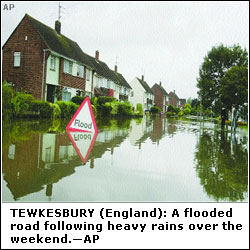 LONDON: Prime Minister Gordon Brown visited the scene of Britain's worst flooding in 60 years on Monday as thousands of people remained stranded in their villages and towns, many without clean water or electricity.
With swathes of central and western England under water and more rain on its way, Brown flew in a helicopter over the water-logged county of Gloucestershire before meeting officials handling the response on the ground.
Thousands of homes have been hit by the floods, which have prompted the Royal Air Force to carry out what it said was probably its biggest-ever peacetime rescue operation in Britain, picking up more than 100 people.
The worst-hit areas are the largely rural counties of Gloucestershire, Worcestershire and Oxfordshire, where nine flood warnings are in place.
Speaking at his monthly press conference just after his visit, Brown linked the flooding to climate change and confirmed extra funding and a review to address potential future problems.
“Like every advanced industrialised country, we are coming to terms with the issues surrounding climate change,” he said.
Britain was grappling with “19th century structures” and its drainage system would also have to be looked at, he added.
His comments came amid fears that the situation could be about to get even worse.
In the university city of Oxford, which is on the Thames, up to 1,500 people have already been evacuated to a football stadium amid widespread inundation and the closure of scores of schools.
A reported 150,000 homes do not have drinking water after a water treatment plant in historic Tewkesbury, Gloucestershire, was closed after becoming deluged. Noting the irony of the situation, the Daily Mail's headline Monday read:
“Water, water everywhere but ... not a drop to drink!” The resulting shortage led to panic buying of bottled water in the county.
In Gloucestershire and neighbouring Herefordshire, more than 48,000 homes were without electricity after a power station was shut down because of the flooding.
Rail services across the affected area were paralysed while many roads were also impassable.
Amid criticism from opposition parties over the government's handling of the crisis, Benn is set to make an emergency statement to lawmakers at the House of Commons later in the day.
“We've seen unprecedented levels of rainfall and flooding that people haven't seen for 60 years,” he told ITV television.—AFP




























