0
0

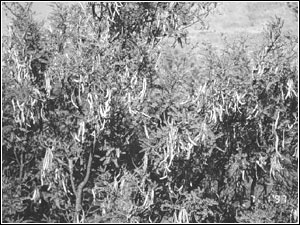 LOCALLY, Mesquite is called “vilayati babul”. While this tree has many uses, it has a reputation of being a weed and is treated as a undesirable thorny tree in many states, which adversely affects agricultural community.
Farmers have pressured their state governments to eradicate these trees and the forestry department has been asked to stop further plantation of Mesquite and eradicate the existing ones in many states of India.
Actually Mesquite is the tree of dry. We can make use of this tree in desert areas for reclamation of sanddunes and providing a valuable source of income to the poor of the area.
Livelihood: As the tree plays a vital role in sustaining the livelihood of the rural poor, including landless, small farmers and artisans, it is called the tree of ‘the poor’. In rural areas, Mesquite is often the only source of fuel, and dry season fodder and provides income for many families. Large branches and trunks of the tree yield high quality timber, comparable in colour and physical attributes to Indian rosewood and other commercial hard.
It is also used for posts and pillars. Its wood called "wooden anthracite" in some areas, is used as fuel. Fruit pods are high in sugar and are a rich food source for man and animals. Mesquite honey is of the highest quality and its gum is comparable to gum of acacianilotica (local indigenous babul).
People of many states in India have developed localbased on this tree and its products. The timber and pods are stored yearfor fodder and are important items of trade. Flowers provide bee forage and sweet, nutritious pods are relished by livestock and made into human food.
The foliage is rarely browsed but leaf litter improves soil quality. Researchers in India have found that it provides up to 70 per cent of fire wood needs of rural populations in dry regions. The dreary scene of dry districts is changed to that of green belts by planting this tree.
Health supporting flours: Mesquite meal is achieved from the pods of the tree. This sweet-tasting flour is low in carbohydrate and fat and is up to 20 per cent rich in protein (the seeds are up to 40 per cent protein). Mesquite is high in calcium, manganese, potassium, iron and zinc and high in fiber and lysine.
A lot of research work is going on into the nutritional and blood sugar balancing benefits of Mesquite. Carlos Nagel, head of Friends of Pronatura, stated: “A healthy stand of Mesquite produces as much food value through its pods as does a wheat field under cultivation. The Mesquite does it without capitalisation, pesticides, fertiliser or irrigation and with minimal cultivation".
Medical studies: Dr Nabhan reports that the Mesquite meal "is extremely effective in controlling blood sugar levels" in people with diabetes. The sweetness comes from fructose, which the body can process without insulin. In addition, soluble fibres, such as galactomannin gum, in the seeds and pods, slow absorption of nutrients, result in a flattened blood sugar curve. The gelfibre allows' foods to be slowly digested and absorbed in four to six hours, rather than in one or two hours, which produces a rapid rise in blood sugar.
Important antidote: According to Dr Peter Felker from Texas A and M University, Prosopis (Mesquite) is the only tree able to yield 2.5 tons of wood / ha/ year where nothing can grow. On saline soils in India this can rise to 12 tons.
Industrial use: Timber of this tree has very good technological properties (low shrinkage, high resistance), these qualities coupled with its red brown colour makes it attractive for high quality furniture and flooring. It can also be considered a major component for food and fodder production from its fruits/pods.
An FAO official pointed out that 500 million people live in dry lands through out the world and are amongst the poorest of all people. Many such sites are entirely barren and under these circumstances any plant growth is better than nothing, even if it gives only a little fuel wood, fodder or even shade. Likewise in Sindh, there are huge dryas under:
Out of the total 40,914 square kilometers area of Sindh, 48.5 per cent fall in dry zone. If a campaign of aerial sowing is started in these areas in collaboration with the meteorological department as this department can help forecast rainy. Before the commencement of rainy season, the programme of aerialmay be started by the government functionaries. We can improve these areas to a great extent in, a period of 10 to 15 years and improve the sociocondition of the local beneficiaries on one side and increase the percentage of trees on the other by planting this multipurpose trees.
At present energy crisis and environmental degradation is a serious problem in our country. To day fire wood is beyond the purchase power of labourers. Mesquite plantation will definitely help us in solving some problems.
It is a fact that Sindh is deficient in forestry resources with less than five per cent of its total area under forests which include riverine forests, irrigated plantations and mangrove forests. These meet about 10 per cent of the province's energy requirement. The other 90 per cent is met by trees grown on farm lands. The total existing wood requirement of the province is 6.4 million m3 where as the sustainable is only 1.68 million m3 i.e. a gap of 4.72 million m3 exists.. As such there is no other way to make up the deficiency and meet our energy crisis other than the rehabilitation of dry.
It is very unfortunate that no research institute or organisation has given serious thought towards soil stabilisation, vegetation and sociocondition of these areas. If any one has noted anything in this species, it is only its negative side, ignoring the positive aspects. These drawbacks would continue unless we are determined to modernise its cultivation and production. There is no item on the surface of universe which has only advantages. The sustainability of projects using Mesquite as a development tool is directly related to the capacity of the local beneficiaries to integrate this tree into their agricultural system. The government should prepare result-oriented strategy with mass motivation and education to turn the sterility of the dryinto fertility.