0
0

KARACHI, July 1: Prominent politicians, scholars, lawyers and activists of various social organisations taking part in a consultative meeting here on Sunday emphatically stressed on denying the country’s armed forces any role in politics and called for free, fair and credible elections under an independent and non-controversial election commission to ensure a truly representative government to take charge of the country’s affairs.
The meeting, organised by the Human Rights Commission of Pakistan, discussed various issues including current political situation, armed force’s involvement in politics, sustenance of democratic process, relations between federation and the federating units and linkages between them, provincial autonomy and prospects of fair and free elections.
Sardar Sherbaz Mazari, Raza Rabbani, Ghinva Bhutto, Jamil Bugti, Mamnoon Hussain, Amin Khattak, G. M. Jakhrani, Saleem Zia, Yousuf Mustikhan, A. Khaliq Junejo, Dr Mehreen Bhutto, Mariam Palijo, Mumtaz Saheto, M. B. Naqvi, Abrar Kazi, Nihal Hashmi, Nasreen Siddiuqi, Kaiser Bengali, Omar Saeed, Tasneem Siddiqui and Rahat Saeed, besides Zohra Yusuf and Iqbal Haider of the HRCP, expressed their views.
They vehemently emphasised on a strict check on military personnel’s indulgence in business, commercial and trade activities, maintaining that the armed forces must restrict themselves to their responsibility of defending the country’s borders.
They suggested that all political parties should agree on and comply with a code of conduct by to ensure free and fair violence-free elections in the country.
At the same time, they said, there must be a mechanism under which every elected representative could be held accountable to his deeds after being given the public mandate.
Demanding grant of a genuine provincial autonomy, they said the federating units should have the right to claim royalty of their respective resources from the recipients, be it the federation or any other federating unit.
Condemning the military operations in Balochistan and tribal areas, suppression of media and forced disappearance of quite a large number of people, they demanded an immediate halt to all sorts of oppression.
The leaders called for the setting up of a neutral interim government to hold free, fair and impartial elections under an independent election commission and transfer powers to the elected representatives.
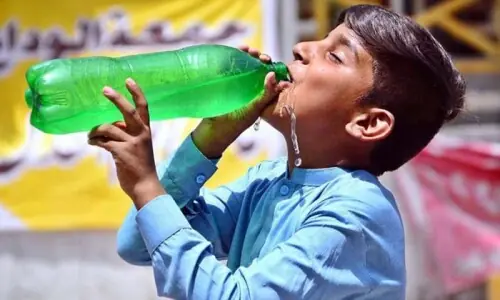
The speakers regretted that pressing problems like absence of basic facilities, including health, safe drinking water, education, energy, low-coast housing, etc, had remained unresolved in most parts of the country.
They also demanded extension in the date for the registration of voters’ in electoral lists, saying that tens of thousands of eligible voters might not have been able to get their names enlisted owing to bad weather conditions.
The speakers expressed their support to the lawyers’ ongoing movement for the independence of the judiciary.