0
0

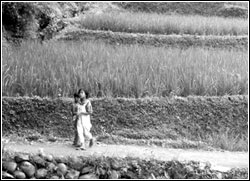 OURS is the fifth largest agricultural country in the Muslim world, twentieth worldwide and fifth largest milk producer of the world. It is blessed with abundant natural resources. About 25 per cent of the total land area is under cultivation and is irrigated by one of the world’s largest irrigation system.
Agriculture’s share in the GDP is about 22 per cent and it employs about 45 per cent of the labour force. The most important crops are wheat, cotton, sugarcane, and rice, which account for more than 32 per cent of the value-added of the overall agriculture.
Pakistan’s agriculture in the last decade of the twentieth century has been concerned with mega trends that are directing our destiny. These trends are shaping the lives and fortunes of the agricultural community i.e. producers, processors, suppliers, scientists, and educators. This may be taken care of in a six-fold manner:
First, consumer is king (or queen) in the agricultural markets today. Today's consumers are very much concerned about the nutritional characteristics of the food products brought home from the market; they're very concerned about the safety of those food products. So consumer satisfaction must be treated as the number one priority.
Second, is the globalisation, as we live in a global market and a global society. This can provide tremendous opportunities to draw upon genetic material from other countries which will help us create new products. Many alternative crops are available in the rest of the world and most Pakistani consumers are totally unaware of there existence. Introducing some of these could contribute greatly to the quality and variety of our diet.
Because of the size of the world market, internationalisation is one of the fundamentally important factors affecting the well-being of farmers of our country. In the 1970s, the world market for bulk commodities corn, soybeans and wheat in particular, virtually exploded, but in the 1980s the growth in the world market was almost entirely in what we call value-added products--; alternative products and processed products.
Pakistan capitalised on conventional agricultural output and failed to respond to these global changes but now we are moving towards the value-addition in agriculture. If we are going to thrive in this international environment we have to address the reality of (1) marketing value-added products, (2) developing more alternative crops and more specialty crops, and (3) finding ways to deliver those to foreign consumers in the form in which they want to buy.
Third, the rising trend of organic agriculture requires major changes in management to assure adequate plant nutrients and to control crop pests. Alternative sources of nutrients to maintain soil fertility include manures, sewage sludge and other organic wastes, and legumes in cropping sequences are needed to be focused on. Rotation benefits are due to biologically fixed nitrogen and from the interruption of weed, disease and insect cycles. A livestock enterprise may have to be integrated with food crops to provide animal manures and to utilise better the forages produced.
The fourth major trend is the increasing concern for the environment. One of the goals is to provide modern commercial agriculture, whether in traditional or alternate crops, with the best available environmentally friendly and economical pest control mechanisms. Water quality is number one issue in this regard and it is one of the highest priority issues. We are concerned with how to make sure that our agriculture production systems of the future not only provide an acceptable level of income to our farm families but also produce those agricultural products in an environmentally benign manner.
The fifth major trend is a change in the policy environment. There has been a significant decline in the role of "old-line" programmes that used to make up the most important elements of agricultural policy. Instead, the new agenda is environmental policy, science policy, trade policy, animal welfare, and food safety. These are the hot issues and the policy priorities. In many cases, these programmes caused some negative impacts on Pakistan’s agriculture. They led to greater specialisation than optimal, and misuse of natural resources. Specialisation has very important implications for new and alternative crops.
The sixth great trend is that agriculture is becoming an increasingly high tech industry. We must have a tremendous array of powerful tools of modern plant science at our disposal for the improvement of traditional crops through genetic manipulation and for finding alternative means of controlling pests. These genetically engineered crops could be less dependent on chemicals that have been associated with environmental negatives. We also must have opportunities to borrow genes for alternative crops from all over the world and introduce them into crops that we've traditionally grown.
These trends have important implications for new crops. One of the most important issues will be to identify the best alternative and new crops that we can competitively grow in an environmentally friendly manner to satisfy today's consumer demands for safe and nutritious products.