0
0

KARACHI, March 12: The British Commonwealth was on Monday urged to take a position on contentious issues concerning world peace and work positively for promoting understanding while respecting difference of opinion and focusing on ‘principled diplomacy’.
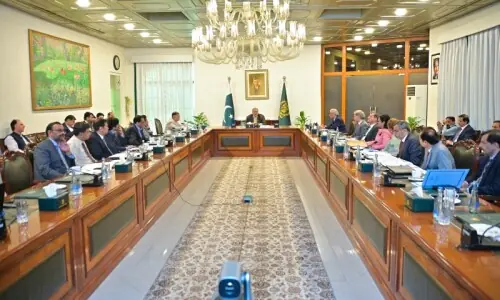
The call was the general consensus of the participants of the Commonwealth Day seminar, organised by the Pakistan Institute of International Affairs in collaboration with the Royal Commonwealth Society and the Commonwealth Journalists’ Association.
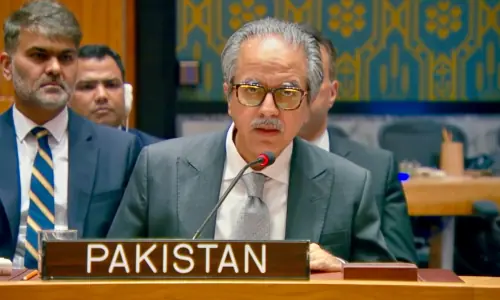
Ambassador Mahdi Masood advocated the case of a ‘principled diplomacy’ if the serious turmoil, unrest and confrontations affecting the world community were to be overcome.
He was of the view that in the present era, when the world had become a global village, the culture of tolerance and mutual understanding had become an indispensable pillar of a civilised, peaceful family of nations.
Subordination of principled diplomacy, whether emanating from principles of religion, ethics and morality, or from the founding principles of inter-state relations, to the dictates of real politick has come to represent a policy based on exclusive national expediency, he said.
He was of the view that perceived, strategic national interests in economic and security fields, hegemonic impulses, narrow interests of the ruling establishment, camouflaged as national interest, have become the building block of real politick.
He claimed that vital elements of inter-state relationship, including covenants and treaties, principles of world order enshrined in the UN Charter, international laws of peace and war, had all been sacrificed at the alter of national expediency.
The US has extended its conception of real politick to the extent of pursuing a dangerous and destabilising strategy of unilateral diplomacy and pre-emptive use of force, particularly in the Middle East. On Kashmir, principles and rights enshrined in the UN Charter as central elements (including the right to self determination, the will of people, and the sanctity of the UN resolutions) have all been jettisoned by India, by the West (and the East) at the alter of self-interest and political expediency.
He also referred to religion as an important element in both conflict and their resolution. While basic principles of ethics and morality are common to most religions, it is the divisive exploitation of religion which reduces or nullifies religion’s role in conflict reduction.
Mahdi Masood, therefore, emphasised the need for seeking the common ground between the vital principles of various faiths.
Former Pakistani high commissioner to the UK and representative of the Royal Commonwealth Society in Pakistan Mr Qutubuddin Aziz read out Queen Elizabeth’s message.
The queen was of the view that in today’s difficult and sometimes divided world, it was imperative to keep trying to respect and understand each other better. She focused on the virtues of diversity in the Commonwealth, and said that by respecting differences and promoting understanding, a better future would be possible for everyone.
President of the Commonwealth Journalists’ Association Mr S. M. Fazal gave resume of the organisation.
PIIA Chairman Fatehyab Ali Khan also spoke on the occasion.