0
0

PESHAWAR, March 11: The provincial government has extended the European Commission-assisted Strengthening of Livestock Programme to the remote areas of the province so as to help people start their own businesses.
To be completed by 2009, the project was launched across the country at a cost of 25.942 million euros. The European Commission has granted 22.9 million euros and the rest of 3.042 million euros has been provided by the federal government.
An official of the livestock department told Dawn that under the programme, technical training about livestock was being imparted to people involved in milk production and cattle keeping. Guidance was being given on how to produce quality stuff and transport it to the market, he said.
For the purpose of training, a section had been dedicated at the project management unit of the department in the city, he said.
He said that 6.5 million families in Pakistan were dependent on livestock to earn their livelihoods. According to a study conducted in 2004-05, the country had a total of 26.2 million buffaloes, 24 million cows, 24.9 million sheep and 56.7 million goats, he informed.
He said more than 11 million cattle heads, including 4,26,000 buffaloes and cows, 6,53,000 sheep and goats and 46,000 other animals perished in the October 2005 earthquake. He said the earthquake had also caused damages to the tune of Rs867 million to livestock infrastructure including government buildings, feed stores and animal shelters.
Under the programme, the livestock official said, a relief of 5 million euros had been set aside for restoration of the livestock infrastructure in quake-hit areas. Besides, 2,500 blankets, 21,000 copper sheets, plastic sheets weighing 8,510kg and 23,540kg fodder had been provided to the affected population there, he added.
Citing reports prepared by the department, he said about 41,378 cattle heads were treated for different diseases and 44,346 vaccinated after the earthquake.
Under the project, Gender Support Programme in Peshawar and One-Village, One-Product Programme in Abbottabad, Haripur and Peshawar had been started, he said.
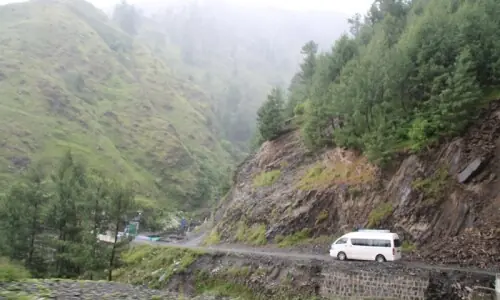
Due to improper road network, people in the remote Kalam Valley were being assisted in marketing the milk produced by them, he said.
He said livestock farm schools had been established in Nowshera and Peshawar for educating farmers about modern techniques. A model feeding farm with a capacity of producing 1,000kg fodder per acre had been set up in Harichand Charsadda district. He said cattle and chicken were getting treatment at a well-equipped dispensary.
The official said that all district-level offices of the department had been provided equipment and drugs for controlling the spread of diseases in the province.
He said seeds of mat grass had been sent to the districts for free distribution among farmers.
“The per acre production capacity of mat grass seeds is 150 tons,” he said. “These seeds are not required to be sowed again and again as they keep growing for several years on being sowed just once.”