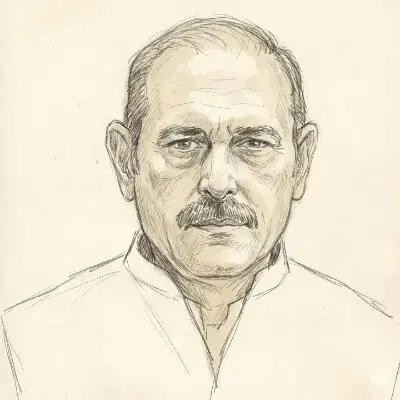
PESHAWAR, March 1: Pakistani security forces have captured Mullah Obaidullah Akhund, deputy to the elusive Taliban chief, Mullah Mohammad Omar, from Quetta, a federal government official has told Dawn.
Mullah Obaidullah was arrested on Monday, the official said, requesting anonymity due to sensitivity of the matter.
The Taliban leader carries a $1 million reward and is the most senior Taliban figure captured since the ouster of the puritanical militia from power in November 2001.
His arrest came the day US Vice-President Dick Cheney arrived in Islamabad on an announced visit to deliver what was widely believed to be a warning that the new Democratic Congress could cut aid unless Pakistan became more aggressive in hunting down Taliban and Al Qaeda operatives.
The official, however, said the arrest of Mullah Obaidullah, who was defence minister in the ousted Taliban regime, had no link with Mr Cheney’s visit and the action which led to his arrest had been planned in advance based on good intelligence.The official declined to give further information but said that two others, who were captured along with Mullah Obaidullah “could be” Amir Khan Haqqani, a Taliban commander in Zabul, and Abdul Bari, the former governor of Helmand province.
Mullah Obaidullah’s arrest comes amid reports that the Taliban are preparing for a `spring offensive’ in Afghanistan that has seen dramatic upsurge in violence over the last one year. He was on America’s most wanted list and was a member of the 10-man Taliban Leadership Council announced by the Taliban supreme leader in June 2003.
Nato officials and western diplomats consider Mullah Obaidullah as one of those closest lieutenants of Mullah Omar. The other two were Mullah Akhtar Osmani and Mullah Akhtar Mohammad Mansoor.
Mullah Osmani, who was a former Taliban army chief, was killed in a US airstrike in Helmand in December last year.
Hailing from Punjwai district of Kandahar province, Mullah Obaidullah Akhund was widely considered as the military chief of Taliban forces.
Former Taliban spokesman Abdul Latif Hakimi, who was captured by Pakistani security forces in Quetta in 2005, had told the media in March 2005 that Mullah Omar had told Mullah Obaidullah to initiate an attack that would send a clear signal to the world that the Taliban were a force to be reckoned with.
That Mullah Obaidullah was close to Mullah Omar was also evident from the fact that 14 commanders appointed by the Taliban leadership for two war zones in southern and eastern Afghanistan had been asked to report directly to the 10-member leadership council, which was later expanded to 18 members.
Mr Hakimi had said that the council was supervised by Mullah Obaidullah and Mullah Beradar, who were to report matters directly to Mullah Omar.
When asked if the arrest of Mullah Omar’s deputy had put the security agencies anywhere close to the elusive Taliban leader, the official said: “Had he been in the same city, he would have been taken by now.”