0
0

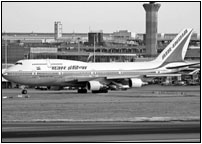 INDIA’S civil aviation sector, which has taken off on a high-growth trajectory, last week heralded the era of consolidation, with a ministerial committee endorsing the move to merge the two state-owned giants, Air India and Indian.
The long-awaited move now awaits a nod from the federal cabinet, considered to be a mere formality, and the process is expected to kick off from April and take two years to complete. The Civil Aviation Minister, Praful Patel who has been pushing for a merger between the two airlines, expects the new entity to emerge among the top-30 international carriers and operating with “the precision and reliability of Lufthansa and in-flight service of Singapore Airlines.”
The giant new airline is expected to have a fleet strength of 125 in about three years, and a turnover of nearly $3.5 billion. Air India, which mostly operates on international routes, had last year ordered for 68 Boeing aircraft – 50 for itself and 15 for its low-cost carrier, Air India Express.
Indian (formerly known as Indian Airlines) had similarly placed an order for 43 Airbus aircraft. The state-owned airlines have started getting the deliveries, and the induction of 111 ‘next generation’ aircraft is expected to boost the prospects for the new merged entity, and help them regain a large chunk of both the domestic and international sectors.
Air India and Indian had a near-monopoly over the Indian skies till about 15 years ago, when the government threw open the sector for competition. Private domestic airlines have eaten into the share of Indian, which has now fallen to the third place – after Jet Airways and Air Deccan. Air India is also facing competition from private players including Jet Airways, Air Sahara, who have launched international operations.
But analysts do not expect smooth sailing for the two carriers, and later the merged entity, as private airlines and international carriers will continue chipping into the market share of the government airlines. The merger is also expected to face opposition from trade unions of the two airlines.
Kapil Kaul, chief executive officer, South Asia, Centre for Asia Pacific Aviation (CAPA), points out that the next two years will see a lot more of mergers and acquisitions in the Indian aviation space.
Jet Airways had last year made a failed bid for Air Sahara, but that mishap is unlikely to prevent either Jet, or other leading private airlines from attempting takeovers. Kingfisher, which is owned by liquor baron Vijay Mallya, is on the prowl, while the Tatas – former group chairman JRD Tata is considered the father of Indian aviation, and also started Air India, which was later nationalised – are eager for an active role in the sector. The Tatas recently injected some funds into SpiceJet, a low-cost domestic carrier.
THE civil aviation sector in India is one of the fastest growing segments of the economy, growing at a massive 50 per cent annually. The entry of low-cost carriers (LCCs) has virtually revolutionised the sector, as millions of new travellers are taking to the skies.
Just a decade ago, India’s domestic air traffic added up to less than 10 million passengers a year. It is now over 25 million, and is expected to cross 60 million in three years. According to CAPA, the total number of passengers – both domestic and international – is likely to cross the 100 million-mark by 2010.
Patel, the civil aviation minister, estimates that the industry will grow by around 25 per cent annually over the next 10 years. Indian carriers are expected to acquire a whopping 1,000 aircraft over the next two decades. European aircraft maker Airbus estimates that Indian airlines will need about 1,100 aircraft costing over $100 billion over the next 25 years.
Its rival, America’s Boeing feels the country will need about 850 aircraft over the next 20 years. About a dozen airlines have placed orders for 450 aircraft, deliveries for which have started.
The Indian civil aviation sector has a total fleet strength of just 270; incidentally, this is double the fleet strength of about two years ago. Besides the huge orders by Air India and Indian, Jet Airways has ordered for 10 new Boeings worth $1.5 billion. The leading private airline expects to raise its fleet strength from 60 to 90 in two years.
Boeing and Airbus are the major beneficiaries of this boom in the Indian aviation sector. Indian carriers account for more than a third of the orders with these two manufacturers. Boeing has an order for 100 aircraft worth $15 billion from airlines in India, while Airbus has orders for 200 aircraft.
According to aviation minister Patel, the sector offers tremendous opportunities for growth, both economic and in terms of jobs. For instance, every aircraft that is inducted into an airline’s fleet generates 10,000 direct and indirect jobs, he points out. The civil aviation sector is expected to create over four million new jobs over the next decade.
LCCs like Air Deccan and SpiceJet are trying to lure upper class train travellers, wooing them with cheaper fares. The no-frills airlines have succeeded in growing the market significantly in recent years, at the cost of both Indian Railways and the full service airlines.
According to CAPA, LCCs won over 20 per cent market share of full service airlines last year, and today account for 35 per cent of the market share. By 2010, the share of LCCs is expected to touch 70 per cent.
THE Tatas, despite several setbacks in their efforts to enter the aviation sector in recent years – including the failure of their proposed joint venture with Singapore Airlines to take off, following bungling by successive governments – last week came out with a determined bid to make its presence felt in the booming segment.
Tata Realty & Infrastructure, a group company, has tied up with Singapore’s Changi Airport International (CAI) for a new venture – with the Tatas having a 51 per cent controlling stake – to take up airport modernisation projects in India.
Though India’s civil aviation sector is one of the fastest growing in the world, its airports are in appalling shape. Realising the mismatch between the burgeoning traffic and the facilities on ground, the government has embarked on an ambitious modernisation programme.
The Mumbai and Delhi international airports – the busiest in the country – have been handed over to private consortiums, who have launched ambitious expansion and modernisation plans. About $50 billion is likely to be invested in expanding the civil aviation and airports infrastructure by 2015, and the government is eager for public-private partnerships.
Two other major airports – Kolkata and Chennai – are to be taken up next for modernisation, but the Left parties are opposed to handing them over to private players. The Kolkata airport modernisation project may be handed over to the state-owned Airports Authority of India, but other projects, including Chennai airport, is likely to go to the private sector.
Several greenfield projects – including Mumbai and Pune – are being planned, for which the government has no funds. International and private participation and funding of these projects is a must to ensure that the country’s airports are able to handle the expected 100 million passengers who will be flying every year by 2010.
Besides the major airports, there are at least three-dozen other smaller airports, and nearly 300 airstrips that have to be re-developed all over India. The new Tata-CAI venture will bid for many of these projects.
The CAI had earlier teamed up with telecom major Bharti and had plans to bid for the modernisation of Mumbai and Delhi airports, but at the last minute backed out of the same. But with tremendous opportunities opening up in the airports infrastructure sector, there’s growing international interest and many major players are expected to tie-up with Indian partners.