



 0
0

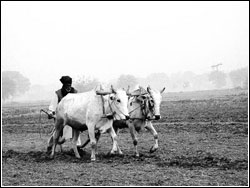 THE poor in Pakistan is usually exposed to risks—-risks to his health, his family members, his belongings, his livestock and even to his land. Let him fall sick and his dependents would begin starving as they all literally depend on him. It is in this sense that a rural household could be the most appropriate unit for analysing the microeconomics of poverty.
Now let us examine a socio-economic unit of a household in any a rural area where poverty is relatively more rampant. This unit usually consists of a head of family, other members of his family and his livestock. The visible source of income in most cases would be their small-size crop and in some cases, a small enterprise in the form of a tiny shop. In one form or the other, the old house, the livestock if any, a piece of land and the working hands would constitute the capital of that family.
Apparently, a poor has all the components required for the growth and development. And yet he is poor. Isn’t this a paradox? Of course, it is. But the real problem of a poor is that being weak, he is unable to face the unforeseen shocks.
The capital and the assets of a poor man are quite vulnerable and what is needed is their protection including that of the health of his family members and his own.
It also means the probability of being exposed to a number of other risks like violence, crime, natural disaster, an attack of pests on crops, being pulled out of school, or loosing entitlement. Vulnerability is hard to measure since it is dynamic but expressly easy to feel around wrecking irreparable losses for a household.
For instance, if one member of a family falls prey to a major disease, the whole family suffers for many years. All the savings are spent on it and household assets are sold away; in most cases money is borrowed from various sources. Worse is the situation when the ailing person is the only earning member of the family. Poverty in such cases turns out to be chronic.
Equally vulnerable is the cattle possessed by a household. Livestock is one of the most volatile enterprises for which MFI lends funds. In a sense, it is much more useful than a crop because it provides daily income along with daily food provision to the family in the form of milk, butter and related nourishment.
A crop could also be vulnerable on various counts. It is exposed to an attack of ant type of bugs and pests beside being at the mercy of floods and famines. Sub-standard and fake fertilizers and pesticides are the other types of risks a farmer faces.
A recent World Bank study says; “Around 56.2 per cent Pakistanis run the high risk of falling in poverty as a large number of rural households and children under 15 years may fall into poverty trap in the next few years. This proportion of the population faces more than 50 per cent probability of finding themselves in the poverty trap in next few years. Some 32.2 per cent of this have already been trapped in the vicious circle of the poverty”.
The problem involves two types of people: those likely to fall in the poverty trap and those already poor but have no opportunity to jump out of this trap.
Moved by this statistical analysis, the government has compiled a draft of ‘social protection strategy’ stressing the need for taking policy measures at the state level to provide the social and economic protection to the susceptible. The need for such a strategy is specially pressing as the report pinpoints that one in four Pakistanis is poor and one in every two is vulnerable to poverty in near future.
However, the question is what could be done for this weaker segment of our population. As pointed out in the draft, there is an acute need to provide both social and economic protections. From the social sector side, there is need to formulate and implement a comprehensive strategy specially focusing on the health and education sectors.
Let us take health sector. There in an need for devising a better health policy which would focus on two factors: firstly, the capacity of the existing infrastructure has to be improved in the rural areas. Basic health units, rural health centres, dispensaries, maternity homes and child and mother care centres are in dismal conditions.
These are either under the occupation of local influential, UC nazims, councillors, or police and rangers who have turned these into barracks. Those spared luckily are seldom visited by any doctor, dispenser or any other official from the health department.
In short, almost all these units, meant for providing primary health care remain non-functional. There is an urgent need to get them vacated and made functional.
In the second place, it should be ensured that the concerned health official is regular in his/her duty. For this, the authorities have to eliminate reservations of staff. In most cases, the staff complaints about the law and order and the accommodation problems. For this, a residence for doctors and paramedical staff be arranged along side the health unit.
The present health infrastructure is insufficient even if its capacity was to be raised to the level that it becomes reasonably functional. Therefore another initiative that the states should take is to provide a basic health unit or at least a dispensary at a distance of minimum five kilometres.
Another step could be a comprehensive training programme for the traditional birth attendants (TBAs). At least one trained and willing TBA should be made available in each major village so that the mother mortality rate is reduced.
The World Bank study describes the children under age of 15 as vulnerable with high rates of chronic or persistent vulnerability as a high proportion of children between 5-9 years of age group are not enrolled at schools (63.2 percent of the chronic vulnerability). Similarly, some seven million children between 10-14 years are not enrolled in schools as a result of which they are most likely to remain poor.
There is a need for a nationwide drive for enrolling the primary education and a mass mobilisation for adult literacy programmes. Although the National Commission for Human Development (NCHD) is doing its job, the literacy issues could not be left at its exclusive mercy.
So far as the technical and vocational education is concerned, a mere visit to any such centre would convince you that there is nothing except a debris of unusable machinery. The private sector can turn this problem into an opportunity by exploiting the market for technical education.
But the question which remains unanswered so far is, what could be the possible interventions to be made for providing economic protection along with the social services to the poor he is entitled to? One could be the protection of the man himself in the form of a micro health insurance for his life. Similar policies could be offered to him protecting his crop, his livestock and other meagre assets.
These micro insurance policies, if formulated properly and implemented comprehensively, could provide support and protection to him than other micro credit schemes which have earned a status of an internationally approved policy tool to fight the poverty. But the micro insurance if compared with micro credit is a fresher theme which possibly could turn to be more potential tool in the war against vulnerability.
Although such insurance schemes have not been on the agenda of policy makers and think tanks, Adamjee Insurance Company Limited and Rural Support Programmes Network (RSPN) have taken a joint step in this direction. Any poor could be a member of this scheme through a community set up organised by RSPN after paying a nominal amount.
But the initiative remains confined to persons and does not cover crop, livestock and house structure which are equally important for the person. Its membership is limited as it covers only those who are the members of the community bodies formed by RSPN.






























