0
0

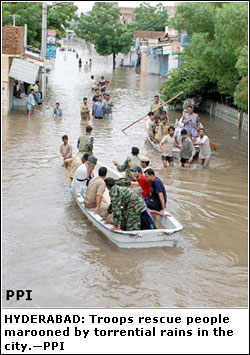 HYDERABAD, Sept 8: At least ten people lost their lives as swirling floodwaters inundated several cities and towns in Sindh amid driving rain, causing the civil administration to swiftly deploy military helicopters and boats to help thousands of marooned people.
The monsoon downpour, which lashed Hyderabad and adjoining cities and towns for over 18 hours, left a trail of destruction, wreaking havoc on the province’s communications and electricity networks.
Grappling with the aftermath of 200-millimetre rainfall, the Hyderabad district administration declared a state of emergency and called out the army. District governments of Jamshoro, Tando Allahyar, Tando Mohammad Khan and Matiari immediately followed suit. The Hyderabad city government announced that all educational institutions would remain closed on Saturday.
The Pakistan Rangers, Sindh, dispatched contingents of troops to help the beleaguered civil administration in the rain-hit cities. Shipping and Ports Minister Babar Khan Ghouri directed the Karachi Port Trust and Port Qasim Authority to take part in the relief operation.
According to the Pakistan Meteorological Department, the cities that were badly affected by the rains were Tandojam (190mm), Tando Ghulam Khan (185mm), Mithi (180mm), Tando Mohammad Khan (109mm), Chorr (90mm), Samro (77mm) and Badin (75mm).
However, good tidings came from PMD director-general Dr Qamaruzzaman Chaudhry who told Dawn that the weather system responsible for the Sept 8 rains would die out in the next 12 to 18 hours.
“The current monsoon depression formed over the Bay of Bengal four days ago. It came to lower Pakistan after moving over the Indian state of Rajasthan,” he explained.
Dr Chaudhry said there was no other monsoon weather system in sight.
Ordinarily, the monsoon rains lash Pakistan between July and the middle of September.
Electrocutions and house cave-ins were mostly the cause of the fatal rain-related accidents: five people died in Mirpurkhas, two in Hyderabad, one each in Tando Allahyar, Tando Mohammad Khan and Matiari.
Low-lying areas in the Latifabad and Qasimabad talukas turned into veritable lakes as rainwater found its way into houses and commercial centres. Widespread flooding hit other cities of the province.
Friday’s rain dealt a bitter blow to the standing cotton crop in the interior of Sindh, fuelling speculation that the province would not be able to meet the cotton production target this year
They said the choked Left-Bank Outfall Drain did not only refuse to accept floodwaters but also released the saline water meant for the sea into the fields, causing untold damage to the environment.