ISLAMABAD: The federal government spent more than Rs5 trillion on devolved provincial subjects and on ministries created on Council of Common Interests (CCI) matters in violation of the Constitution, the head of a Senate panel claimed on Tuesday.
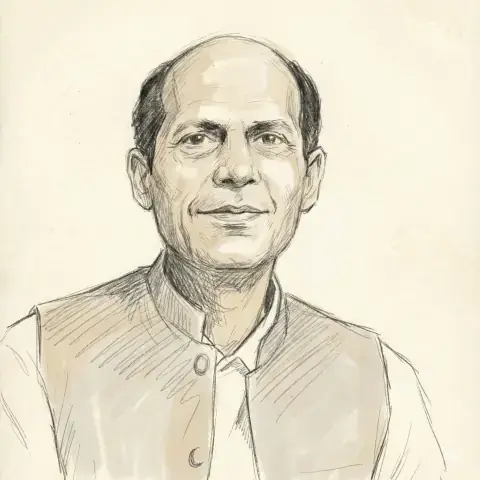
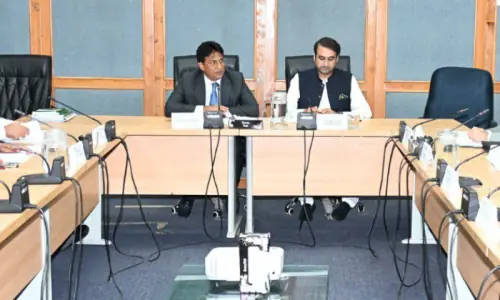
Citing data from the report of the Auditor General of Pakistan, Senator Barrister Zamir Hussain Ghumro, chairing a sub-committee of the Senate Functional Committee on Devolution, said the figure was equivalent to more than $18 billion.
The convener said the country was facing twin issues of exorbitant federal expenditure and heavy borrowing totalling $135bn.
“At present, federal government expenditure stands at around Rs19 trillion, while total tax and non-tax revenue was Rs20tr, leaving nothing for the provinces and forcing the federal government to resort to heavy borrowing,” Ghumro said.
The PPP senator contended that had the government implemented the 18th Amendment, devolved provincial matters and handed over CCI matters to the permanent secretariat of the CCI as envisaged under Article 154 of the Constitution, the country would not have needed handouts from the International Monetary Fund (IMF).
During the last 15 years, the IMF gave Pakistan $15bn, while the government spent $18bn to $20bn on devolved ministries and institutions, he claimed.
“Had this amount been spent on infrastructure and social development, Pakistan would have been a different country.
“A taxpayer’s hard-earned money had been consigned to unauthorised expenditure,” he added.
The convener said the federal government makes two kinds of expenditure from the Federal Consolidated Fund: “charged expenditure” on remuneration and other perks of the president, Senate chair and deputy chair, National Assembly speaker and deputy speaker, auditor general, high court and Supreme Court judges; and debt servicing, which the NA does not vote on, and “other expenditure” in the form of demands for grants by federal ministries created on federal subjects.
“It must not spend a penny on provincial or other purposes,” Senator Ghumro stressed.
“This is taxpayers’ money paid to the federal government to be spent for the purposes and services rendered by the federal government under the Constitution.
“The federal government is not obliged to provide health, education, housing, sanitation, water or other services for which the Constitution empowers provincial governments.”
Senator Ghumro added: “A citizen cannot pay the federal government for purposes and services not rendered by it under the Constitution; hence such unauthorised expenditure of more than Rs5tr amounts to gross misuse of authority under the law and Constitution and must be accounted for legally.”
He said neither the Ministry of Finance can send demands for grants for such expenditure nor the auditor general or Accountant General of Pakistan can authorise it.
They have to see that the expenditure is for purposes and services to be provided by the federal government under the Constitution, he said.
“Those matters are specifically mentioned in the Federal Legislative List. All powers under Article 142 are vested in the provinces except those enumerated for the federation in the Federal List.”
Senator Ghumro said that, under Article 154 (functions and rules of procedure of CCI) read with Article 97 (extent of executive authority of federation), executive authority over subjects mentioned in the Federal Legislative List’s Part II is to be exercised by the CCI and not the federal cabinet.
The convener noted that the CCI and Cabinet Division had sent summaries to the prime minister to abolish 24 ministries and institutions, thus curtailing federal expenditure, but the prime minister had yet to respond.
He said that, even otherwise, such ministries would become redundant as the Auditor General of Pakistan and the finance ministry would not allow such expenditure.
He directed the CCI and Cabinet Division to send a fresh note to the prime minister for abolition of ministries on provincial and CCI matters.
In July, the Functional Committee on Devolution had expressed serious concerns over the re-establishment of federal ministries on subjects devolved to the provinces under the 18th Amendment.
It had also constituted a sub-committee to examine the alleged violations.
During a meeting of that sub-committee last month, senators sought a probe into a staggering Rs2.6 trillion expenditure by the federal government on education and health ministries.
Provinces’ share in federal appointments
The sub-committee also took up the matter of shares of provinces in federal appointments in ministries and corporations.
The Establishment Division informed the committee that, as per its instructions, 5,000 jobs of Balochistan had been advertised to rectify its share as required under Article 38(g) of the Constitution.
Senator Ghumro said the committee had identified a shortage of more than 30,000 jobs in Balochistan’s share, which must be filled. The convener noted that a shortage of more than 80,000 jobs had been pointed out in Sindh, and that positions must be advertised to rectify it.
The Federal Public Service Commission secretary informed the sub-committee that appointments for the shares of Sindh and Balochistan in services would be expedited as they had cleared the earlier backlog. He said a special CSS examination was conducted for these provinces.
The sub-committee observed that there was a meagre number of appointments of secretaries, CEOs and other high positions from Sindh and Balochistan.
The convener said Article 38(g) envisages shares in all grades, and the federal government must submit a grade-wise position in grades 18 to 22 in 15 days.
It must expedite the process through ministries in grades 1-15 positions, by FPSC in grades 16 and 17 positions and in grades 18 to 22 by the federal government and the prime minister. Compliance must be substantive and practical, he said.
The Senate panel called for implementation, rather than “statements of intent”.
It also expressed displeasure over the non-submission of a report by the information ministry, which had sought a month to devolve print media organisations and functions at the federal level and develop a mechanism to give broadcasting rights to provinces under Article 159 of the Constitution.
It directed the ministry to finalise all issues in 15 days and submit compliance.