Supreme Court terms lawyers' vigilance 'foundational' to protecting clients' cases from dismissal
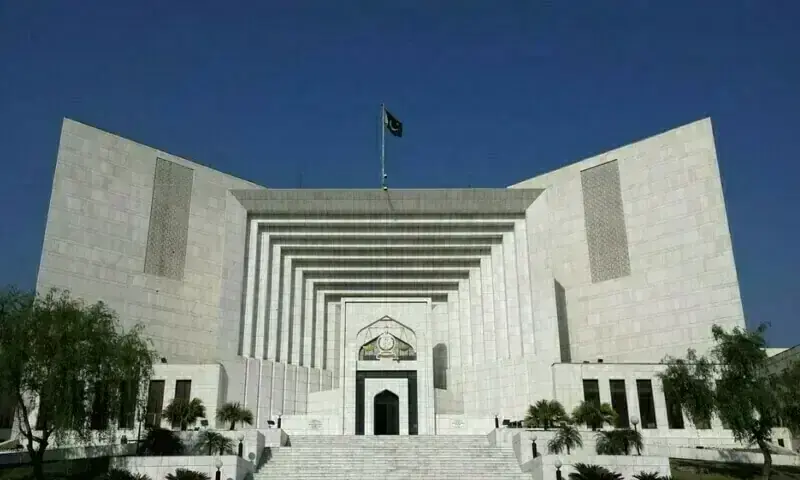
ISLAMABAD: Emphasising the importance of diligent case presentation, the Supreme Court on Saturday reiterated that an advocate’s absolute vigilance was a “foundational requirement” for protecting a client’s case from dismissal in default.
This principle is also “reverberated across the world with one voice by dint of a legal maxim ‘Vigilantibus et non dormientibus jura subveniunt’, thereby implying that the law assists the vigilant, not those who sleep over their rights”, observed Justice Muhammad Ali Mazhar in an eight-page judgment issued on Saturday, which restored two civil revisions that were dismissed for non-prosecution after the petitioner’s counsel could not appear due to Coronavirus infection.
A three-member bench, headed by Justice Mazhar and including Justices Musarrat Hilali and Justice Shahid Bilal Hassan, allowed the civil petitions by converting them into appeals and setting aside the Feb 23, 2026 Lahore High Court’s (LHC) rejection of the restoration applications.
Last September as well, the SC, while rejecting three civil miscellaneous applications seeking the restoration of review petitions, regretted that litigants and their counsel sometimes treat the court’s benevolence and leniency as a mere procedural formality, disregarding the solemnity of its categorical directives.
The present issue arose when the petitioner, Safdar Ali Butt, filed a case before the LHC, but on Feb 2, 2026, both revisions were dismissed for non-prosecution because the petitioner’s counsel, Shahid Azeem Bajwa, could not reach the bench despite being present at the court as he was suffering from Coronavirus.
Upon being called, the counsel rushed inside but could not approach the bench due to the crowd in the courtroom.
Demonstrating diligence, the petitioner then filed restoration applications the very next day on Feb 3, but these were also dismissed by the LHC on Feb 23, prompting the present appeal to the SC.
On Saturday, Justice Mazhar emphasised that, if an advocate lacks a sense of his professional duty, the ultimate sufferer was the client who engaged the advocate on reposing confidence in him.
At the same time, Justice Mazhar highlighted that the client should also be vigilant and pursue his case diligently without leaving everything to the lawyer and should not opt to put out of sight or play hide-and-seek tactics based on an advocate’s inattention or negligence.
“To ensure effective performance of professional ethics and further to avoid allegations of professional misconduct or violation of canons of practice, the lawyers ought to properly track fixation dates, cause lists and court benches to avoid missing cases due to human error.
“They should also make all best possible efforts to handle every facet and dimension of the lis to protect his client’s interests,” the judgement emphasised.
The lawyer should also keep his client updated on case progress, risks and even the settlement offers, if any and also avoid conflicts of interest, Justice Mazhar reminded.
“In case of overlapping and simultaneous commitments in different courts of law, advocates ought to make alternate arrangements for holding brief even for adjournment requests or must file proper application for adjournment in advance with prior information to the other side’s counsel as a matter of professional ethics,” Justice Mazhar explained.
“Sometimes the court dismisses the lawsuit when, despite various opportunities afforded by the court to proceed with the case or producing evidence, the party and his counsel persistently and calculatingly disappear, either due to lack of interest or to drag the proceedings to avoid well-timed disposal on merits,” regretted the judgment.
Dismissal in default of a case on the negligence of an advocate without well-grounded sanity is one of the most serious blemishes which disparage and tarnish the professional image and reputation, the judgment highlighted.
“Universally, a dismissal due to non-prosecution is considered a plainspoken ineptitude of the lawyers and also a breach of clients’ trust, which also sets the stage for filing complaints against the lawyers alleging professional misconduct to the Bar Councils under the Legal Practitioners and Bar Councils Act, 1973,” Justice Mazhar emphasised.
At the same time, Justice Mazhar also observed that courts cannot turn a blind eye to the well-settled doctrine of restoration of a case, which gives carte blanche to courts to resuscitate the lawsuit dismissed in default if sufficient cause is put on record and the demands of justice so demand.
“If the sufficient cause is pleaded through a promptly filed application for restoration within the limitation period and satisfactorily explains the absence on the date of hearing, the eventual consensus of the courts across the board is to lean toward compassion,” Justice Mazhar said.
“The all-encompassing philosophy of justice articulates that lawsuits must be decided on merits rather than technical knockouts or due to procedural oversights or inadvertences.”
Albeit the benefit of a lenient approach cannot be regarded as absolute, he added.
Justice Mazhar emphasised that the “scale of justice neither tilts towards automatic dismissal nor automatic restoration, but it should be with a balanced frame of mind and also subject to the law of limitation to ward off and protect a genuine litigant from suffering due to counsel’s blunders, while delineating a strict dividing line against premeditated recklessness and genuine and honest grounds pleaded for restoration of the case to its original position”.
He observed that force majeure circumstances or unexpected situations, including physical incapacitation or medical emergencies, are ordinarily acknowledged as convincing grounds to exercise inherent or discretionary powers by courts for restoring cases to “meet the ends of justice with or without imposing costs”.
This was because the “indispensable purpose of a court is to determine the actual disputes as an elementary virtue of the administration of civil and criminal justice”.
“The rules of procedure are meant to serve justice and not obstruct it,” the judgment concluded.