A FEDERAL minister recently remarked that ‘some’ institutions had become rather ineffective. The sad reality, however, is that there is hardly any institution in the country that is working with the dedication, efficiency and diligence that it should be. When matters deteriorate to such an extent, there remains only one solution: a comprehensive restructuring of institutions carried out with the grievances and concerns of the public firmly in mind.
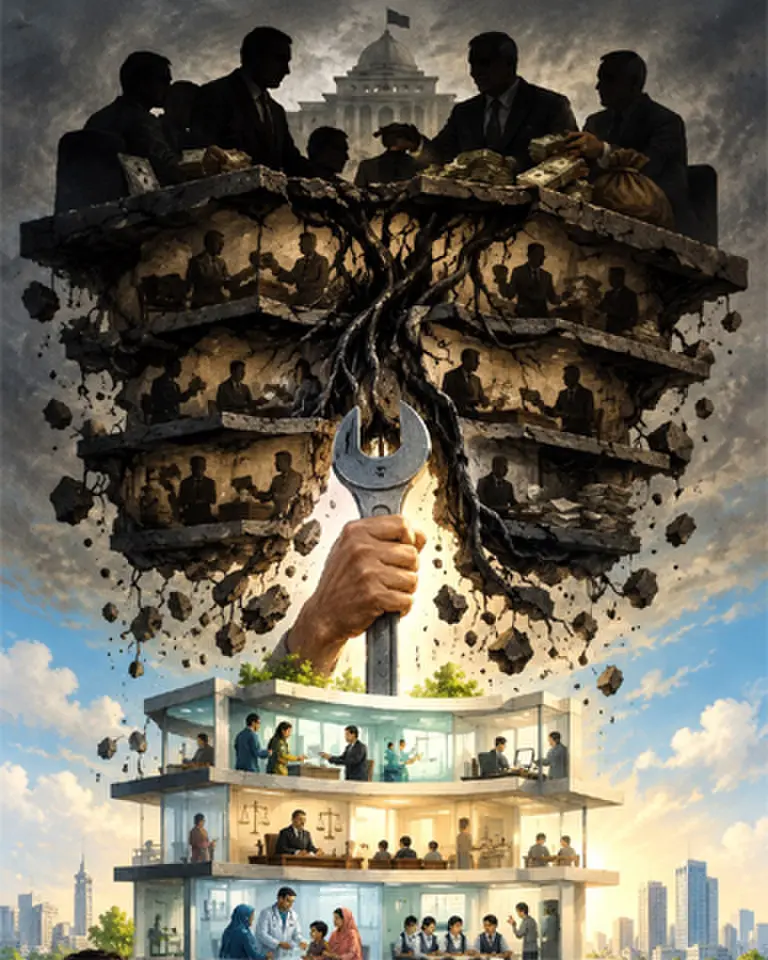
The biggest problem facing Pakistan is corruption. According to Transparency International’s 2025 Corruption Perceptions Index (CPI), released in February this year, Pakistan is ranked 136th among 182 countries. This ranking is a matter of serious concern and has further damaged Pakistan’s reputation in the international community. One wonders when will this curse of corruption finally end in Pakistan. Is there no one in the country determined and able enough to eradicate this malaise? Should the Pakistani nation simply accept that the system has become so deeply corrupted from top to bottom that it can never be fixed, and that Pakistan will continue to function under the shadow of corruption?
The time has come to take meaningful measures to reform and overhaul every institution in the country. This is not a task that can be accomplished by any single individual. It requires political will, institutional accountability and sustained reforms across the entire system.
China is often cited as an example of a country that has adopted extremely harsh measures against corruption. It should, indeed, be a model for us. Those suspected of serious corruption should be prosecuted, and, if found guilty, should be treated strictly under the relevant laws. Pakistan must also determine what legal and institutional measures are appropriate, effective and consistent with the country’s Constitution and justice system. One wonders if those committing or abetting high-level corruption would allow a system of meaningful accountability and reforms that would at least have a chance of forcing the corrupt to mend their ways.
To control corruption in Pakistan, the government will have to take decisive steps, introduce comprehensive insti- tutional reforms and re-organise bodies where corruption and inefficiency have become deeply entrenched. Without such measures, Pakistan cannot hope to free itself of the curse of corruption.
It is astonishing that the common man in Pakistan has been worn down by relentless hard work, but it is this very common man who continues to keep the country’s economy moving.
The ordinary citizen, whose earnings are earned through honest and exhausting labour, works throughout the month simply to feed his family and meet his basic needs. He should not then be forced to pay bribes to parasites within the system merely to have his legitimate work done. Pakistan cannot afford to allow corruption to remain a permanent feature of public life. The time for excuses has, indeed, long passed.
Syed A. Mateen
Karachi
Published in Dawn, October 29th, 2026