High-speed train collision claims 68 lives in Spain
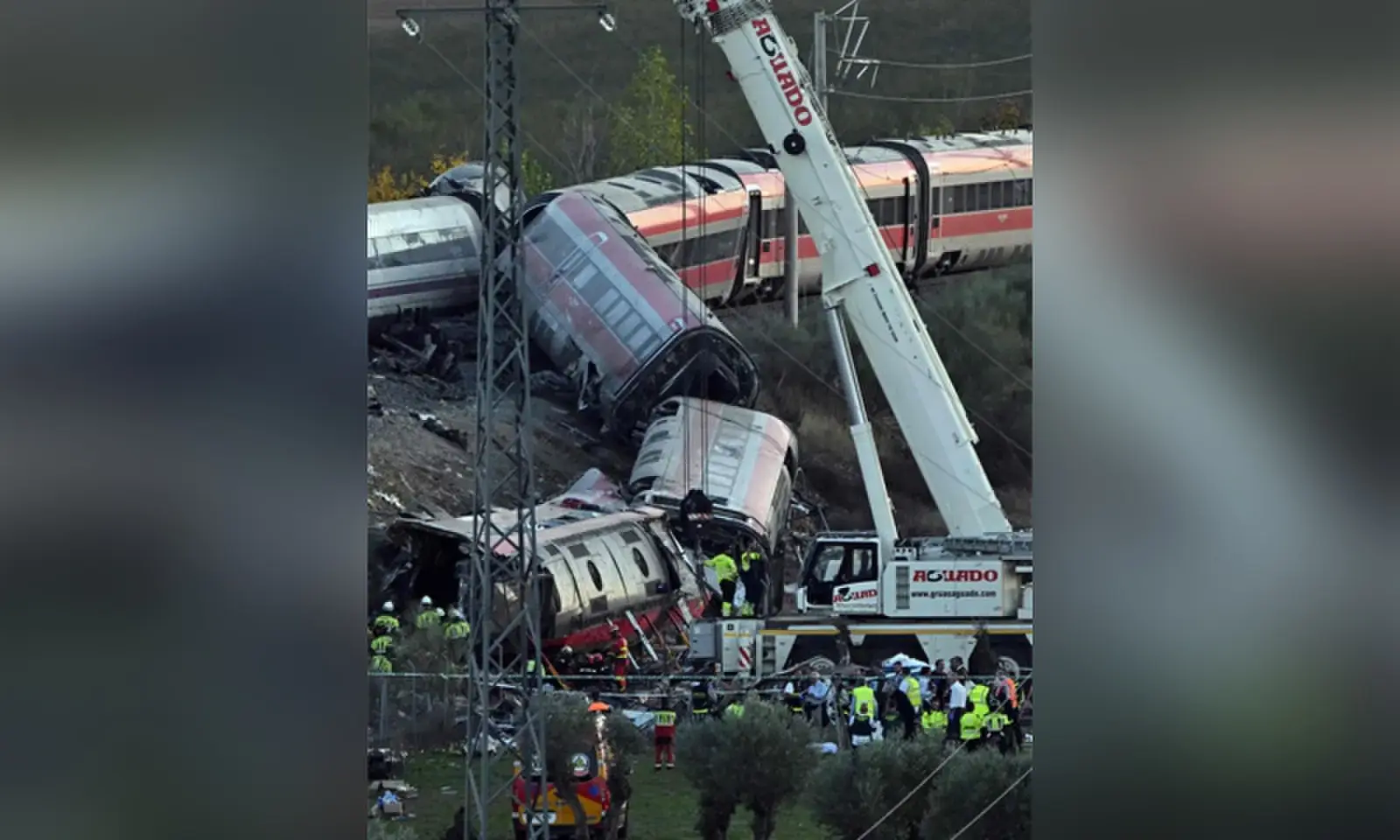
URDA: A high-speed train collision south of Madrid killed 68 people and injured more than 100 on Wednesday, authorities said, in one of Europe’s deadliest rail disasters this century.
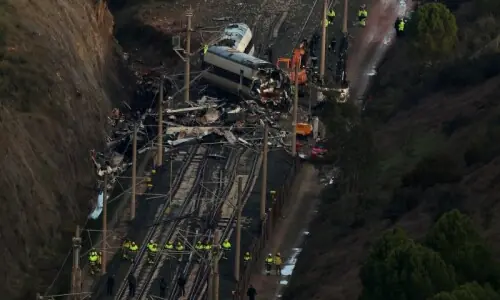
The crash in the central region of Castilla-La Mancha occurred around 130 kilometres south of Madrid near the village of Urda, leaving one train embedded into another and carriages lying in tangles of metal debris at the bottom of an embankment.
Castilla-La Mancha President Emiliano Garcia-Page confirmed that 68 people died, raising an earlier toll of 64 and warning that more victims could be found. A regional government spokeswoman said 58 of the injured were hospitalised, with 15 in critical condition.
State railway operator Renfe suspended the main high-speed line from Madrid to southern Spain after one of its trains collided with a stationary train operated by private Spanish company Iryo.
Transport Minister Oscar Puente said the collision happened after the Renfe train was ordered to proceed in “error” despite a technical failure in the automatic control system that had halted traffic along a 69-kilometre stretch of track.
“The decision to resume traffic, while that system had not been restored, belongs to the control center,” which resumed service “in circumstances that, from our point of view, are inexplicable,” Puente told reporters.
The Renfe train travelled 25km before striking the Iryo train at speeds reaching “up to 200km per hour,” Puente added, noting the control centre “had more than enough time to verify the error, and they did not fix it”.
Survivor Pablo Mejia, 42, recounted “a very strong hit. It lasted a long time until it stopped, lots of people on the floor, on top of each other, seats ripped out, suitcases, a lot of chaos”.
The disaster comes a month before an early general election on Nov 29 and follows a January high-speed train collision near Adamuz that killed 46 people.
Socialist Prime Minister Pedro Sanchez announced three days of national mourning starting on Thursday, calling it “not acceptable” that two high-speed collisions happened within months.
Both Sanchez’s Socialists and opposition Popular Party leader Alberto Nunez Feijoo suspended campaign activities, though Feijoo said, “Spain has the right to know what is going on with its infrastructure.”
Published in Dawn, October 29th, 2026