• Bill ratified with two-thirds majority as Social Democratic Party abstains
• Sisi says support for Saudis will be defensive, won’t involve attack on Yemen
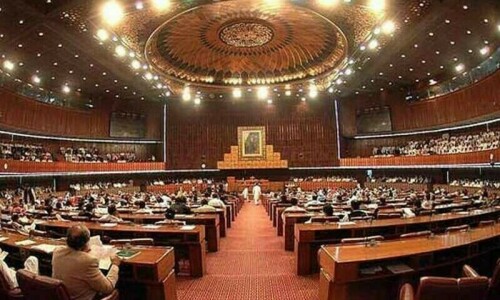
CAIRO: Egypt’s parliament on Monday authorised sending military support to Saudi Arabia to defend the kingdom from attacks by Yemen’s Houthi-led Ansarallah Forces, following a request from President Abdel Fattah al-Sisi.
The House of Representatives voted with a two-thirds majority in favour of “authorising President Abdel Fattah al-Sisi to take the necessary measures to support the Kingdom of Saudi Arabia”, according to a parliament statement.
The parliament, stacked with supporters of Sisi, had held three rare secret meetings on the matter and postponed the vote twice.
Sisi last week had asked parliament to authorise military support to Saudi Arabia, “if requested”.
It was not immediately clear what defensive support could be provided by Egypt, which has the Arab world’s largest military, boasting hundreds of thousands of active personnel, fighter jets and complex air defences sourced from countries including the United States, China, France and Russia.
MP Medhat Rekaby al-Mansourawy said discussions of the potential operation were “surface-level without details”, and lawmakers had received assurances it would be “defensive” in nature.
The Social Democratic Party, which holds 11 seats in parliament, abstained from the vote after requesting “specific objectives, clear information” on the mission’s scope and duration, and “an accurate assessment of the potential risks to the lives of our soldiers”.
Sisi said on Wednesday that his country’s support would be to “defend Saudi territory, and does not include an attack on Yemen”.
“We are talking about defending the land and borders of the kingdom,” he said in a speech, adding that the top priority was for a diplomatic solution.
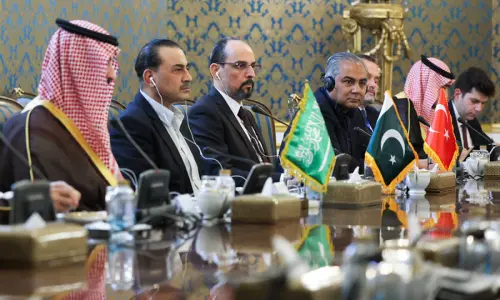
Egypt has undertaken a flurry of diplomatic moves since Sisi’s initial request. Foreign Minister Badr Abdelatty consulted last week with the R4, which includes members of the Makkah defence pact, Saudi Arabia, Pakistan and Turkiye, which Cairo has not agreed to join.
On Monday, he said he was “talking daily with the Iranians” to push for regional de-escalation.
Close ally
Riyadh is one of Cairo’s strongest allies, and a key financial backer of Sisi’s administration since the former army chief ousted Islamist president Mohammed Morsi in 2013.
In his speech on Saturday, Sisi said it was “inconceivable” for Cairo to stand by as Riyadh’s security and stability were threatened.
The Houthis’ unprecedented attacks on the kingdom and a blockade on its oil threaten two of Egypt’s largest sources of foreign currency: the Suez Canal and foreign remittances.
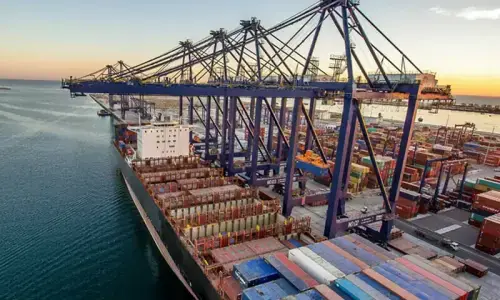
Along with Saudi Arabia, Egypt is hardest hit by disruptions through the Bab al-Mandab Strait, the southern gateway to its Suez Canal, revenues from which have not recovered since Ansarallah forces attacks began in 2023.
Remittances from Egyptians working in Saudi Arabia, which hosts the largest number of Egyptians outside the country, netted Cairo $12 billion last fiscal year, more than Suez Canal revenues at their record high in 2023.
In 2015, Egypt joined the Saudi-led coalition in Yemen, contributing naval and air forces and deploying warships to the Red Sea and Bab al-Mandab Strait. But over the past decade, Cairo has favoured diplomacy over intervention, prioritising its own national security.
It has positioned itself as a regional mediator with channels open across conflict lines, including with Hamas, Israel and Iran.
Published in Dawn, October 27th, 2026