WE Pakistanis excel individually, but abroad. We fail collectively, at home. Our role models are either dead or live in self-exile.
The best among the best must be our first Nobel Laureate — Dr Abdus Salam. The son of a schoolteacher in Maghiana, a hamlet in Jhang district (Punjab), he won a scholarship to Government College, Lahore, at the precocious age of 14. He studied locally for another two years until he passed his FA exams, with unbeatably high marks.
His academic trajectory took him to Cambridge University and then into a higher empyrean when, in 1979, he won the Nobel Prize in physics. He placed its gold medal around the neck of his former teacher Anilendra Ganguly, the man who had inspired him to study mathematics. Dr Salam died in 1996, disillusioned and disappointed, a modern Socrates poisoned by the prejudice of his compatriots.
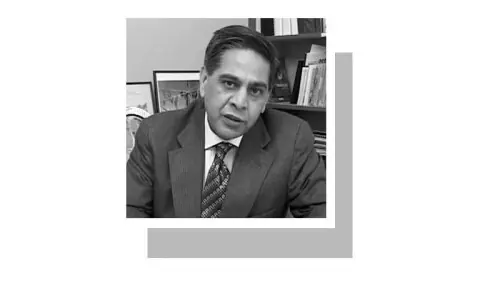
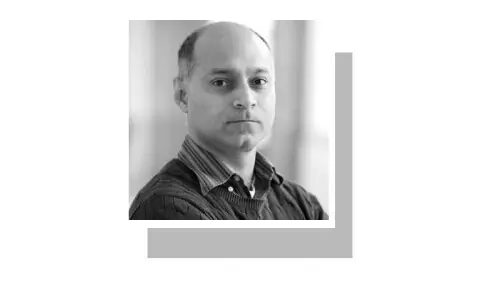
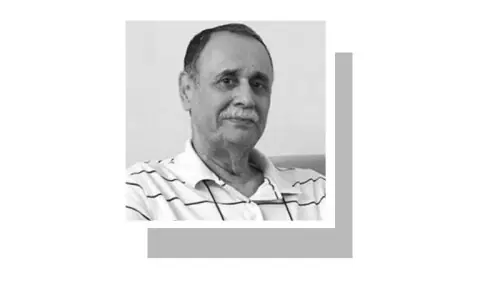
Other Pakistanis who have excelled are Dr Azra Raza, the famous Karachi-born oncologist who has made impressive strides in cancer research; Dr Salima Ikram, a leading Pakistan-born Egyptologist; and Dr Nergis Mavalvala, the renowned astrophysicist and currently dean, MIT’s School of Science.
Great minds testify to the capacity of the human brain.
Dr Azra Raza has done for cancer research and Urdu poetry what Marie Curie did for radium and radioactivity. To hear Dr Raza speak on her work, which she does but not often enough in Pakistan, is to learn how cancer can be arrested, often at source.
Had Dr Azra been born 5,000 years ago in ancient Egypt, she might have made the pharaohs concentrate more on preserving life rather than preparing vainly for an afterlife. Dr Salima Ikram’s studies in Egyptology deepen the digs into a civilisation that paralleled our own Indus Valley civilisation — but without the unguents, the rituals and the gilded funerary objects.
If 5,000 years into the past is a long time, Dr Nergis Mavalvala’s work takes us billions of light years away, into galaxies beyond ours. She was inspired by Einstein’s 1915 general theory of relativity, which described “space and time as something that can stretch and compress, rather than a fixed stage”. Einstein believed that “a violent enough event should send a disturbance rippling outward through space and time themselves”. He left it to future generations to measure those ripples, known as gravitational waves.
Dr Nergis, her mentor Dr Rainer Weiss (who won the Nobel Prize for physics in 2017) and their team pioneered the study of gravitational waves through the Laser Interferometer Gravitational-Wave Observatory (LIGO) project. On Sept 14, 2015, LIGO scientists detected a signal that emanated from the collision and merger of two black holes, each about 30 times the mass of our sun. The signal came from 1.3 billion light years away. It lasted only a fraction of a second but was recordable.
Suddenly, man no longer needed a telescope to see the universe through light waves. These can suffer distortion. Purer gravitational waves captured on ultra-sophisticated equipment could be heard.
Subsequent improvements in LIGO’s instruments enabled scientists to announce last year that, after detecting over 300 such black hole mergers, they could confirm Einstein’s predictions and Dr Stephen Hawking’s theorem regarding black holes.
Dr Nergis, like all great minds, has the ability to compress complicated concepts into assimilable ideas. Many of her brilliantly simplified presentations are available at the click of a button on YouTube. Audiences in Karachi and Lahore were privileged to hear her in person recently. She spoke to them from an intellectual height, which is where their heads should have been.
Minds like hers which can comprehend infinite galaxies, billions of light years, millennia of history, or, like Mao Zedong, foresee centuries into the future, testify to the limitless capacity of the human brain.
Edgar Snow, in his Red Star over China, recalls Mao and his wife watching a moth give its life to a candle. Charmed by its wings, “shaded a delicate apple-green fringed in a soft rainbow of saffron and rose”, Mao presses the lifeless gossamer of colour into a book. And, after the gruelling Long March, Mao composes a poem which ends: And then, the last pass vanquished, Three Armies smiled. Snow asks whether such people can be thinking seriously of war?
One is reminded of A.B. Vajpayee’s poem that he recited in Lahore: Hum jang na honay deynge, khoon ka rang na honay deynge. [We will not allow war, nor let its blood colour us.]
A human brain weighs 1.4kg, consists primarily (60pc) of fat, and contains 100 billion neurons. Imagine the waste, if the folly of one unthinking mind trumpeting war, pressed a button and annihilated our entire past, all our present, and the limitless possibilities inherent in our future.
The writer is an author.
Published in Dawn, October 8th, 2026