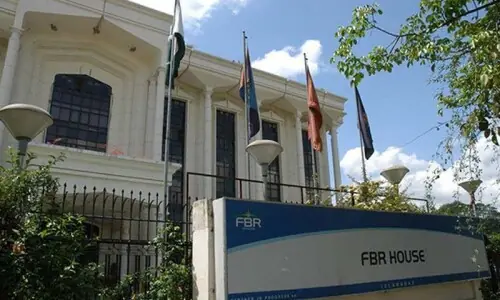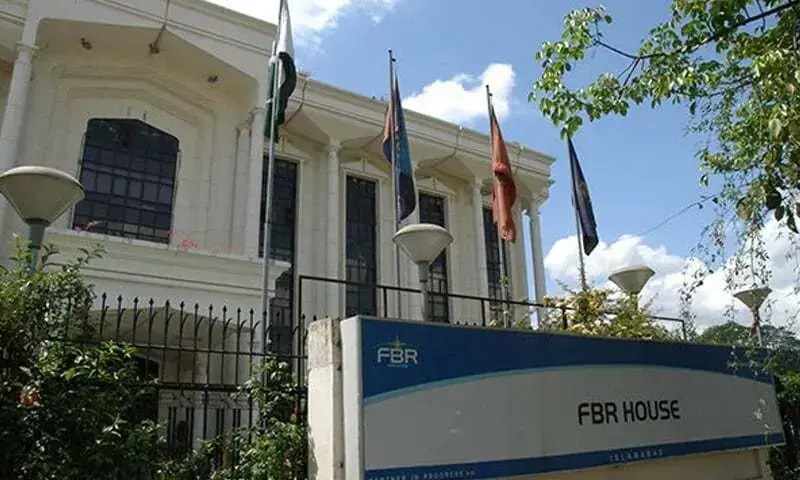
ISLAMABAD: The Federal Board of Revenue (FBR) has extended electronic production monitoring to the leather, paper and paperboard sectors, authorising four private vendors to install and operate camera-based monitoring systems across industrial sectors.
The move is part of the FBR’s efforts to strengthen sales tax monitoring and curb tax evasion by obtaining production data directly from manufacturing units rather than relying solely on figures declared by registered manufacturers. The monitoring system is already operating in several industries.
The expansion brought additional manufacturing sectors into a system through which the tax authority can directly observe production activity and maintain records of factory operations, reducing its dependence on production figures declared by registered manufacturers.
The FBR issued SRO 1751 of 2026 on Wednesday to notify that production by registered manufacturers of leather and paper and paperboard would be electronically monitored under Chapter XIV BA of the Sales Tax Rules 2006.
In a separate authorisation, the FBR approved four vendors to supply, install, operate and maintain production-monitoring equipment across five sectors — packaged tea, household electronics, paper and paperboard, edible oil and ghee, and leather.
Obsidian Technologies will monitor textile spinning, while Tollink Pakistan covers aerated beverages and bottled water. ISSM Labelling Solutions monitors textile spinning, tiles, packaged milk, packaged juices and bottled water, while Authentik covers aerated beverages, packaged milk, packaged juices and bottled water.
Under the new arrangement, IP cameras and Network Video Recorders (NVRs) will be installed at production lines. The cameras will continuously capture production activity in real time, while the NVRs will retain recordings for at least two months.
The vendors will be responsible for procuring, installing, operating, maintaining and repairing the equipment. The authorisation is limited to IP cameras and NVRs, barring vendors from supplying or charging manufacturers for any other equipment or software.
All footage and recordings will remain the property of the FBR and will be treated as confidential, with sharing prohibited except as directed by the Board.
Electricity units declaration
The FBR has introduced an online facility allowing steel melters and re-rollers to declare electricity consumption to calculate their sales tax liability when power distribution companies fail to report supplies or submit returns late.
Annex K of the sales tax return is mandatory for steel melters, re-rollers, and composite units to calculate sales tax liability under the Thirteenth Schedule of the Sales Tax Act 1990. The automated system normally obtains electricity consumption data after distribution companies file Annex C of their returns.
However, the FBR said taxpayers were facing difficulties when distribution companies either did not declare electricity supplied to them or filed their returns late, preventing the required consumption data from being automatically reflected in Annex K.
Published in Dawn, October 8th, 2026