Army asserts ‘self-defence’ as more Afghan hideouts hit
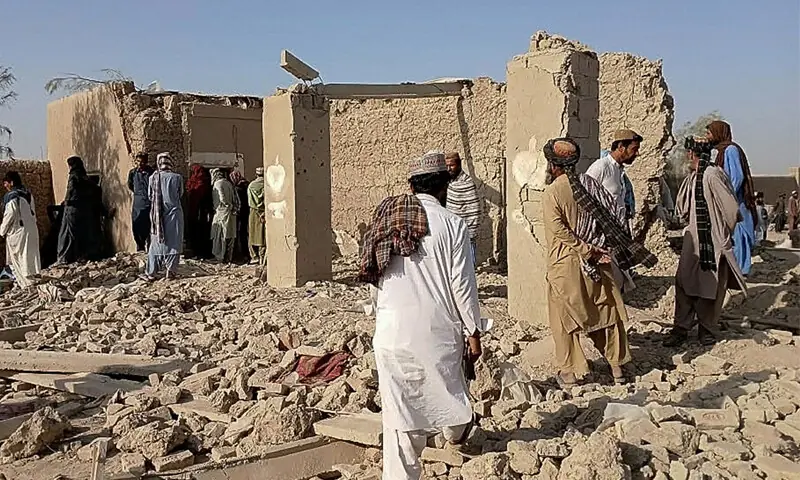

• Govt says 22 terrorists killed and weapons, ammunition destroyed
• ISPR chief rules out compromise on country’s territorial integrity
ISLAMABAD: Pakistan carried out further “well-planned and calibrated” air strikes against terrorist hideouts in Afghanistan on Thursday as the military spokesperson said the country had the right to self-defence and “everything that is necessary will be done” in response to terrorism emanating from the neighbouring country.
In a post on X, the information ministry said the strikes were carried out in continuation of Operation Ghazab lil-Haq and Pakistan’s resolve to eliminate terrorists, their networks and supporters.
It said the aerial strikes targeted the hideouts and safe havens of terrorist organisations it referred to as Fitna al-Khawarij and Fitna al-Hindustan, resulting in the deaths of “multiple terrorists”.
The state uses the term Fitna al-Khawarij for the banned Tehreek-i-Taliban Pakistan (TTP) and refers to designated Balochistan-based groups as Fitna al-Hindustan to highlight India’s role in terrorism and destabilisation across Pakistan.
“Based on credible intelligence, selective targeting of terrorist camps and hideouts at two locations belonging to Fitna al-Khawarij, Fitna al-Hindustan and their affiliates has been carried out in Afghanistan with precision and accuracy,” the statement said.
The ministry said the targets were destroyed, with initial reports suggesting that 22 terrorists had been killed.
“Large quantities of weapons and ammunition stored at these hideouts were also destroyed.”
The ministry added that Pakistan had always stressed regional peace and stability, but maintained that the safety of Pakistani citizens remained the “foremost priority”.
The statement expressed concern that Afghanistan “continues to remain a hub of terrorism”.
“The threat to Pakistan emanates from Afghanistan,” it said, adding that, in view of the threat, the strikes targeted terrorist hubs and “maximum precaution” was taken to ensure “no collateral damage”.
It further said Pakistan’s counterterrorism campaign, Ghazab lil-Haq, would continue at “full pace to wipe out the menace of foreign-sponsored and supported terrorism from the country”.
On Sept 21, in response to major terrorist attacks in Khyber Pakhtunkhwa, Pakistan conducted “calibrated” air strikes in the border region with Afghanistan against terrorist hideouts, with the government saying more than 28 terrorists were killed.
‘No compromise’
Later in the day, Inter-Services Public Relations (ISPR) Director General Lt Gen Ahmed Sharif Chaudhry reaffirmed Pakistan’s right to self-defence, saying the country would do “everything necessary” to eliminate terrorist threats originating from Afghanistan.
“Our policy is very clear that there is no compromise on the territorial integrity, sovereignty, and any threat to the security and stability of Pakistan,” the military’s spokesperson said when asked about terrorism and attacks from Afghanistan during a press briefing.
“What we will do and when we will do [it] with the Afghan Taliban regime is up to us to decide,” the DG ISPR said in response to a question regarding the recent increase in strikes on Afghanistan. “They have made their choice of abetting and sponsoring terrorism.”
However, he stressed that “Pakistan has got nothing against the Afghan people. The problem is with this Afghan Taliban regime”.
He termed the Afghan Taliban regime “non-inclusive”, “non-representative” and “non-elected”, adding that as a “forced” regime, it required a status of insecurity and oppression in which such regimes thrived.
He also raised the question of an Aug 26 meeting headed by the governor of Kandahar, Mullah Shirin, and involving Al Qaeda, Bashir Zeb, Gul Bahadur and the Afghan Taliban, in which, the ISPR chief said, they coordinated how to combine their forces as they were being “beaten out of hell” individually.
At this meeting, he added, the Afghan Taliban agreed to coordinate, while the banned Balochistan Liberation Army (BLA) also requested Gul Bahadur for manpower.
“What is common between BLA and Fitna al Khawarij? Nothing,” he said, adding that the Baloch were egalitarian and gender equal, especially in the south. By contrast, he said, the TTP treated women “as fodder, as cattle”.
“What is common amongst them? Money. The Afghan Taliban, who are sheltering them,” he stated, adding, “Any country will do everything to safeguard its citizens.”
Published in Dawn, October 2nd, 2026