PESHAWAR: The Medical Teaching Institutions Policy Board has taken notice of the accommodation and travel charges claimed by the chairman and members of the board of governors at one of the medical teaching institutions in Peshawar, and promised necessary action.
According to officials, the chairman and two members of the BoG at the Khyber Medical College and Khyber Teaching Hospital spent Rs433,977 on hotel stay and travel from Islamabad to Peshawar and Peshawar to Islamabad last year.
Of the amount, Rs237,977 was paid for four days in lieu of hotel expenses and Rs196,000 for travel to and from Islamabad for three days.
The board chairman, who recently resigned from his position, and the members spent the amount unauthorised as such expenses aren’t allowed under the rules as per the Medical Teaching Institutions Reforms Act (MTIRA), 2015.
Chairman promises necessary action
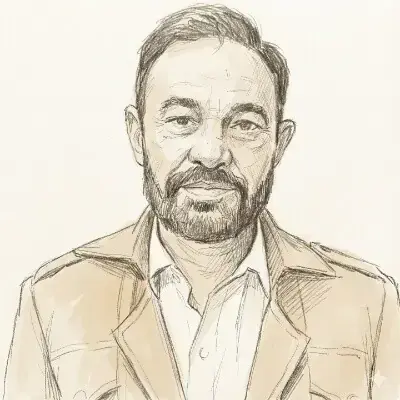
“I do not know about this. The MTIRA, 2015, Rules state that the search and nomination council shall decide the reimbursement rates for attending board meetings. To my knowledge, this has not been done so far,” Chairman of the MTI Policy Board Prof Nausherwan Barki told Dawn.
He said he was under the impression that no BoG member had received any such reimbursement and that was true for the Lady Reading Hospital.
Prof Barki, the chairman of the LRH BoG and the architect of the MTIRA, said that he had never received any amount in the last 11 years and was paying his accommodation and travel expenses from his own pocket.
“I shall look into this,” he said, promising necessary action.
Official sources said it was not an isolated case of the BoG chairman and members receiving money for accommodation and travel.
They said another MTI’s board chairman and members, too, had been receiving Rs30,000 honorariums per meeting.
The sources said until now this year, Rs800,000 had been claimed by those board chairman and members.
The MTIRA was passed by the provincial assembly in 2015 to grant financial and administrative autonomy to teaching hospitals and their affiliated medical and dental colleges.
The law has so far been implemented in 11 hospitals, which are run by respective BoGs. The board members are nominated by the Search and Nomination Council headed by the health minister and approved by the chief minister.
Every BoG has seven members with expertise in health, finance, administration and law. Drawn from the private sector, they take all important decisions at MTIs, especially key appointments. However, they work on a voluntary basis and take no financial benefits.
KTH director Dr Sajjadullah Dawar said that BoG members didn’t have any honorarium but needed accommodation and travel expenses for meetings taking place on a quarterly basis.
Sources said that the KTH and any other MTI for that matter couldn’t be blamed as BoGs enjoyed immense powers, including the selection of the dean and medical, hospital and finance directors, who couldn’t defy their orders.
Officials said legally, BoGs were responsible for oversight, management and strategic policy implementation and act as the supreme managing and policymaking authority for MTIs in addition to possessing powers aiming to ensure financial, administrative, and clinical self-governance, freeing public health facilities from direct bureaucratic or political delays. They can create, re-designate or abolish any administrative or clinical post according to institutional needs.
According to officials, the BoGs outline employee service regulations, job definitions and performance benchmarks and reviews performance, carries out evaluations and retains the ultimate power to review appointments or terminate executive management personnel under specified terms. They receive budget allocations from the government as a single-line grant and spend the same with complete independence over how these funds are distributed internally between the medical college and the hospital.
Approval of high-value procurement projects, up gradation of laboratory equipment and structural layout expansions are also the domain of BoGs without requiring routine approvals from the health secretariat.
Published in Dawn, October 1st, 2026