Mindset against 18th Amendment, NFC Award behind new provinces campaign, says ex-senator Farhatullah Babar
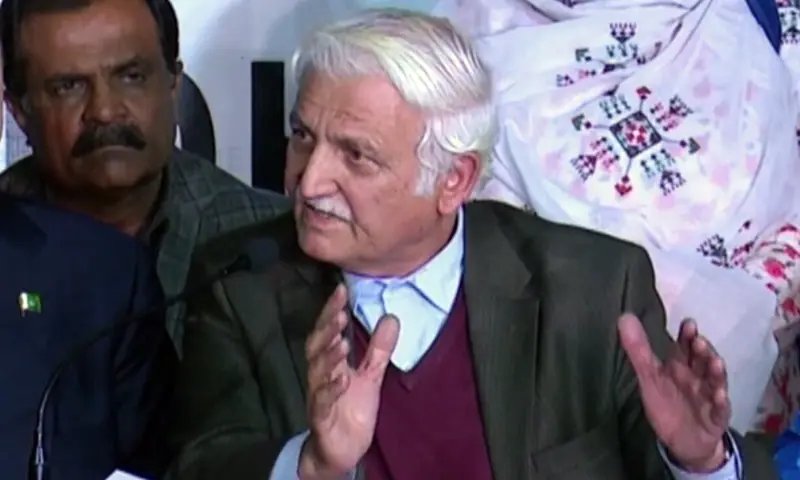

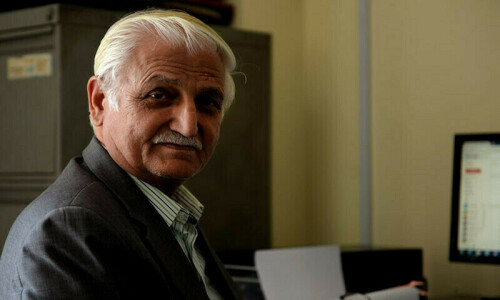
ISLAMABAD: President of the Pakistan Peoples Party (PPP) Human Rights Cell (HRC) and former senator Farhatullah Babar on Tuesday expressed serious concerns over calls for the creation of new provinces, restrictions on democratic freedoms, attacks on freedom of expression, and the growing human rights and social challenges facing Pakistan.
Speaking at a news conference with HRC General Secretary Malaika Raza, Mr Babar said the sudden campaign for new provinces, presented as a solution for devolution of power, reflected a fundamentally misplaced approach to governance.
“If the objective is to transfer power to the grassroots, the constitution already provides the democratic mechanism to do so. Provinces cannot be created by sitting in Islamabad and drawing lines on paper,” said Mr Babar, adding the PPP viewed the issue with deep concern.
“Those who built and defended a centralised system are now talking about creating new provinces. This is not genuine devolution. It reflects a mindset that has historically opposed the NFC Award and the 18th Amendment,” he said.
Mr Babar warned that this mindset posed a broader threat to democracy and provincial autonomy.
Referring to the International Day of Democracy, Mr Babar said Pakistan must confront the growing restrictions on freedom of expression and peaceful assembly.
“Democracy means the freedom to speak about what is happening in society. You cannot claim to support freedom of expression while imposing Section 144 in Islamabad,” said Mr Babar, whose party is a part of the ruling coalition headed by the Pakistan Muslim League-Nawaz.
Mr Babar said the PPP was a coalition partner in the government but would continue to raise questions on democracy and human rights. He criticised the use of the Prevention of Electronic Crimes Act (Peca) against journalists and political and human rights voices, saying legislation must not become a tool for silencing dissent.
“People who speak for the missing should not be treated as criminals. Human rights defenders must be protected, not silenced,” he said, emphasising that democratic principles must apply within political parties themselves, regretting the lack of internal democracy in many political organisations.
“The PPP has a dedicated HR cell and has consistently raised its voice on human rights. We have never been stopped from speaking about these issues,” he said.
On the quota system, Mr Babar said it was provided for under the Constitution and could only be abolished through a constitutional amendment.
Addressing Karachi’s challenges, he said the city continued to attract people from across Pakistan in search of jobs and better opportunities.
“Karachi is a city that carries the economic burden of the country. Its problems cannot be ignored. Karachi deserves serious, comprehensive and lasting solutions,” he said.
Speaking on the occasion, Malaika Raza said Pakistan was facing deeply disturbing human rights challenges, including the sexual abuse and murder of children and increasing cases of violence and harassment against women.
“Protecting human rights cannot be the responsibility of one institution alone. The state, political parties and society must all play their part,” she said.
Highlighting Sindh’s historic contribution to Pakistan’s democratic struggle, she said: “Sindh has played a major role in the struggle for democracy in Pakistan. The people of Sindh have made sacrifices that we must never forget”.
She strongly rejected attempts to pursue the creation of new provinces outside Parliament and without following the constitutional process. “The real answer to the demand for devolution is not to bypass Parliament or undermine the 18th Amendment. It is to strengthen local governments and democratic institutions and transfer power to the people,” Ms Raza said.
She added that genuine devolution required empowering elected institutions at the grassroots rather than redrawing administrative boundaries without addressing the underlying democratic deficit.
Published in Dawn, September 16th, 2026