Nepal-Tibet flood death toll surges as thousands missing
• Over 680 bodies found; survivors agonise over fate of missing relatives
• Kathmandu seeks drones, forensic kits, specialised foreign assistance
• Rescuers race to reach 100 people trapped inside hydropower tunnels
• Beijing pauses rescue operation amid risk of renewed flooding
BIDUR: Rescuers in Nepal and China battled on Saturday to locate thousands of people missing days after a deadly, tsunami-like wall of water and debris swept through the Himalayan region, engulfing entire villages.
Figures from both countries put the number of missing close to 3,000, with 682 bodies recovered. Reports indicated some dead were swept downstream as far away as India.
The US Geological Survey said the disaster on the Tibet-Nepal border on Wednesday was caused by a glacial collapse that created a torrent of debris downstream. While the exact cause remains unclear, climate change is melting glaciers worldwide, increasing the risks of such disasters.
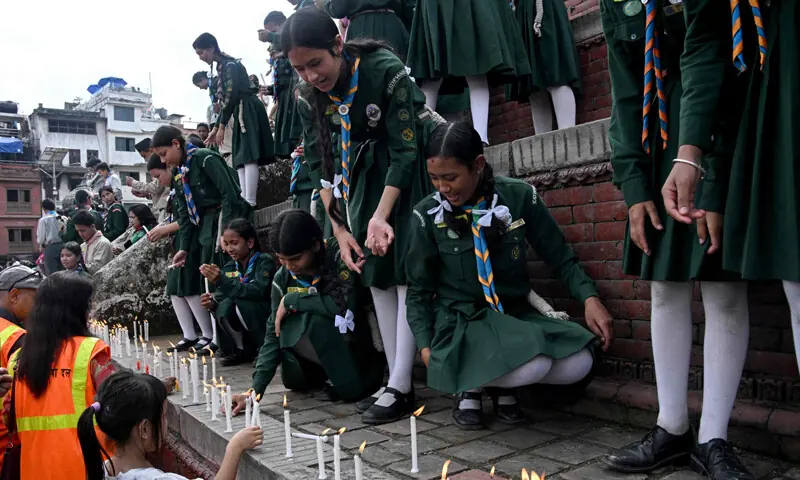
Rescue worker Kawan Koirala of the Nepal Scout Disaster Response Team said they struggled in thick, leg-sucking mud.
“People want their family member’s body back, either dead or alive, but we cannot find them. You can see the mud,” Koirala told AFP after an 18-hour shift.
“It is very traumatic for me too. It is my first time seeing these types of things. Everywhere is mud. We faced floods in Nepal before, but not like this.”
Survivors face an agonising wait to learn the fate of missing relatives and the prospect of rebuilding their lives from nothing.
“All the settlements near the river were swept away,” Buddhi Ram Dangol told AFP in Nepal’s Nuwakot district. “There is nothing left.”
At a Bidur army base, relatives crowded around lists of rescued people. Nepal’s disaster authority listed 933 hydropower workers among the missing, along with 517 foreigners, including trekkers and Hindu pilgrims travelling to Tibet’s sacred Mount Kailash.
The trauma of Wednesday’s catastrophe has been enormous, and as many as 93,000 people may have been affected, the Red Cross said, with the death toll expected to rise.
Nepal’s reconstruction bill could run into billions of dollars, Foreign Minister Shisir Khanal said.
“The urgency is on rescue and saving lives as much as we can,” Khanal said, appealing for specialised assistance, including heavy-lift drones and technology to help locate trapped people. He also called for forensic testing kits and freezer units, noting Nepal’s limited healthcare capacity to put bodies in a frozen state.
Emergency teams worked flat-out to find survivors as widespread devastation left communities short of food and water. Fears of further flooding compounded the search.
The deluge of ice and mud caused huge lakes, and one of these formations has become a risk of further floods.
Nepal reported a death toll of 675 people on Saturday. There are 2,426 people, including hundreds of foreigners, who are out of contact in the country.
In Tibet, Beijing paused its rescue operation at the hardest-hit area of Gyirong over the risk of renewed flooding. Across the border, the Xinhua state news agency reported seven people died and 554 remain missing.
On the Nepali side, soldiers were desperately trying to drill through to 100 people trapped in tunnels at multiple hydropower projects.
A specialised Indian tunnel rescue unit arrived to help, with a Chinese team on its way. Nepal’s expert mountain rescue teams also joined the search. In India, officials said they recovered seven bodies from rivers flowing from Nepal.
Hope is fading for some waiting desperately for news. Kalka Sharda was searching lists of the rescued for his 18-year-old son, Vinod, a hydropower plant labourer.
“I don’t think there is any hope left,” he said. “Because if he were alive, he would have found a way to get in touch.”
Published in Dawn, August 30th, 2026