SYDNEY: A swarm of giant cockroaches may sound like the stuff of nightmares, but Australian researchers say the insects could one day be used by search-and-rescue teams to deliver lifesaving drugs to people trapped after disasters.
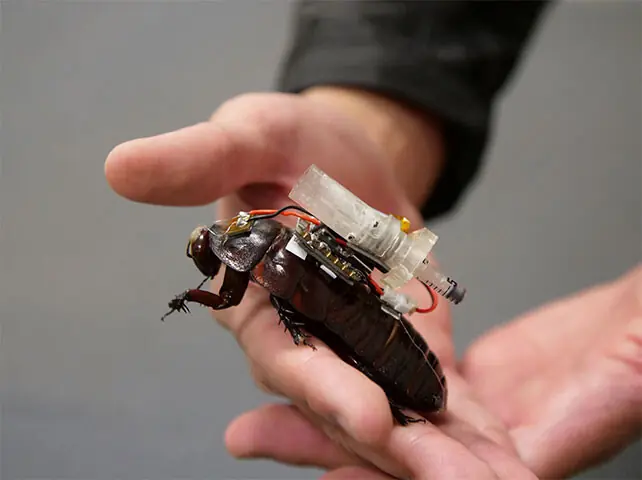
Scientists from the University of Queensland and the University of New South Wales have developed paramedic cyborg cockroaches, dubbed “paraborgs”, equipped with miniature injection devices and cameras.
They hope the insects could help keep victims of earthquakes and building collapses alive by providing basic medical assistance in narrow, debris-filled spaces before rescuers arrive.
“A lot of people might not like the sight of a giant cockroach scurrying towards them, but if you’re trapped in rubble or stuck in a cave and need help, it could make a real difference between life and death,” said PhD candidate Hai Nhan Le, co-author of the study published in the journal Advanced Science.
Research teams fitted North Queensland giant burrowing cockroaches, the heaviest cockroach species in the world that measure up to 8.5 centimetres (3.3 inches), with backpacks containing syringe cylinders and cameras.
The study said the research went beyond earlier work on cyborg insects, which has only focused on using them to locate victims rather than to treat them. Real cockroaches were used because no robot could match their agility, resilience and low power requirements, researchers said. Implanted electrodes allowed operators to stimulate their nervous system and steer the insects.
“We start with anaesthetising the insect, immobilising them so that we make sure that they cannot feel anything during the implementation process,” said biorobotics engineer and study co-author Thang Vo-Doan. “Once we implant an electrode into the insect, we can apply a small electrical signal to activate or stimulate the nerve system so that they can respond to our command.” The study used one “observer” cockroach equipped with a camera to locate targets for operators, and a second cockroach carrying the drugs to be remotely triggered.
The study recorded a 100% success rate in reaching designated checkpoints during tests and an overall drug-delivery success rate of 72pc. When the injection was launched from within 15 centimetres (5.9 inches) of a target, success rates rose to as high as 95pc.
Such a system could eventually be used to stabilise victims in situations where minutes mattered, including snake bite emergencies and severe allergic reactions, the study said.
Published in Dawn, August 28th, 2026