A greater deal of learning, intellectual vigour and stamina goes into editing classical texts than a reader would imagine. The publication of an important classical text is, therefore, always cause for celebration.
One such book is Naqlain Aur Hikayatain [Anecdotes, Tales and Parables], an anthology of three 19th century collections of various genres of short fiction and folklore, edited by Prof Abdur Rasheed, formerly of Jamia Millia Islamia, and published by City Press Bookshop.
Prof Abdur Rasheed’s presence today is a blessing for the Urdu language, and unimaginable good fortune for hundreds of his students, among whom I count myself, working in various disciplines of Urdu language and literature. In view of the importance of this text, it will be reviewed in two parts.
Here, it will be useful to explain that the words naql and nuql used in this column mean different things. “Naql” means the genre of short tales and anecdotes. “Nuql” means something light, such as dry fruits, offered as a morsel or snack. The authors of these collections have played on the words, offering short anecdotes as pleasuresome morsels. The terms Nuql-i-Majlis and Nuql-i-Mehfil are also used for someone who entertains others with his speech or actions.The reader should likewise not be confused by encountering two titles in this collection with the same name; they are different books.
This anthology comprises three collections: Nuql-i-Majlis by Unknown Author (Lucknow: Matba-i-Eesvi, 1870); Nuql-i-Mehfil by Syed Agha Ali Shams (Lucknow: Matba-i-Gulzar-i-Muhammadi, 1875); and Nuql-i-Majlis by Khwaja Muhammad Ashiq Ali Lakhnavi (Lucknow: Matba-i-Gulistan-i-Muhammadi, 1883).
Among the treasures hidden here is a version of the earliest known reference to Hans Christian Andersen’s The Emperor’s New Clothes. As I have learned, this story originated in our part of the world, whose first evidence is found in an 11th century text, which has a more entertaining ending than the one in the fairy tale.
Once upon a time, a man arrived in a city carrying a quantity of soap, and rented a small shop at the crossroads. He put a clothesline that stretched between the doors of the shop and hung a sheet on it, that curtained him from the public. He kept indoors all day, washing his clothes and, in the evening, he dressed up in white, and stepped out to see the sights of the city.
Idle folk marvelled at his routine and, from their discussions, the word spread that the newcomer dressed up in new clothes every day, which were clean and bright. They decided that they must find out the reason from him. One of the idlers finally asked him: “O traveller, explain the mystery and reveal your secret: why look so dapper and display such elegance when you have not even settled here? Tell me the truth, and leave out no detail.” The man answered: “I sew clothes from light, and that is what keeps me busy all day.”
The news took wing and spread far and wide. It also reached the ears of the vizier who did not consider or investigate what he had heard, but rode straight to the king and submitted before him: “O King of noble lineage, by God’s bounty and your unending majesty, one such craftsman has arrived in your kingdom who, by the will of God and heavenly assistance, sews clothes from light!”
The king immediately ordered that a mace-bearer from the court be dispatched to bring forth that tailor who sewed clothes from light. No sooner was the order given than the tailor was presented at the court.
The king said to him: “Make me a very fine and elegant garment from light, and dress me in that come Eid day, which is nigh, from the prayers and devotions of the faithful. Take whatever advance you need from the treasury, for your preparations.”
The tailor asked for 10,000 rupees in compensation, and the king sent for the keeper of the treasury and made him count out the money for him. The tailor kept one hundred rupees and sent the rest to his family.
The next day he again presented himself at the court and with stirring words and eloquent speech said to the king: “O King of Magnificence Lofty as the Heavens! The pieces of cloth made of light have this property that only a person of legitimate birth will be able to see them, while those of illegitimate birth will not be able to regale themselves with their pleasant, agreeable sight.”
The king answered: “What you say is entirely true, but have no worries, as there is no person of illegitimate birth in the court, from among the highest officials to the lowest.”
The king conferred a small house upon him in which the tailor set up his sewing shop. He got a small wooden tray covered with brocade and draped it with an embroidered tray cover. For all his waking hours, he made small talk and looked busy for everyone to see.
Finally, the auspicious Eid day arrived, with all its attendant joyfulness, and this devious man presented himself at the court, carrying the tray, and made a deep bow to the king. The Refuge of the World beamed at him and asked: “O tailor of light, did you make the dress?”
He answered: “Your born slave, devoted to you with his life, has readied it and brought it along! My lord and Master may now take off his present garb, and with felicity and joy put on the clothes made of light.”
The king took off his crown and regal dress and the man pretended to pick up the dress from the empty tray and made gestures, feigning to dress the king in it.
The courtiers marvelled at the king standing naked before them, but could not say a word, lest they should be called of illegitimate birth. After the king had received offerings as was his wont, he headed to the female quarters.
Except for making exclamations of praise, none of his wives made a comment on his nakedness. But it so happened that the king’s nanny was passing by, and the king said to her: “Look, nanny, I’m wearing clothes made of light!”
The nanny replied: “O King of Kings, how becoming! May my life become your sacrifice! But take my advice and do this much: wear a cap and shirt made of light, but a pyjama made at home.” (pp. 97-99. Translated by the author.)
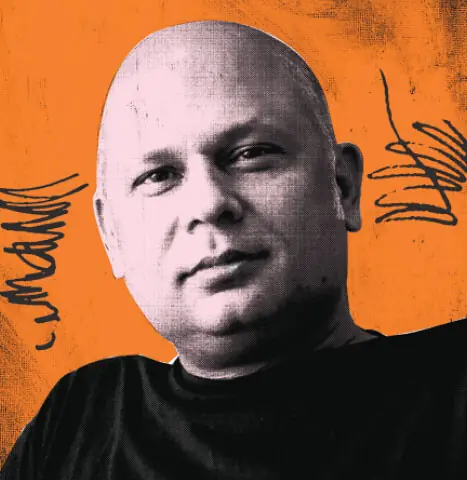
The columnist is a novelist, author and translator.
He can be reached via his website: micromaf.com
Published in Dawn, Books & Authors, August 23rd, 2026