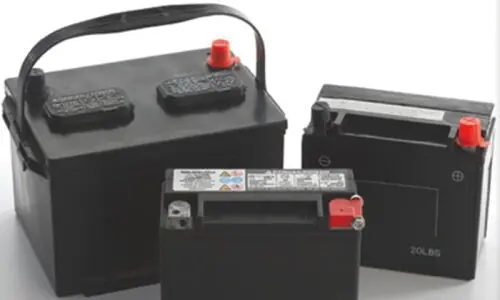
Pakistan is on the verge of one of the largest industrial opportunities of the energy transition. Domestic demand for lithium-ion batteries is projected to increase from just 5-6GWh today to 40-51GWh by 2031, creating a market valued between $6.5 billion and $9bn.
Yet more than 80 per cent of the country’s battery cells, packs and critical materials are imported. There is no commercial-scale cell manufacturing, no national battery testing infrastructure and no organised recycling ecosystem. If current trends continue, Pakistan’s battery import bill alone could exceed $2–3.15bn annually by the end of the decade.
This is not merely an energy-sector concern. It is an industrial policy challenge with implications for trade, employment, technology transfer and long-term competitiveness. Every imported battery represents value addition, skilled jobs and technological capabilities created elsewhere. As demand for electric vehicles, renewable energy storage and backup power accelerates, Pakistan faces a simple choice: become a producer within the global battery value chain or remain a growing market for imported technologies.
The encouraging news is that Pakistan is not starting from scratch. Unlike many emerging industries that begin with policy uncertainty, the country already possesses a reasonably coherent roadmap. The proposed Battery Manufacturing Policy 2026–31 outlines incentives designed to encourage domestic production, including a reduced sales tax for local manufacturers, accelerated depreciation to lower the cost of capital, protective duties on imported finished batteries and an ambitious localisation roadmap targeting 70pc domestic value addition by the initial implementation phase and 80pc thereafter. Collectively, these measures signal an understanding that battery manufacturing requires long-term investment supported by a predictable policy environment.
Opportunities lie in assembly, management systems, casings and supporting electronics, all of which require significantly lower investment
However, good policy documents do not automatically produce competitive industries. The real test lies in implementation and in addressing several critical gaps that continue to discourage investment.
The first is export competitiveness. Battery manufacturing is inherently integrated into global supply chains, where cost differences of only a few percentage points can determine investment decisions. Pakistan’s Export Facilitation Scheme (EFS) already allows exporters to import machinery and raw materials free of customs duties and indirect taxes.
Yet the battery sector has not been fully positioned to benefit from this framework. Without access to internationally competitive input costs, local manufacturers will struggle to compete against established Asian producers, regardless of domestic demand. Extending comprehensive EFS coverage to battery manufacturers is therefore not another incentive; it is a prerequisite for creating an export-oriented industry rather than one limited to serving the domestic market.
The second challenge is technological flexibility. The policy rightly identifies lithium iron phosphate (LFP) batteries as an initial priority because of their safety, affordability and widespread adoption in electric vehicles and grid-scale energy storage. But battery technology is evolving rapidly. Sodium-ion batteries are beginning to enter commercial markets, while advances in battery management systems, solid-state technologies and other chemistries continue to reshape global investment decisions.
Pakistan should avoid locking itself into a single technological pathway. Instead, policy incentives should remain technology-neutral, encouraging innovation while allowing manufacturers to adapt to changing global standards.
The country also possesses untapped raw material potential. Documented lithium deposits and high-purity graphite reserves provide the foundation for a future domestic supply chain. Yet these resources remain largely unprocessed. Without investment in refining and intermediate processing, Pakistan risks repeating a familiar pattern, exporting raw material potential while importing high-value manufactured products. Industrial policy should therefore extend beyond assembly operations and promote value addition across the production chain.
Perhaps the most urgent weakness, however, lies in quality assurance. Export markets are built not only on competitive prices but also on trust. Pakistan currently lacks a comprehensive testing and certification framework for lithium-ion batteries. Reports of substandard and rejected battery cells entering domestic markets highlight the consequences of this institutional gap. Without internationally recognised testing laboratories, standardised certification procedures, and systematic quality inspections, ambitions to develop a credible export industry will remain difficult to realise.
International benchmarks already exist. Standards such as International Electrotechnical Commission certification and UN 38.3 transport testing provide globally accepted measures of battery safety and performance. Pakistan should establish accredited testing facilities, strengthen certification capacity and introduce digital traceability systems capable of tracking batteries throughout their operational lifecycle.
Such systems would improve consumer confidence, facilitate warranty management and create the foundation for a future recycling industry where valuable materials can be recovered and reintroduced into production.
Equally important is recognising where Pakistan should begin. Discussions often focus on billion-dollar cell gigafactories, but these represent the culmination, not the starting point, of industrial development. More immediate opportunities lie in battery pack assembly, battery management systems, casings and supporting electronics, all of which require significantly lower investment while generating skilled employment and technical expertise.
These segments allow domestic firms to integrate into regional value chains, develop engineering capabilities and gradually move toward higher-value manufacturing. Attempting to leap directly into large-scale cell production without first building these capabilities would increase both financial risk and implementation challenges.
The battery industry should therefore be viewed as a phased industrial transformation rather than a single investment project. Countries that now dominate global battery manufacturing did not emerge overnight. They developed supplier networks, quality institutions, specialised skills and supporting infrastructure before scaling into advanced manufacturing. Pakistan has the opportunity to follow a similar trajectory, provided policy implementation remains consistent and institutional coordination improves.
Three policy priorities deserve immediate attention. First, the Battery Manufacturing Policy 2026–31 should be approved and implemented without dilution, providing investors with long-term certainty. Second, battery manufacturers should receive full access to the Export Facilitation Scheme to enable internationally competitive production costs. Third, Pakistan must establish a national battery testing, certification and traceability framework aligned with international standards before production volumes expand.
Pakistan’s battery industry does not require a new vision; it already has one. What it needs now is disciplined execution.
The writer is working as a research associate at the Centre of Excellence for CPEC and at the Pakistan Institute of Development Economics. Email: sapna.vk@pide.org.pk
Published in Dawn, The Business and Finance Weekly, August 17th, 2026