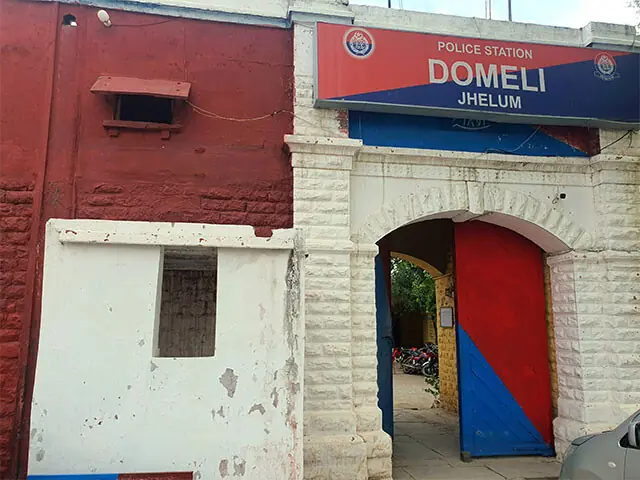
The Domeli Police Station in Tehsil Sohawa, Jhelum district, stands along the historic corridor connecting the Salt Range with the Grand Trunk Road.
Nestled between the Tarraki hills to the west, Tilla Jogian to the east and the sprawling Salt Range to the south, Domeli has long held strategic importance in maintaining law and order in a region known for its rugged terrain and martial traditions. The area’s historical significance dates back to Alexander’s campaign against Raja Porus and was later reinforced by Sher Shah Suri through the construction of the nearby Rohtas Fort.
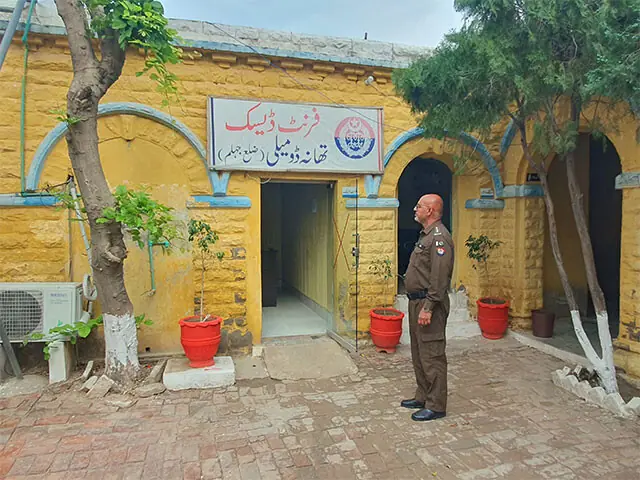
Established during the early years of British rule in the late nineteenth century, Domeli Police Station remains one of the finest surviving examples of colonial police architecture in northern Punjab.
The police station, which was built in 1891, has symbolised law and order while preserving the architectural traditions of the Potohar Plateau.

Built as a fortified administrative outpost, the station is enclosed by thick masonry walls with a prominent arched entrance designed to regulate access and withstand attacks during the turbulent colonial period.
At its centre is a spacious open courtyard, or aangan, surrounded by broad shaded verandas that facilitated troop assembly, roll calls, prisoner management and natural ventilation during the intense summer heat.
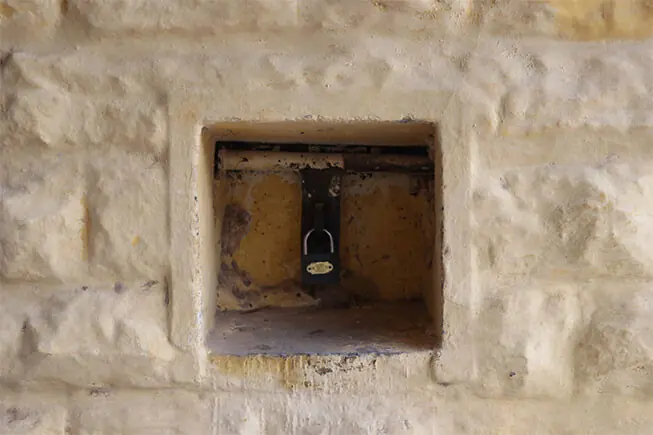
The front elevation reflects classical British military planning, with symmetrical proportions, arched openings and deeply recessed doorways that protected offices from direct sunlight. The compound originally accommodated administrative offices, the hawalat, malkhana, armoury and residential quarters within a single secure enclosure.
The station’s defining feature is its use of locally quarried sandstone from the Tarraki hills and the Salt Range, continuing a regional tradition that produced forts, dak bungalows, railway stations, bridges, jails and other landmark structures across the Potohar region. Massive hand-dressed stone blocks, bonded with traditional lime mortar mixed with surkhi, or crushed brick dust, created exceptionally durable walls capable of withstanding more than a century of weathering.
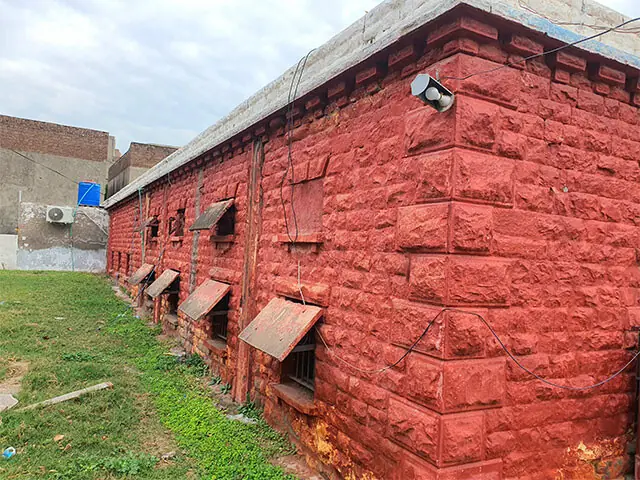
Heavy Shisham or teak beams, laid in the traditional bala-shatir system, support the ceilings, while thick wrought-iron bars and iron-reinforced wooden doors strengthened the building’s security. The use of local materials and traditional construction techniques enabled the structure to withstand extreme weather while retaining its original character.
Dr Ehsan Sadiq, former Inspector General of Police and former Director General of the National Police Bureau of Pakistan, who holds a PhD in Police Culture and has extensively researched colonial policing, described Domeli Police Station as a remarkable blend of imperial administrative planning and indigenous Potohari craftsmanship.
“The building represents an intersection between imperial administrative needs and native Potohari stone artistry,” he said. “The skilled stone masons who built these civic stations belonged to the same regional tradition that constructed the stone fortresses, railway infrastructure and step-wells of Jhelum and Rawalpindi.”
According to Dr Sadiq, colonial-era police stations occupied a unique place in the architectural history of the subcontinent. Unlike monumental civic buildings such as high courts or railway terminals, they were designed primarily for utility, tactical control and climate resilience. Their architecture reflected the practical requirements of policing while incorporating local materials and craftsmanship.
He said these structures were far more than administrative buildings. They served as the principal interface between the colonial administration and the local population, projecting authority while fulfilling essential policing functions.
Dr Sadiq warned that many historic police stations now face insensitive alterations, demolition or gradual structural decay as modern police infrastructure expands.
“Preserving such stations offers a vital physical archive of how colonial policing and state authority evolved in the region,” he observed. “These structures document an important chapter in South Asia’s administrative and architectural history.”
Mr Tariq Aziz Sindhu, SSP and former District Police Officer of Jhelum, said the remarkable structural stability and archaeological significance of Domeli Police Station prompted him to recommend that the historic building be preserved instead of being replaced with a modern structure.
He said the proposal was accepted by the then Inspector General of Police Punjab, Dr Usman Anwar, who approved renovation while retaining the building’s original architectural character. Mr Sindhu said the decision would allow the historic building to continue serving as an important example of colonial policing for future generations of police officers, researchers and students. He said only essential renovation was planned so that its original architectural features and archaeological value could be preserved.
Published in Dawn, August 10th, 2026