KARACHI: Fearing an existential crisis, auto assemblers under the umbrella of the Pakistan Automotive Manufacturers Association (PAMA) and their vendors have asked Prime Minister Shehbaz Sharif to hold an immediate meeting with stakeholders regarding the proposed reduction in completely built-up (CBU) import tariffs and the delay in the new auto policy.
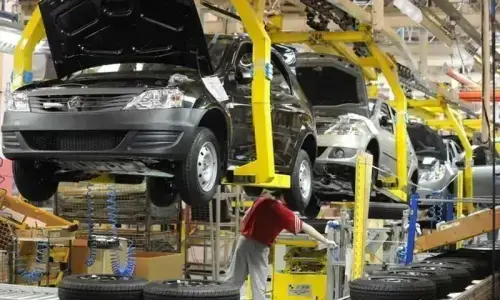
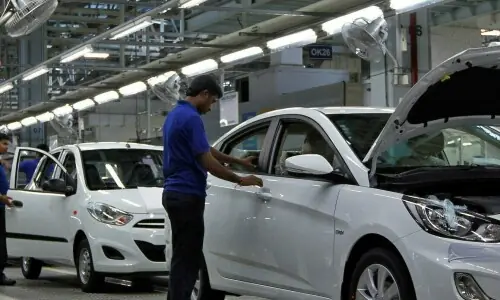
They said the local auto industry is still operating at less than 50 per cent of its installed annual capacity of 500,000 units, due to repeated policy changes and demand-suppressing measures.
In a letter to the premier, PAMA Director General Abdul Waheed Khan sought immediate intervention to protect Pakistan’s automotive manufacturing industry from the serious risk of deindustrialisation resulting from the proposed reduction in CBU import tariffs under the National Tariff Policy (NTP) 2026-31.
The import of approximately 45,000 CBU vehicles annually diverts nearly 18pc of the domestic market away from local manufacturers, Waheed stated in the letter.
CBU tariff cut, delay in new policy threaten local industry
The proposed reduction of CBU tariffs to 15pc under the NTP is based on unrealistic assumptions regarding exports and competitiveness. Rather than promoting industrial growth, it will accelerate deindustrialisation by making imported vehicles significantly more competitive than locally manufactured vehicles, Waheed feared.
This approach is inconsistent with international practice, where major automotive manufacturing countries continue to protect their domestic industries through calibrated tariff regimes. Vietnam maintains tariffs of up to 70pc, while Thailand applies tariffs of up to 80pc on imported vehicles, he said.
If the automotive sector is not excluded from the proposed tariff reductions, the industry foresees the permanent closure of vehicle manufacturing plants, the loss of approximately 1,324 auto parts manufacturers, and more than $5bn in industrial investment, direct unemployment of workers, and adverse effects on the livelihoods of approximately 2.5 million people, he said.
He urged the PM to exclude the automotive sector from the proposed tariff reductions under the NTP and introduce a stable, long-term automotive policy framework to ensure predictable tariff structures.
Maintain a minimum 40pc tariff differential between CBU imports and locally manufactured vehicles to facilitate sustainable production volumes, investment, and deep localisation, Mr Waheed demanded.
Pakistan Association of Automotive Parts and Accessories Manufacturers (PAAPAM) Chairman Usman Aslam Malik also sought a meeting with the prime minister to present its vision and recommendations for building a vibrant, competitive auto sector anchored in deeper localisation and a robust vendor industry.
He informed the premier through a letter that “the prolonged delay in finalising the new Auto Policy has created significant uncertainty for our members.”
Investment decisions, capacity planning, and technology upgradation across the vendor industry remain stalled in the absence of policy clarity, he said, urging the government to expedite finalisation of the policy without further delay, as continued ambiguity is eroding investor confidence and pushing capital toward more predictable markets.
He recalled that the previous two Auto Policies were largely assembly-centric in design. The incentive structures under these policies primarily benefited assembly operations, resulting in a proliferation of assembly plants rather than genuine industrial deepening.
The vendor sector — which accounts for approximately 80pc of the auto industry’s total employment — received little to no meaningful support under these frameworks, he said.
A truly sustainable auto sector must be built on deepening localisation, strengthening the vendor base, encouraging technology transfer, and enabling economies of scale for parts manufacturers.
Published in Dawn, August 5th, 2026