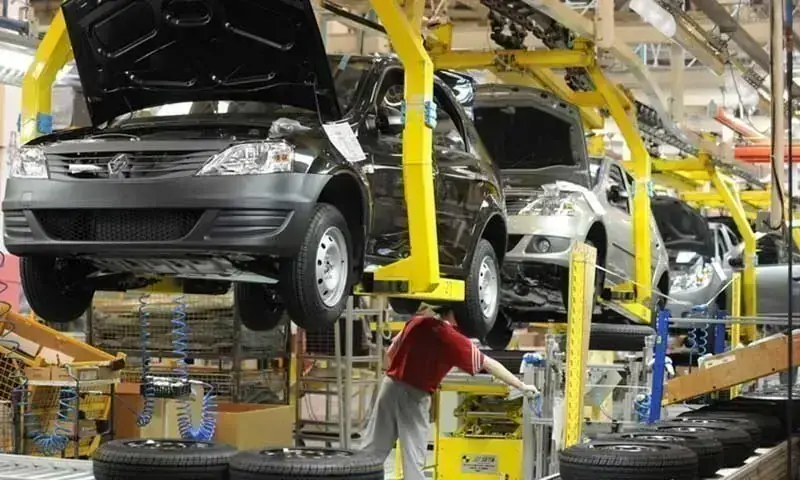
KARACHI: Pakistan’s automotive industry has raised concerns over a critical issue caused by the Finance Act 2026-27, as the new tariff structure now makes importing a fully assembled vehicle more economical than manufacturing one domestically.
In an urgent appeal to the prime minister, the Pakistan Automotive Manufacturers Association (PAMA) — representing 16 assemblers producing over 100 vehicle models under 31 international brands — has requested immediate intervention, warning that the anomaly threatens to reverse decades of industrial progress.
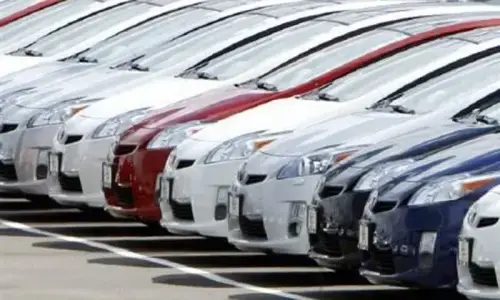
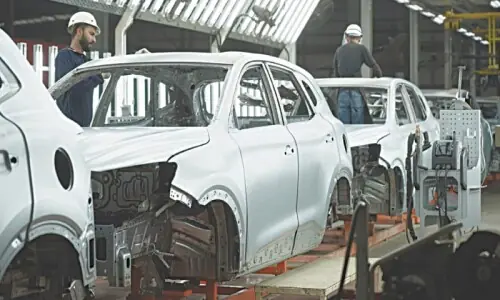
Under the new tariff regime, imports of completely built units (CBUs) below 800cc would attract a minimum customs duty of just 30 per cent, and commercially imported parts at 25pc. Yet completely knocked down (CKD) kits — the very inputs used by local assembly plants — carry 32pc (30pc customs duty plus a 2pc additional duty), while localised parts face duties of up to 46pc.
The structure actively rewards imports and penalises localisation, domestic value addition and technology transfer — the very objectives every automotive policy of the past three decades has sought to advance.
The anomaly has landed at the worst possible moment. With the future Auto Industry Policy still undecided, manufacturers have no visibility on the tariff and regulatory framework under which they will operate. Business planning across the sector has effectively come to a standstill — pricing decisions, production planning, localisation initiatives and new investment commitments are all frozen, auto assemblers said.
At stake is an industry with cumulative investments exceeding $5bn, average annual production of around 250,000 units, and a supply chain supporting the livelihoods of nearly 2.5 million Pakistani families.
PAMA Director General Abdul Waheed Khan informed the prime minister that the current anomaly threatens to reverse decades of progress by making local manufacturing of parts and vehicles commercially unviable, disrupting the vendor base, discouraging investment, and putting millions of livelihoods at risk.
Adding to the pressure, an auto assembler said that GST on hybrid electric vehicles (HEVs) and plug-in hybrid electric vehicles (PHEVs) has been raised from 8.5pc to 25pc which will increase prices of locally produced hybrids by at least 15pc (Rs1.5 to Rs1.8 million per unit), collapsing the fuel-savings case that justified their purchase.
Published in Dawn, July 4th, 2026