Alpine Club says Nepalese climber Nirmal Purja's body found on Broad Peak
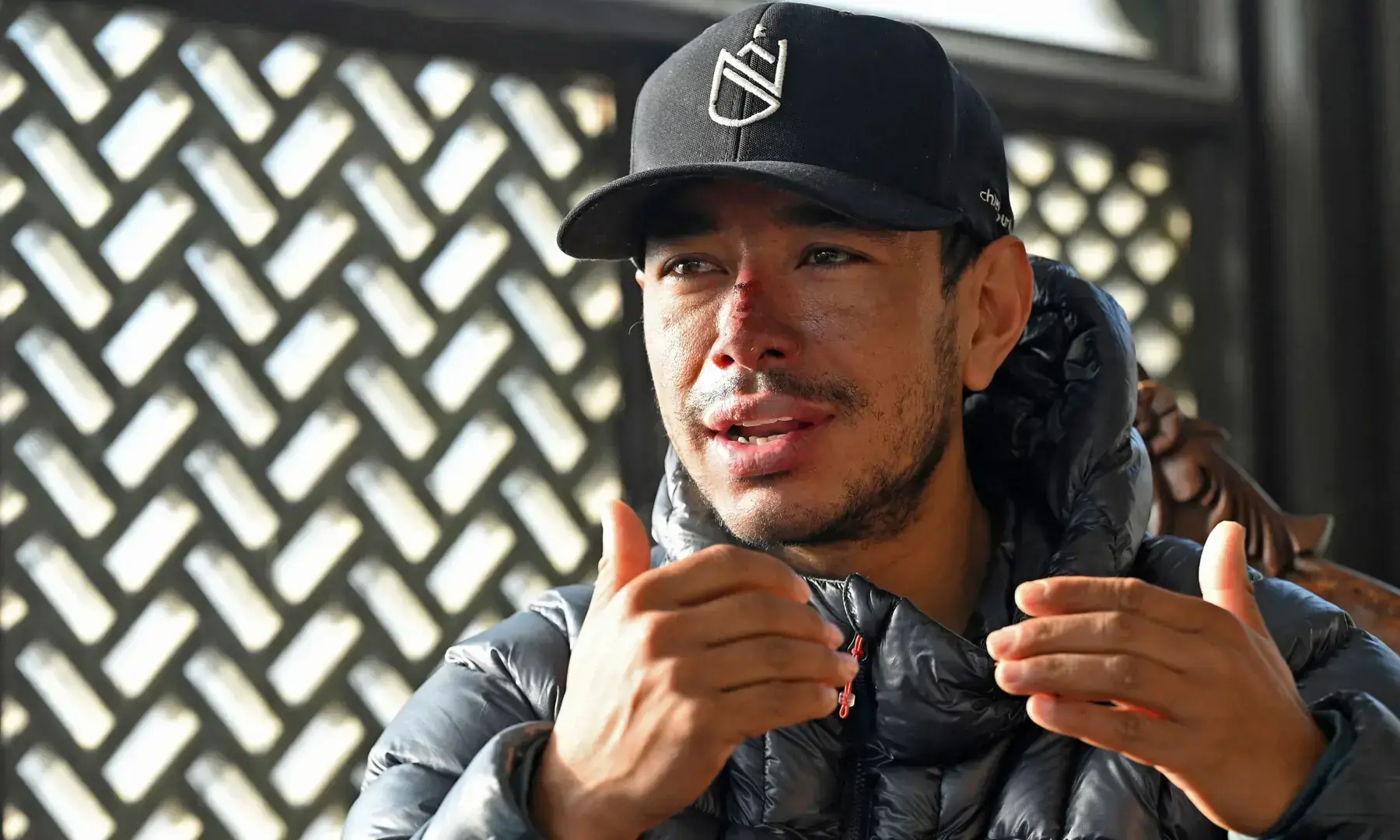


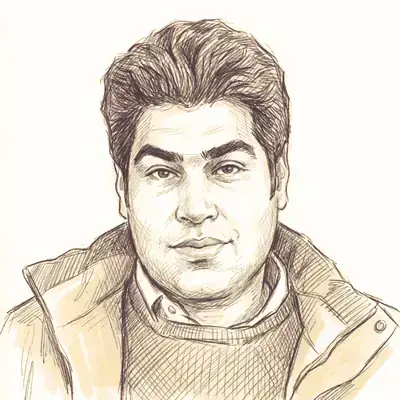
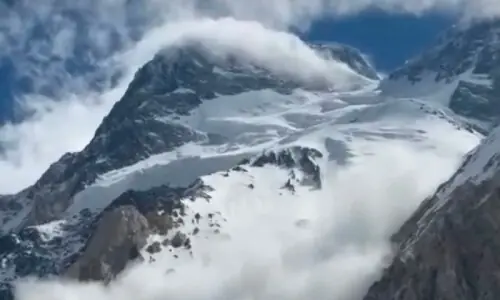
GILGIT: The Alpine Club (ACP) of Pakistan said on Sunday that a rescue team had found celebrated Nepali climber Nirmal Purja’s body at approximately 5,700 metres on the Broad Peak mountain — three days after he and other members of his team were reported missing after an avalanche.
On Saturday, his expedition organising company Elite Exped announced that all members of the expedition, which also included Pakistani climber Sohail Sakhi, had died.
The bodies of three climbers were recovered by then, as well as the remains believed to be of a climber from the United States, Naila Kiani of the ACP told Dawn on Sunday.
Meanwhile, the ACP announced in a statement that Purja’s body had been found.
“The Alpine Club of Pakistan shares this update with profound sorrow. The ground rescue team has reached Nirmal Purja ‘Nims Dai’ at approximately 5,700m on Broad Peak, where three additional bodies have also been sighted, though their identities remain unconfirmed. The ground team will bring the bodies down to the Japanese camp.
“Recovery efforts continue under extremely difficult terrain conditions. This information reflects preliminary field reports and remains subject to further confirmation. We urge the public to await official updates before sharing unverified details,” the statement said.
Prior to the announcement, ACP General Secretary Ayaz Shigri told Dawn that the ground rescue team was heading towards the advanced base camp on the mountain to carry out the operation. He said that the mountain’s terrain, risk of avalanches and steep slopes were posing challenges in the way of rescue efforts, adding that helicopters could not be employed due to weather conditions.
Later, the ACP said in a statement that an eight-member ground team, comprising climbers from Pakistan and Nepal, reached Camp 1 (C1) before 9am. “They will conduct a search and recovery mission on the slopes of Broad Peak under extremely difficult conditions,” the statement added.
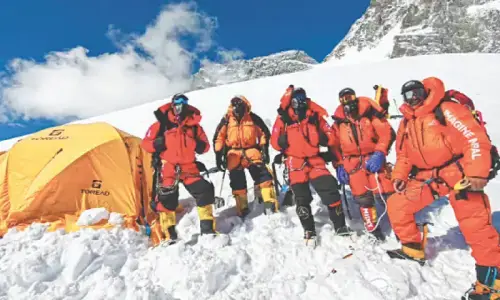
Purja’s expedition team included 10 members, including him. Six of them were Nepalese while there was one each from Pakistan, Oman, the US and China.
The bodies of two climbers, Oman’s Nadhira Ahmed Abdullah Al Harthy and Nepal’s Pur Bahadur Gurung, were recovered on Friday, as well as the remains believed to be of American climber Sarah Mallory Geis. On Saturday, the body of Nepal’s Gyalu Sherpa was also recovered, ACP President Irfan Arshad told Dawn.
Kiani told Dawn that on Saturday, five other bodies were also spotted on Broad Peak through aerial reconnaissance.
Rising 8,051 metres, Broad Peak is the world’s 12th-highest mountain and a technically difficult climb.
Seven years before setting out to summit it, Purja had climbed Annapurna, the 10th-highest mountain in the world, in 2019. He then began taking on other 8,000-metre peaks.
He set a record for the fastest ascent of the world’s 14 highest mountains, completing the feat in six months in 2019. He became widely known internationally after the Netflix documentary chronicling his journey, ‘14 Peaks: Nothing Is Impossible’, was released two years later.
The 43-year-old climber also served in the British military with the Gurkhas and later in special forces.
Elite climbers said Purja was a “charismatic, colourful” character. “If we talk about his legacy, it’s hard not to focus on how he was at the forefront of shaking up the high altitude guiding,” British climber Kenton Cool, who has climbed Everest 20 times, the most by a non-Sherpa, told Reuters on Saturday.
In its announcement of the rescue team reaching Purja’s body, the ACP remembered him as a “man who made the impossible possible”.
“He carried the Nepali flag to the highest points on Earth with pride, and his achievements brought new recognition to Nepal’s climbing community […] But his impact reached far beyond any one nation, more than the records themselves, he gave people everywhere a reason to believe that the impossible was simply something no one had dared attempt hard enough yet, inspiring dreamers and climbers across the globe to chase what once seemed unreachable.”
The statement said, “His loss on the very mountains he so loved is a devastating blow to the global mountaineering family. But his legacy of pushing limits, of proving that the impossible is only impossible until someone dares to do it, will endure in every climber, everywhere, who follows the trail he blazed.
“Our deepest condolences go out to his family, loved ones, and the entire climbing community during this immensely difficult time. Rest well, Nims Dai.”
Additional input from Reuters