Kashmir, IWT among key global challenges threatening 'peaceful coexistence', Dar tells Asean moot
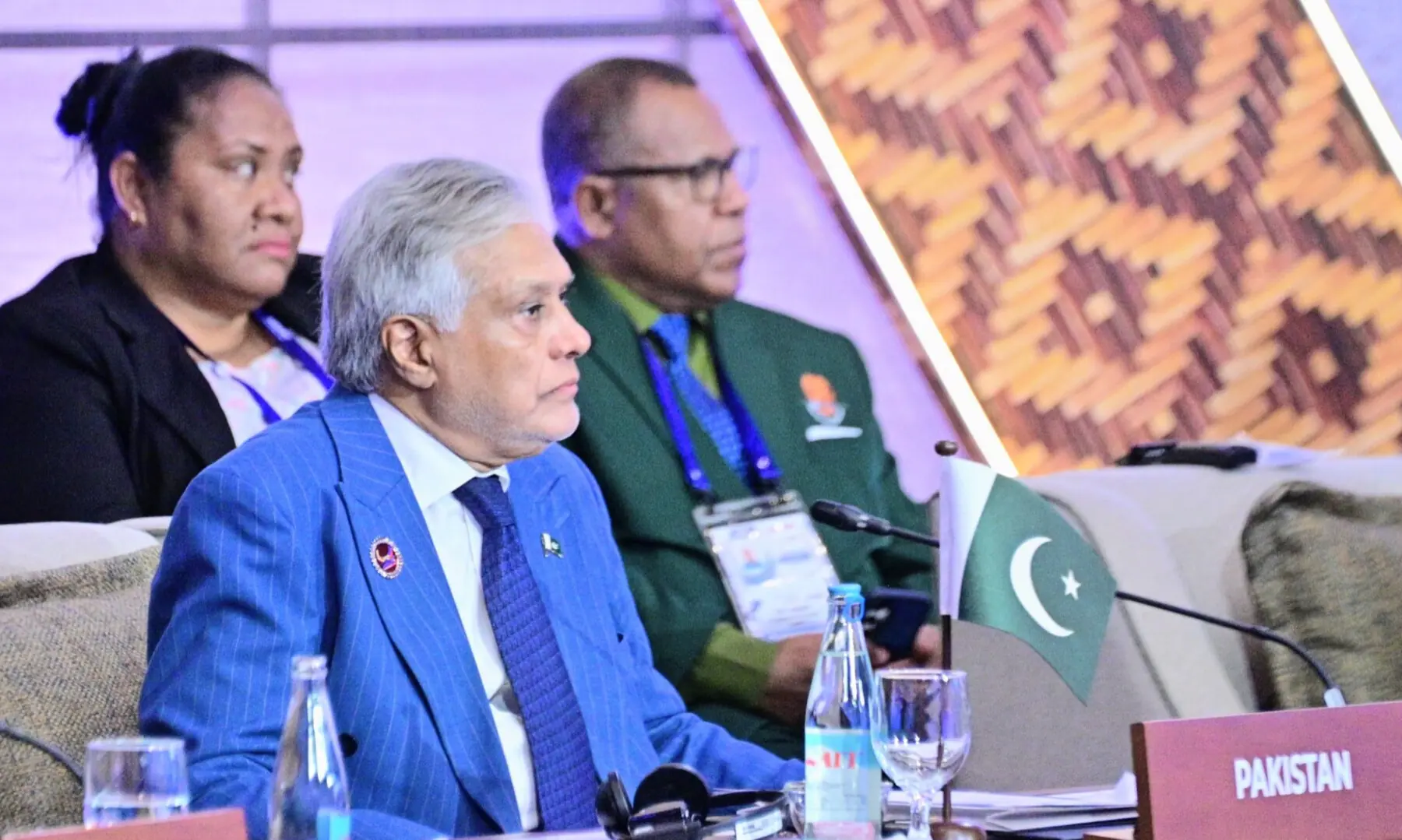
Deputy Prime Minister and Foreign Minister Ishaq Dar on Thursday drew attention to key challenges threatening peaceful coexistence and stability across the world, listing the Kashmir dispute and India’s threats to Pakistan’s water share among them.
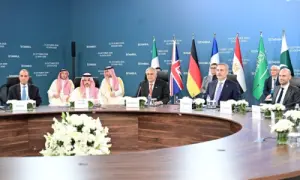
He made the remarks at the 33rd ministerial meeting of the Asean Regional Forum (ARF) held in Manila, the Philippines.
Foreign ministers and delegates from 27 member states of ARF gathered for the summit, which comes amid a flare-up in the war between the United States and Iran. The conflict is a key concern for the 11-nation Asean, which has a combined gross domestic product of about $3.8 trillion heavily reliant on Middle East oil.
Addressing the meeting, DPM Dar highlighted eight key challenges that he said “continue to threaten peaceful coexistence, stability and our livelihoods across the region and the world”.
“Any delay in addressing these challenges will only undermine our collective efforts to achieve peace, stability and prosperity across our regions and beyond,” he said.
Noting the “continued failure” to resolve longstanding disputes in South Asia, he particularly called attention to the Jammu and Kashmir dispute as “the heart of regional instability”.
He said that Pakistan continued to advocate for a “just and peaceful” settlement, in line with the United Nations Charter and resolutions as well as the aspirations of the Kashmiri people.
The deputy premier also expressed concern once again over India’s decision to unilaterally place the Indus Water Treaty (IWT) in abeyance after hostilities flared up between the two nations last year.
“We simply cannot afford to let this serious provocative development remain unaddressed,” Dar said, urging the entire international community to support a peaceful resolution to the issue.
The issue of water has remained a bitter point of contention between the two nuclear-armed nations since May 2025. Earlier this month, the top brass of Pakistan’s army vowed to undertake “all measures necessary” to ensure the availability of Pakistan’s rightful share of water.
US-Iran war and Gaza
Dar also highlighted Pakistan’s role in facilitating a ceasefire between the US and Iran and convening talks at the leadership level between the two arch-enemies after 47 years.
Appreciating the confidence placed in the country by the US, Iran, Gulf countries and others, he said, “These hard-earned achievements through dialogue and diplomacy have created a valuable opportunity to advance lasting peace. We must not let this opportunity slip through our hands.”
He expressed his hope that Pakistan’s efforts to bring peace would contribute to regional stability, as well as the reopening of the Strait of Hormuz and the resumption of normal shipping. He called on the international community to reinforce these efforts through sustained dialogue, diplomacy and constructive engagement.
Thirdly, the deputy premier called attention to the ongoing humanitarian crisis in occupied Palestinian territories, calling it “deeply alarming”.
“Our collective failure to prevent the genocidal streak unleashed in Gaza raises serious questions about our collective conscience as human beings, and about our ability to prevent the continued atrocities in the region,” he said.
FM Dar reiterated Pakistan’s support for Palestinian self-determination and the establishment of an independent, sovereign, viable and contiguous state of Palestine based on pre-1967 borders.
‘Common threat’ of terrorism
DPM Dar also highlighted the issue of terrorism, terming it “a common threat and challenge for all of us in varying degrees”.
“Pakistan has been at the forefront of the global fight against terrorism. No country outside active conflict zones has been sacrificing as [much as] Pakistan,” he said, highlighting that over 90,000 lives had been lost as well as close to $150 billion in economic damages.
Despite all odds, he said, the country was determined to fight against all forms of terrorism. He stressed that this long-term commitment required sustained national efforts and enhanced international cooperation.
In particular, he pointed out the challenge of terrorist groups operating from Afghan soil, naming the Tehreek-i-Taliban Pakistan (TTP) and the Balochistan Liberation Army (BLA) as groups exploiting Afghan territory to launch attacks against Pakistan.
“Pakistan has only one expectation for the Afghan Taliban regime: to not allow Afghan territory to be used for terrorism against Pakistan or any other neighbouring country,” DPM Dar said.
“If they are able to honour these commitments and fulfill their repeated promises, there will be immense opportunity for trade, connectivity and socio-economic development across South Asia, Central Asia and beyond.”
The deputy premier called on the Afghan Taliban regime and abetters of regional terrorism to refrain from allowing Afghan territory to be used in this regard, as well as urging ARF members to support these efforts.
There has been a resurgence in terrorism in Pakistan since the Afghan Taliban returned to power in Kabul in 2021. Islamabad has repeatedly urged the Taliban administration to dismantle terrorist sanctuaries on Afghan soil, particularly those linked to the banned TTP. Officials say those appeals have gone unheeded.
Ukraine war, South China Sea tensions
On the Ukraine-Russia war, Dar expressed the country’s support for diplomatic efforts aimed at a “just and lasting peace”, saying that dialogue and diplomacy were the only path forward.
He also addressed a recent incident in the South China Sea, saying that Pakistan valued its ties with all Asia-Pacific states and urging “non-interference, restraint and engagement”.
Tension is currently simmering between Beijing and close US ally the Philippines over an incident in the South China Sea that led each to summon the other’s ambassador.
Beijing claims sovereignty over almost the entire South China Sea via a line on its maps that cuts into the exclusive economic zones of Brunei, Indonesia, Malaysia, the Philippines and Vietnam, and is at the centre of long-running disputes over a multitude of islands and features.
The deputy prime minister also reaffirmed Pakistan’s commitment to the One-China principle recognising the People’s Republic of China as the “sole legitimate authority” over Taiwan. China claims Taiwan as its own territory, which Taiwan rejects.
Climate change
Finally, the minister addressed the issue of climate change, noting that Pakistan remained among the countries most vulnerable to its effects despite being responsible for less than one per cent of emissions.
He highlighted the country’s “ambitious” climate agenda and called for enhanced international cooperation to address what he termed a “common global challenge”.
The deputy premier called on the forum to strengthen its preventive diplomacy role by remaining “dynamic, forward-looking and focused on practical action”.
Dar welcomed the adoption of the Manila Plan of Action 2026-2036 and reaffirmed Pakistan’s commitment to its implementation as well as the ARF’s principles and objectives.
“As we move forward, let us renew our collective resolve to build a peaceful, inclusive and resilient region where sovereign equality, mutual respect and dialogue remain a foundation of our shared future,” he concluded.
Meetings with other FMs
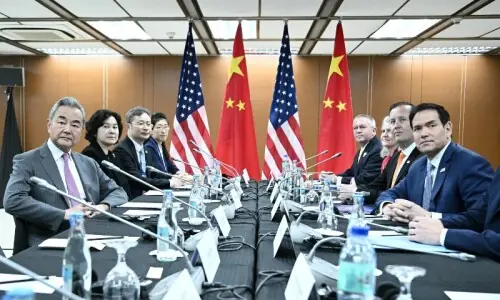
On the sidelines of the ministerial meeting today, the deputy premier also held bilateral meetings with his counterparts from several participating ARF member states.
These included Oman’s FM Badr Albusaidi, New Zealand’s FM Winston Peters, Australia’s FM Penny Wong, and the United Kingdom’s newly appointed foreign secretary Ed Miliband.
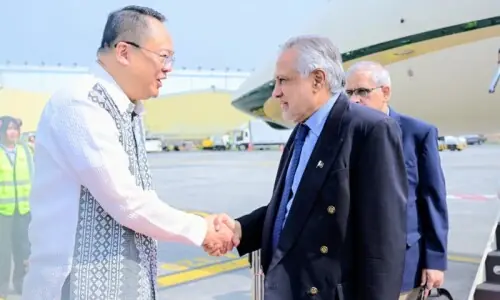
Dar arrived in Manila on Wednesday. He met with the foreign ministers of Russia, Bangladesh, Sri Lanka, as well as Asean Secretary-General Dr Kao Kim Hourn and the European Union’s top diplomat Kaja Kallas.
He also attended a dinner meeting hosted by Egypt’s FM Dr Abdelatty, where the two ministers held wide-ranging discussions.
The DPM visited the headquarters of the Asian Development Bank (ADB), where he met with the bank’s Vice President (South, Central and West Asia) Yingming Yang, Vice President (Sectors and Themes) Fatima Yasmin, and Executive Director for Pakistan Nashita Mohsin.
“Established in 1994, the ARF has remained a pivotal platform for multilateral consultations on regional security issues. Since becoming a member in 2004, Pakistan has maintained an active role within the forum, consistently offering constructive contributions to its regional programmes and objectives,” the FO noted on Tuesday.