Israel launches fresh strikes in Lebanon despite truce


 0
0

• Two injured in new wave of air raids reported across southern towns
• Over 646,000 displaced Lebanese return home, while nearly 500,000 remain unable to go back
• Rights groups raise concerns over justice provisions, long-term civilian displacement risks
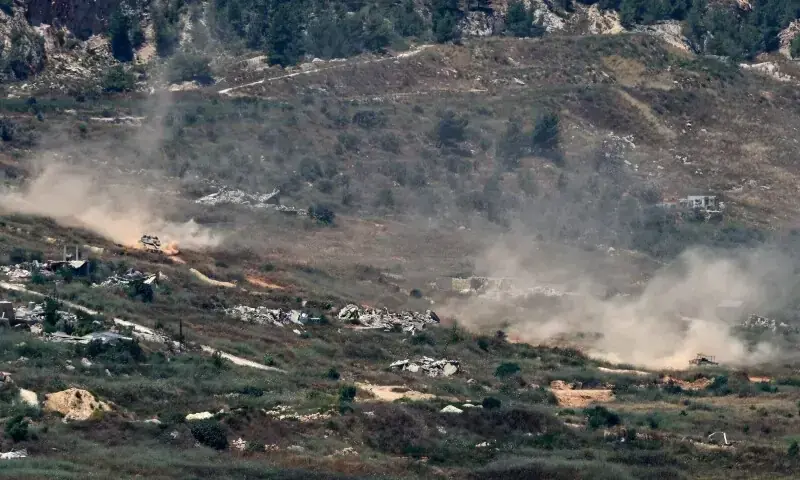
BEIRUT: Israel continues to attack southern Lebanon, launching fresh air strikes and refusing to withdraw its forces from occupied Lebanese territory, despite a recent US-sponsored ceasefire framework agreement being in place to pave the way for a permanent end to the war.
The Lebanese state-run news agency reported that Israeli forces carried out at least three strikes on Thursday night.
The attacks hit near the town of Baraachit in the Bint Jbeil area, as well as in Nabatiyeh Al-Fawqa. The agency also reported two injuries in an Israeli strike on the town of Seddiqine near Tyre.
Meanwhile, the Israeli military said on Friday it had hit several Hezbollah targets in southern Lebanon a day earlier.
The army claimed the sites in Bint Jbeil, Beit Yahoun, Kounine and Baraachit “were used by Hezbollah to advance attacks against IDF soldiers”.
Israeli officials have repeatedly ruled out withdrawing troops, maintaining that any departure would happen only after Hezbollah has been disarmed across Lebanon.
Israeli Prime Minister Benjamin Netanyahu visited troops in southern Lebanon on Tuesday, vowing that his country’s forces would stay in the area as long as Iran-backed Hezbollah remained a threat.
The deal between Israel and Lebanon makes any Israeli withdrawal from occupied Lebanese land conditional on Beirut disarming Hezbollah, starting with “pilot zones” that the Lebanese military will take over.
Lebanon was drawn into the Middle East war on March 2 when Hezbollah fired rockets at Israel to avenge the killing of Iran’s supreme leader in US-Israeli strikes.
Since then, heavy Israeli airstrikes and a ground invasion have killed around 4,300 people in Lebanon, according to local authorities. In the same period, the Israeli military reported 38 soldiers and one civilian killed.
Meanwhile, the continued military occupation has stalled regional recovery. In a report on Thursday, the IOM said “646,107 IDPs (internally displaced persons) have begun returning to their communities”, while about 500,000 other people remain displaced, based on data collected in coordination with local authorities since June 22.
An agreement signed by Tehran and Washington last month established a ceasefire in Lebanon starting June 21. Since then, hundreds of thousands of people have returned to their homes in southern Lebanon and Beirut’s southern suburbs.
Lebanese authorities say they have worked to remove informal tent encampments in and around Beirut and reduce the number of official shelters.
But it remains impossible to return to dozens of towns and villages near the southern border, many of which have suffered massive destruction.
Human rights organisations are sounding the alarm over the US-backed framework. Amnesty International and five other non-governmental organisations warned on Friday that the agreement “threatens to betray war crimes victims in Lebanon”.
They argued parts of the text aim to prevent victims of international crimes from seeking justice, adding that the document seems to “acquiesce to the prolonged and indefinite forced displacement of tens of thousands of residents of vast swathes of southern Lebanon occupied by Israeli forces”.
Reacting to criticism of the agreement, particularly from Hezbollah, Lebanese President Joseph Aoun insisted on Friday that the document “does not legitimise the continuation of the Israeli occupation in Lebanon”.
He said the absence of a set timetable was because it is merely a “framework formula” rather than a finalised peace deal. “Our shared objective is one: to secure Israel’s withdrawal,” Aoun said.
Aoun responded to human rights groups’ criticisms of Article 13 of the agreement by adding that it affirms the suspension of legal proceedings between states but “does not preclude” private entities from pursuing legal action.
Published in Dawn, July 4th, 2026