0
0

LAHORE: As an Uzbek delegation meets the Punjab Livestock Department authorities on Friday (today) to seek import of halal meat and live animals, the domestic meat processing industry is alarmed, seeing the move as an existential threat to the local investment and employments.
In a ‘reactionary’ note to the federal and provincial authorities, the All-Pakistan Meat Exporters and Processors Association (APMEPA) has called for rejecting live exports in favour of high-value processed halal meat. It cautions that selling animals in raw form transfers massive economic value, jobs, and industrial activity straight to importing countries.While live exports might offer a quick influx of foreign exchange, it warns of severe long-term consequences for local consumers and food security.
“Exporting live animals would drain the local market of high-quality, slaughter-ready livestock, driving up local meat prices and aggravating food inflation.”
Also, exporting top-tier breeding animals risks crippling the future productivity and health of Pakistan’s national herd, while unregulated livestock procurement could weaken disease traceability and animal health monitoring, it argues, adding that timing of the proposed policy is particularly damaging to local modern industrial footprint.
The association says the country has recently poured massive investment into state-of-the-art abattoirs, deboning units, and internationally recognised halal certification systems. These facilities require a steady, predictable supply of livestock. A shortage would slash plant utilisation, spike production costs, and actively erode Pakistan’s edge in the global halal market.Pakistan’s processed meat exports hit a scalable Rs113bm between July and March of the 2025-26 fiscal year.
APMEPA President Abdul Hannan emphasises that a single animal supports far more than just the meat industry as by-products like hides, skins, bones and organs act as critical raw materials for leather manufacturing, pharmaceuticals, gelatin production, animal feed, and pet food, besides other sectors.
“Retaining the animals for local processing creates a multiplier effect, sustaining jobs in veterinary services, quality assurance, packaging, and cold-chain logistics,” he added,
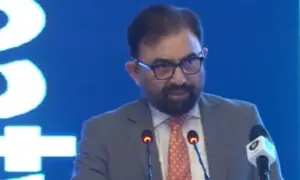
The Pak International Business Forum (PIBF) has also expressed serious concern at the government’s likely policy. Its President Dr Mushtaq Mangat said such a practice undermines local meat processing industry, reduces value addition, and deprives the country of much-needed export earnings and employment opportunities. He said that Pakistan should focus on exporting processed and value-added halal meat instead of live animals.
Published in Dawn, July 3rd, 2026