0
0

India’s Adani Group and Abu Dhabi’s International Holding Company (IHC) are looking to invest $11.5 billion in a massive aluminum project in the eastern state of Odisha, the Indian conglomerate said on Thursday.
The two parties signed a memorandum of understanding with the Odisha state government, Adani said in a statement, with the proposed investment set to be India’s “largest foreign direct investment in the metallurgy sector”.
The statement said the Odisha project will see Adani Enterprises Limited and an IHC subsidiary form a 50/50 joint venture.
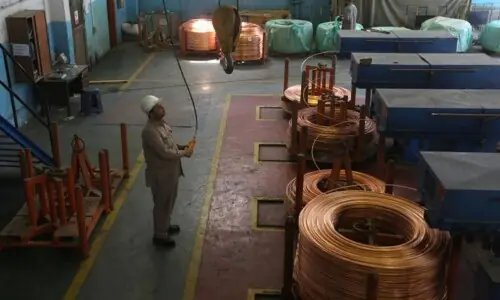
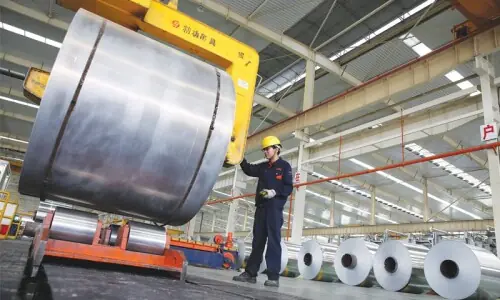
The project itself will consist of a refinery that can produce four million metric tonnes of aluminium per year, a smaller-capacity aluminum smelter and a 4,000-megawatt captive power plant.
The project is expected to create 53,500 jobs, with 35,000 during construction and another 18,500 once operations begin, an official said at the MoU signing ceremony.
Odisha, home to some of India’s largest bauxite reserves used to produce aluminum, accounts for 54 per cent of the country’s aluminum output.
“This partnership with Adani Enterprises reflects that strategy and our shared ambition to develop a world-class integrated aluminium project that creates lasting economic value,” Syed Basar Shueb, chief executive of IHC, said in a statement.
The investment comes as India seeks to expand domestic aluminium production to meet growing demand from the infrastructure, power, transport and renewable energy industries, while reducing reliance on imports of value-added metal products.
While New Delhi is the world’s second-largest producer of aluminum, it still depends on imports to keep up with booming demand from local industries.
Last year, Indian policymakers unveiled a strategic plan to boost domestic output by scaling up production six-fold by 2047 and doubling the national aluminium recycling rate.
Four years ago, India and the UAE signed a broad trade and investment pact that would eventually cut all tariffs on each other’s goods and aimed to increase annual trade between the two nations to $100 billion within five years.