0
0

ISLAMABAD: Consumer inflation eased slightly to 11.1 per cent in June from 11.7pc in May, mainly due to lower prices of energy and essential food items, according to data released by the Pakistan Bureau of Statistics on Wednesday.
The modest decline suggests that recent cuts in petrol and diesel prices have provided some relief to households. The government, however, has yet to fully pass on the benefit of lower international oil prices to consumers, limiting the overall reduction in inflationary pressures.
On a month-on-month basis, inflation dipped 0.3pc in June, compared to the previous month. Inflation was recorded at 7.05pc during the July-June (FY26) period, significantly higher over the 4.49pc during the corresponding months of FY25. The government has projected a revised inflation target of 7.5pc for the current fiscal year (FY27).
The continued increase in monthly inflation, measured by the Consumer Price Index (CPI), has pushed it beyond the earlier projection, mainly because of unprecedented increase in prices of petroleum products.
Non-food inflation in June reaches 13.1pc in urban and 12.3pc in rural regions
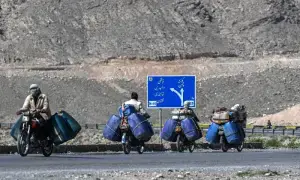
Even though energy prices were revised downward drastically last month, the impact on overall inflation has been minimal. The slight relief in prices during June was largely driven by a fall in transport charges, which declined by 7.22pc in June over the previous month.
Transport charges rose 25.72pc last month over those in June of the previous year.
Non-perishable food items saw a sharp increase of 10.21pc, highlighting volatility in demand for essential commodities. Housing, water, electricity, gas and fuels registered a 15.5pc increase, adding further pressure on household budgets.
The central bank raised its policy rate to 11.5pc from the previous 10.50pc in response to rising inflation. It was kept unchanged at 11.50pc.
The data showed that urban inflation stood slightly higher at 11.2pc, compared to 10.9pc in rural areas.
On a monthly basis, urban prices decreased by 0.5pc, while rural inflation posted no change. Food inflation in June increased by 8.2pc in urban areas and 9.4pc in rural areas.
On a month-on-month basis, food inflation increased 1pc in urban areas and 0.9pc in rural areas. Non-food inflation reached 13.1pc in urban areas, and 12.3pc in rural regions.
The trend indicates that non-food inflation remains very high and is steadily on the rise over the past few months.
Core inflation, which excludes volatile food and energy components, was recorded at 8.7pc in urban areas and 7.9pc in rural areas.
Urban food items, which saw notable month-on-month price increases, included tomatoes (90.10pc), onions (20.80pc), potatoes (17.76pc), fresh vegetables (12.55pc), wheat flour (2.17pc), wheat products (2.12pc), vegetable ghee (1.85pc), wheat (1.72pc), cooking oil (1.53pc) and milk fresh (1.27pc).
Decline was observed in prices of chicken (22.44pc), eggs (10.74pc), pulse moong (1.04pc), pulse mash (0.98pc), beans (0.89pc), besan (0.64pc), pulse gram (0.38pc), fish (0.37pc) and pulse masoor (0.20pc).
The non-food categories saw significant price hikes, including newspapers (14.84pc), washing soap/detergents/match box (1.96pc), liquefied hydrocarbons (1.79pc), tailoring (1.74pc), major tools & equipment (1.66pc), cotton cloth (1.60pc), medical tests (1.48pc), doctor (MBBS) clinic fee (1.47pc) and furniture & furnishing (1.21pc).
Published in Dawn, July 2nd, 2026