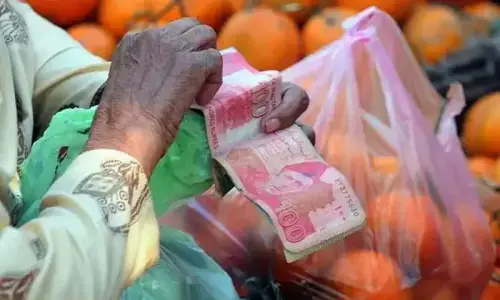
ISLAMABAD: From a fresh peak of 12 per cent inflation in June, the government expects easing inflationary pressure in 2026-27 following opening of the Strait of Hormuz as peace efforts take shape.
“With geopolitical tensions expected to ease following the US-Iran ceasefire, Pakistan’s economic outlook for FY27 is expected to improve further, supported by reform continuity, stronger confidence and a more enabling pro-business environment,” said the Ministry of Finance (MoF) in its Economic Update and Outlook for June.
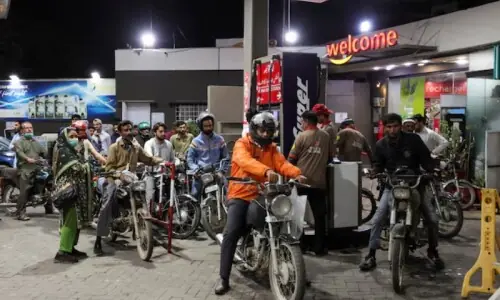
It said the recent easing of geopolitical tensions, due to the ongoing peace efforts in the Middle East, had improved global market sentiment. Consequently, international crude oil prices had eased from their recent highs. This was expected to reduce imported inflationary pressures and help lower domestic fuel and transportation costs, the MoF noted.
While anticipating the June inflation (measured by Consumer Price Index) to remain within the range of 11-12pc, the ministry said the lower international oil prices would be supporting Pakistan’s external account by containing the oil import bill.
Finance ministry cites ceasefire, reform continuity and lower imported inflation for growth
At the close of 2025-26, the MoF said the macroeconomic stabilisation had largely been achieved and the economy was now expected to maintain its growth momentum, supported by improving macroeconomic fundamentals, sustained expansion in manufacturing, especially LSM, a stable external account, improved fiscal discipline and continued resilience in the agriculture sector.
On the domestic front, prudent macroeconomic policies, continued fiscal consolidation, and targeted support for productive sectors are expected to sustain economic growth while preserving macroeconomic stability, it said, adding that the external sector outlook had also strengthened further, supported by record workers’ remittances in May and continued growth in IT exports.
Robust workers’ remittance and IT exports, it said, were expected to reinforce the balance of payments, support foreign exchange reserves, and enhance resilience against external shocks.
“Overall, with geopolitical risks receding, global energy prices moderating, inflationary pressures easing and external buffers improving, Pakistan’s economic outlook remains favourable, with growth expected to strengthen while maintaining macroeconomic stability,” it said.
It said the national economy was concluding FY26 on a stronger footing, with improved macroeconomic stability and sustained recovery in economic activity. Real GDP growth has reached 3.7pc, the highest in four years, while the size of the economy has expanded to $452.1 billion.
Despite early year flood-related disruptions and subsequent volatility in global commodity markets, stabilisation gains were preserved, growth remained broad-based across agriculture, industry and services, and average inflation stayed in single digits within the target range, the ministry said.
Fiscal performance also remained encouraging, underpinned by effective expenditure management, revenue mobilisation and provincial surpluses, which helped narrow the fiscal deficit and achieved a primary surplus of 3.5pc of GDP during 10MFY26.
The external sector also remained stable, supported by sustained growth in remittances and IT exports, a broadly stable exchange rate, and improved foreign exchange reserves and import coverage.
Published in Dawn, July 1st, 2026