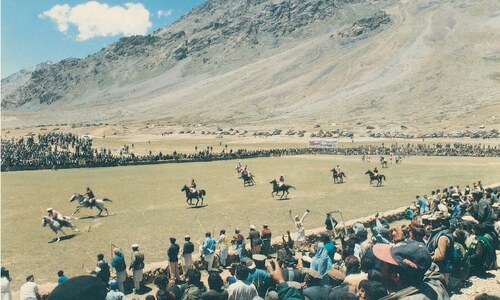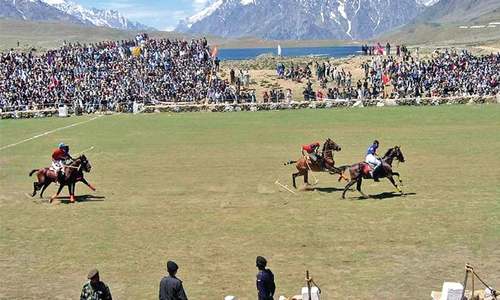
CHITRAL: The residents of Laspur valley in Upper Chitral have complained that the population of yaks began to decline in the area when Shandur festival was started in 1982.
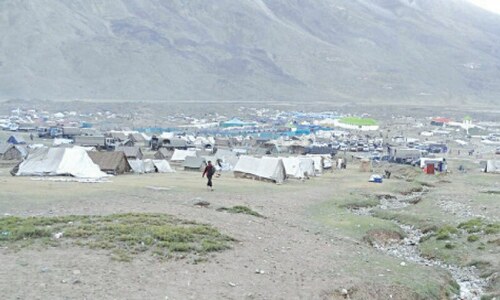
They said that thousands of people thronged the area to enjoy the festival, leaving behind a huge amount of solid waste.
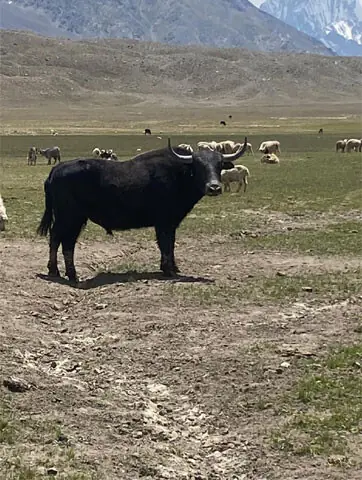
Talking to journalists here, a political and social figure from Harchin Laspur, Suharwardi Khan Yaftali, said that the livelihood of people was livestock rearing, especially the famous Tibetan-breed yak, known locally as “Zogh” which they sold for hard cash and consumed its milk and flesh as powerful nutrition but a significant decrease in its number was being noticed.
He said that yak was raised in every household of the valley and was used for farming and transportation purposes in the past when mechanised farming was not known in the area. Local rugs, carpets and ropes for carrying loads were prepared from its strong and thick hair, he added.
Residents claim 15 animals died after the recent polo festival
“The milk of this animal is extremely thick and highly nutritious, from which butter, cheese and other dairy products are prepared. Additionally, its meat is considered to have high nutritional qualities, containing relatively low levels of fat and cholesterol,” said Mr Yaftali. He added that it was part and parcel of local culture.
Citing the Shandur festival as the main reason for the decline of yak population in the valley, he said that at the conclusion of the festival, massive amount of garbage was left behind in the polo ground and its surrounding areas.
“During the course of grazing, yaks and other livestock consume plastic, leftover food and other harmful materials present in this waste, resulting in various fatal diseases,” he said.
He said that the natural habitat of yak was constantly disrupted. “The serene pastures, where these animals have thrived for centuries, are losing their original form over time. The increasing human activities, tourism pressure and environmental pollution have severely affected their habitat, forcing these rare species to face new survival challenges,” he said.
Mr Yaftali said that yaks had the habit of grazing freely in open pastures and fields in a clean environment. He said that the animal preferred cleanliness and a natural environment but the worst type of pollution left behind in Shandur, the main grazing field, had threatened it.
He said that as per calculations of locals, they lost about 50 per cent of yaks during the past four decades when the three-day festival was declared a calendar event of the year and came to be held regularly.
Yousuf Shahzad, a resident of Sor Laspur and retired government officer, said that Shandur was the major pasture of the valley consisting of the villages of Gasht, Harchin, Balim, Raman and Brok. He said that people sent their yaks there for free grazing during the five months of summer and early spring seasons.
He said that the festival divested them of their grazing land without hindrance while the government was yet to devise any plan for solid waste management in the area, which was being portrayed as ‘the highest polo ground of the world’.
Mr Shahzad said that diseases broke out in the valley soon after the festival when the animals consumed contaminated solid wastes in the pasture but the government never rushed to the rescue and farmers suffered in such case while in the aftermath of it, the number of yaks declined largely.
He said that the death of more than 15 animals was reported from the pasture of Shandur after the recent festival that continued from June 11 to 13.
Published in Dawn, July 1st, 2026