ARE the days of the government numbered? This is a question (or gossip) in Islamabad these days; I call it ‘a question’ because it is not the only one, which in itself reveals that it has its takers and its critics. Though this is an issue never far from anyone’s mind in this city (or Pindi) no matter which government is in place, this particular session of the debate in public was sparked by the column of senior journalist Sohail Warraich. The operative part of the column was his prediction that the government’s downfall would begin in July. Since then, he has been clarifying or explaining this prophecy in articles as well as interviews.
Many are eager to latch on to his views while others argue against it equally passionately. The former point out, as did the column writer himself, about the government’s lack of success on the economic front and its inability to gain popularity. The government has little to offer other than its mantra of stability for five years or so. And this is frankly of little consolation to people who have experienced back-breaking inflation and a slower-than-a-tortoise economy for the past so many years. Even less needs to be said about the PML-N’s lack of popularity. Even those who can’t stop waxing lyrical about the ‘success’ of Maryam Nawaz as chief minister cannot argue that she has made the party popular.
On the other hand, those who feel the government is on solid ground point out the comfortable relationship between the prime minister and the military leadership. This is more than a hybrid regime now; it is one in which the civilian side takes no risks and asserts no power. There is only one side writing on the page, the other is simply following the moving finger. The ‘same page’ is far too dicey a proposition. They also point out the disaster that is the PTI, bereft of any political strategy to woo over those in power. So why would there be any rift or disagreement, ask those on this side of the argument.
However, it needs be said that even those who don’t think the government is in any danger concede the economic fragility in the country. The docility of the prime minister and his generosity in giving credit where it is due might be unprecedented but perhaps so are the economic challenges facing the country and the pressures on the more vulnerable classes. And this is exactly why arguments such as those made by Sohail Warraich, and others, might sound credible, even if — as he himself says — he has no information, just analysis. Those who disagree with this sound far more confident, for they have spoken to the powers that be and heard their assurances with reference to the strong position of the government. But the argument that the government is in danger could simply be an assessment based on experience rather than knowledge.
The populace perhaps has a shorter tolerance level and the establishment understands that.
The Pakistani establishment has considerable institutional expertise in managing public expectations and anger. Or so it had always seemed in the past (other than 1971). And this has manifested itself in two ways. The first is their ability to accept popular parties into the mainstream. This was true of the PPP in 1988, after the death of Ziaul Haq. Despite distrust of the party, which meant forcing Benazir Bhutto to accept certain cabinet choices and hindering her government, she was allowed to take power. And this was equally true in 2007. In other words, unpopular governments or those with a questionable mandate are not kept in power indefinitely and popular parties are accepted, regardless of misgivings, which then causes considerable instability in civilian governments. It usually happens when the institution becomes uncomfortably aware of its unpopularity and feels the need to assert its more ‘professional’ role to gain acceptability.
This decision is linked to the second factor — governments especially those brought into power through questionable elections don’t necessarily complete their terms. Back in the 1990s, the first PML-N government (brought to power in a heavily rigged election) was sent home and replaced with the PPP which, too, was sent home before time. Post Musharraf, governments completed their terms but only till the elections were largely seen to be fair, till 2018, when the electoral exercise became far too controversial and unfair. The resultant PTI government was sent packing in 2022. There are specific political issues for why each government was sent packing but it can also be argued that these quick changes prevent the building up of a pressure cooker like situation.
Unpopularity in itself doesn’t necessarily lead to organised outrage; longevity also acts as a catalyst that brings disparate forces and organisations to join hands. The riots which led to the ouster of Sheikh Hasina didn’t just happen because she had become unpopular but also because of her long reign of nearly 15 years. Similar longevity was linked to the widespread protests against Hosni Mubarak, which the military he had led did not push back against.
In Pakistan, the populace perhaps has a shorter tolerance level and the establishment understands that. Musharraf was struggling with unpopularity within seven years, a fact his institution took advantage of.
As a result, those who remember what has happened in the past are now asking questions about what the Shehbaz Sharif government has to show after presenting five budgets. And other than not picking a fight with those who brought the government to power, it has also done little to bring any legitimacy to the set-up. So the steam continues to build up. And despite the ‘sab acha hai’ (all’s well) mantra on news channels, it is evident to everyone.
It is a simple assessment that should also not escape some of those ruling Pakistan right now; and this includes those in Islamabad, Pindi and some of us who watch politics. Whether it shapes policy is another matter — and better known by those who have powerful zaraaye (sources).
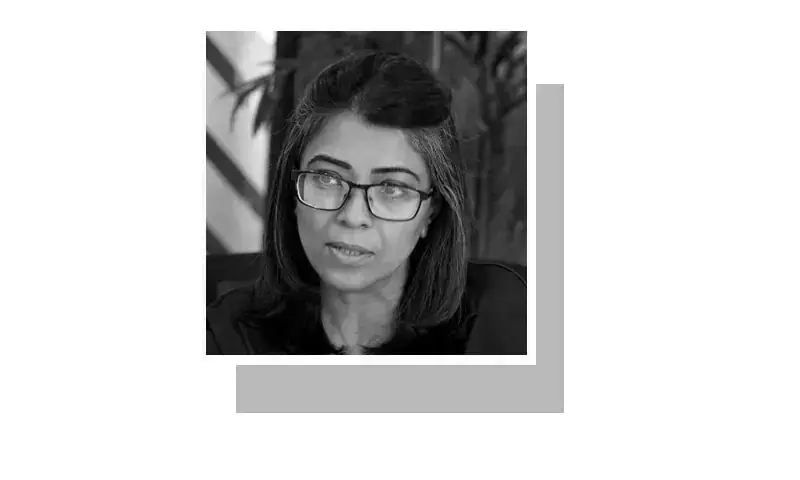
The writer is a journalist.
Published in Dawn, June 30th, 2026