
We term sexual assault as a crime of sex. It is not. It is a crime of power.
The drama serial Case No 9, which concluded earlier this year, forces us to sit with an uncomfortable clinical truth: rape is not just a moment of violence. It is a relational catastrophe that rewires the survivor’s nervous system, hijacks her family’s psychological safety, and reveals the rotting infrastructure of a patriarchal society.
Kamran Haider (Faysal Quraishi), a wealthy business tycoon, does not just assault his sales head, Sehar Moazzam (Saba Qamar). He demonstrates a textbook case of omnipotence — the belief that power exempts him from consequence.
THE SURVIVOR’S MIND
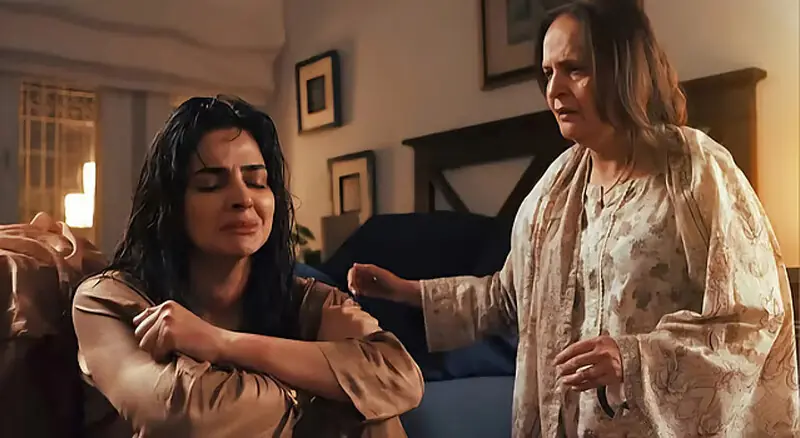
Sehar suffers not just from post-traumatic stress disorder (PTSD), but from complex trauma caused by ongoing betrayal. Here is what happens inside her head:
Hyper-vigilance: Her nervous system is always on alert. Any male voice or sudden movement triggers fear; she cannot relax.
The recently concluded drama serial was more than a courtroom drama. It was a psychological study of trauma, entitlement and the social structures that protect powerful abusers while abandoning survivors
Intrusive re-experiencing: The assault replays not as memory but as a present-tense invasion. Smells, sounds, even a particular quality of light can send her back to Kamran’s house. This is a brain stuck in survival mode.
Moral injury: The deepest wound is not physical. It is the violation of her fundamental belief that the world is predictable and just. When the police question her, when the hospital staff doubts her, when her mother hesitates — each betrayal deepens the injury. She begins to wonder: was I the criminal? Was my reporting of it the real offence?
Dissociation: To survive, her mind learns to leave her body. She watches herself from outside. This is not madness. This is her psyche building a life raft. But the cost is high: she loses access to her anger, her voice and her right to demand justice.
Shame is the core toxin: Unlike guilt (“I did something bad”), shame says, “I am bad.” I deserved this. This is why survivors blame themselves and withdraw. Shame is the internalised voice of a society that trained her to say “yes” to dinner invitations but never taught her how to say “no” to a powerful man’s entitlement.
When Sehar asks herself, “Why did I accept the dinner invitation?” — that is not her voice. That is the voice of every uncle, every neighbour who has ever asked a survivor: what were you wearing? Why were you there? Why didn’t you scream?
THE PERPETRATOR’S MIND
Kamran is not a monster. Monsters are exceptions. Kamran is a product of a system that has never told him no.
Grandiose entitlement: He believes his wealth, his position and his gender grant him access to anyone he desires. He does not see Sehar as a person but as a resource.
Lack of empathy: This is the selective deactivation of empathy for those he defines as beneath him. He can love his children. He can charm his wife. But Sehar is not in his circle of moral concern. She is an object.
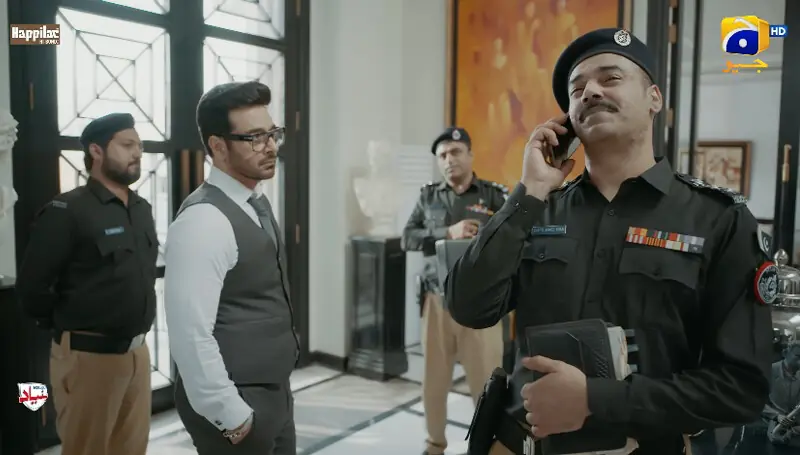
Omnipotence delusion: The most dangerous feature. Kamran genuinely believes he is untouchable. When Inspector Shafiq (Gohar Rasheed) takes his bribe or when his lawyer Bukhari (Noor ul Hasan) manipulates witnesses, each moment confirms his delusion.
Narcissistic rage when exposed: When Sehar fights back, he does not feel remorse. He feels insulted. His retaliation is not a defence. It is a punishment for the crime of challenging his omnipotence. This is the dark psychology of the powerful perpetrator: he does not see himself as a criminal. He sees himself as a man defending his rightful place.
THE FAMILY’S SECONDARY TRAUMA
Trauma is contagious. When Kamran rapes Sehar, he does not wound only her. He wounds her entire family.
Her mother, Shaheena (Hina Bayat) and brother Saad (Ahmed Randhawa) initially urge silence. This is learned helplessness — the desperate calculation that silence is safer than the alternative. They have watched other families get destroyed by the justice system. They know the math: powerful man plus poor family equals destroyed survivor.
Their silence is a second abandonment. Though her father eventually supports her, the damage is lasting.
WHEN PATRIARCHY BECOMES POLICY
Case No 9 shows rape is not an aberration but the result of entrenched patriarchy. Patriarchy is not just men having power. It is a system that teaches women to be polite, accommodating and afraid of saying no.
It teaches men that their desires are entitlements, trains families to prioritise “honour” over justice, rewards wealth and power, not truth, and punishes victims who speak and rewards perpetrators who lie.
Every character in Case No 9 who hesitates, who looks away, who takes bribes — they are not villains. They are functionaries of a degraded system. Inspector Shafiq does not hate women. He simply values money more than justice.
Bukhari, the lawyer, doesn’t believe Kamran is innocent. He believes the system is rigged, so why not profit from it? Rohit, his friend, does not approve of rape. He just cannot afford to lose his business partnership. Shazia, the paid con woman, does not support Kamran. She is surviving the only way patriarchy has taught her: by aligning with power.
This is not a moral collapse from the outside. This is decay from within — a society that has normalised the transaction of justice.
WHY “NO” IS NEVER ENOUGH
Sehar is a successful sales head. She is educated. She has a supportive friend. She is not naive. Yet, she is vulnerable because vulnerability is not about individual strength. It is about systemic power asymmetry.
This is what Western #MeToo discourse often misses: consent is not just about a single moment of “yes” or “no.” It is about whether your refusal will be backed by consequences. Sehar can say no. But without a system that believes her, protects her and punishes him, that “no” is performative. It is permission for the audience to blame her when things go wrong.
Case No 9 shows us that a woman’s vulnerability is not her failing. It is the design of a system that was never built to keep her safe.
THE RUPTURE: WHEN JUSTICE (ALMOST) ARRIVES
The drama offers a rare interruption of this cycle. Not a magical cure, but a rupture.
Kamran’s wife Kiran (Rushna Khan) finds evidence. Her internal battle — love versus conscience — is the drama’s most quietly radical arc. She chooses truth. SP Zohaib (Kamran Jeelani) investigates despite pressure. Barrister Beenish (Aamina Sheikh) offers not just legal strategy but therapeutic witnessing — she believes Sehar without condition. Ali (Ali Rehman), Sehar’s ex-husband, refuses to testify against her character. In a patriarchal culture, this is extraordinary. A man who could have destroyed her with a single lie chooses grace instead.
These ruptures matter. They show that the system is not monolithic. Individuals can choose differently. But they also show how exhausting justice is — how many good people must fight for years to undo the damage of one powerful man.
HEALING: WHAT SURVIVORS ACTUALLY NEED
Case No 9 is not a fairy tale. Sehar’s win is cathartic but incomplete. Healing would also require trauma-informed therapy to help regulate her nervous system, peer support, an unconditionally supportive family, a legal system that moves swiftly and a society that stops asking, “What was she wearing?”
Post-traumatic growth is real. Many survivors become advocates, artists and healers. But growth requires safety first. And safety requires a system that no longer protects omnipotence.
TO THE CREATORS: THANK YOU FOR NOT LOOKING AWAY
Shahzeb Khanzada (writer), Syed Wajahat Hussain (director), and Geo have done something rare. They have refused to use sexual violence as a plot device. They have sat with the mess — the police stations, the hospital questions, the family shame, the media circus. They have shown that the real enemy is not just one man. It is a society that has trained itself to disbelieve.
This is not entertainment. This is the journalism of the soul. And for every survivor: your silence was survival. Your voice is power. The system was never built for you — but you can still demand that it change.
The writer is an integrative therapist and founder of Khudi Wellness. She can be reached at shah.n.sarwat@gmail.com
Published in Dawn, ICON June 28th, 2026