0
0

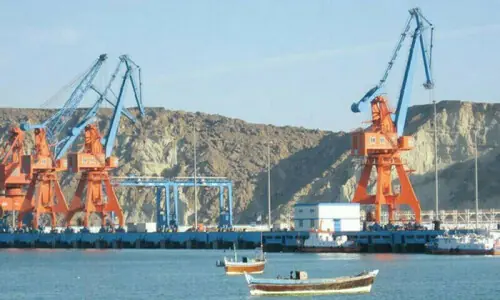
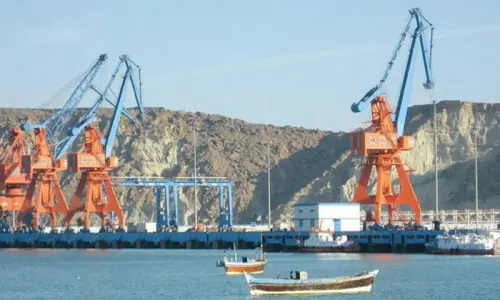
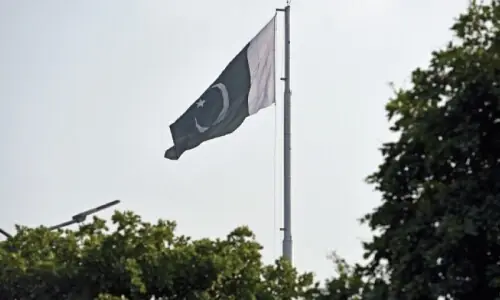
GWADAR has long remained Pakistan’s geoeconomic dream.
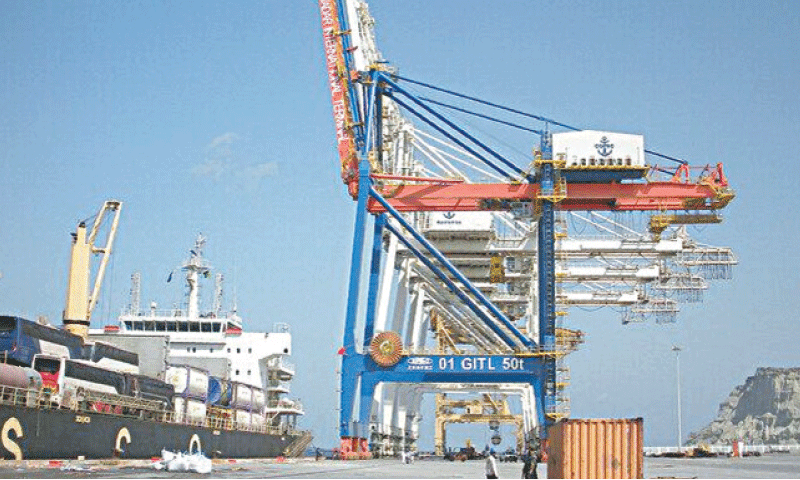
Whenever officialdom thinks of extracting economic advantage from geopolitics, Gwadar is the first image that comes to mind. Yet the port has not realised its promised potential, and the adjoining economic zone still awaits investors.
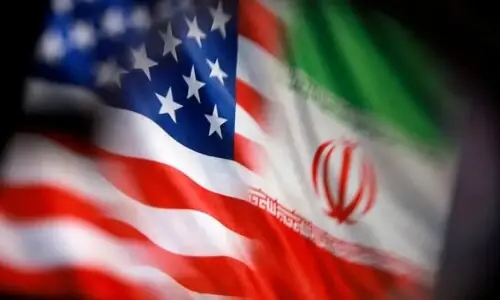
Pakistan’s facilitation of the Tehran-Washington contact generated cautious optimism about a possible geoeconomic opening with Iran. Under the 2008 bilateral agreement on international road transport of passengers and goods, Pakistan has already offered Iran multiple trade routes, including Gwadar-Gabd, Karachi/Port Qasim-Ormara-Pasni-Gabd, Karachi/Port Qasim-Khuzdar-Dalbandin-Taftan, and extended corridors linking Gwadar, Turbat, Panjgur, Khuzdar, Quetta and Taftan. If used, these routes can reduce logistics costs and reconnect Makran with regional trade flows.
Soon after Iranian President Masoud Pezeshkian’s visit to Islamabad, the FBR introduced procedures allowing cross-stuffing of Iran-bound cargo at Pakistan’s seaports and off-dock terminals. The move is expected to benefit Gwadar, Makran and Pakistan’s border trade with Iran.
It can be assumed that such facilitation featured in bilateral discussions. Iran has used the Strait of Hormuz as geopolitical leverage, but chokepoints also impacted Iran as the US naval blockade was costing Iran $500 million daily, resulting in billions in lost oil revenues in just the first few weeks of the tightening restrictions.
The Gulf crisis has reminded all regional states of the need to diversify trade routes. Iran, already facing regional and global constraints, needs alternative corridors; Pakistan is geographically placed to provide them. This opportunity can also benefit Pakistan.
Yet, Pakistan is part of emerging alignments in West Asia that may not always sit comfortably with deeper economic cooperation with Iran. Still, in a region covered in strategic haze, Pakistan’s advantage lies in keeping its options open, building corridors and allowing economics to create space when politics is constrained.
Pakistan’s growing economic engagement with Iran is driven by strategic considerations.
Apart from rapidly changing West Asian geopolitics, Pakistan’s growing economic engagement with Iran is driven by several strategic considerations. Afghanistan remains the first; the need for a more controlled border regime in the context of the Baloch insurgency the second; the long-delayed gas pipeline the third; and the search for alternative routes to Central Asia the fourth.
For decades, Afghanistan appeared to be Pakistan’s natural gateway to Central Asia. However, terrorism and deteriorating relations with Kabul have pushed this ambition to the background. Rawalpindi has lost patience with the security situation across the western border, and, if not abandoned, the dream of reaching Central Asia through Afghanistan has at least been placed on the back-burner.
Interestingly, Pakistan’s strategic community has repeatedly produced grand ideas capable of energising the power elite. Since the Soviet withdrawal from Afghanistan, and even during the war itself, Pakistan envisioned expanding its economic, energy, defence and political relations with Central Asia. Numerous transnational energy and trade corridors were proposed, yet few materialised.
Perhaps Uraan Pakistan is another manifestation of this tendency. The federal government’s National Economic Transformation Plan (2024-29) seeks to place Pakistan on the path to a trillion-dollar economy by 2035 and a higher-income economy by 2047. Within the current power structure, a new strategic vision is echoing. It is titled ‘Three Routes to the World’.
The first, the Blue-Gold Corridor, links Gwadar to Central Asia through Chagai, Herat and Tashkent, offering the shortest land route to the region and a potential corridor for minerals and agriculture. The second connects Gwadar to Mashhad through Iran, relying on existing Iranian infrastructure and offering the fastest and least expensive option. The third, the CPEC-China route, stretches from Gwadar to Kashgar via Islamabad, linking the port to China’s western regions and giving Gwadar renewed strategic relevance in an increasingly uncertain region.
Such visions look good in PowerPoint presentations, but many may not have the capacity to see the constraints and evolve a plan to implement the idea. The power elite is not ready to acknowledge that the Chinese now have reduced enthusiasm for Gwadar and even for CPEC because of security concerns, bureaucratic red tape-ism, and, most importantly, the lack of plans and vision to assess future prospects for the venture.
There is a gap between dreaming and thinking big. The former may involve conceiving grand ideas, but the latter requires plans, institutions and sustained strategies to transform those ideas into reality.
Perhaps the roots of this tendency to dream lie deep in the psychology of Pakistan’s power and intellectual elites. They continue to believe that Pakistan was primarily the product of poet-philosopher Muhammad Iqbal’s imagination, yet they remain hesitant to appreciate the pragmatism of the country’s founder Mohammad Ali Jinnah. From Iqbal, they extract utopianism; from Jinnah, they borrow only fragments of realism.
Dreamers possess a certain luxury. When one dream shatters, another can easily replace it. Yet the strategic vision that dominates sections of the power elite often fails to complement the country’s geoeconomic ambitions. Forget India, with whom Pakistan’s political leadership once envisioned expanding trade and economic cooperation. Afghanistan presents a more revealing case.
Following the Taliban takeover in 2021, Pakistani strategists became optimistic about connectivity with Central Asia through Afghanistan. Central Asian states also appeared receptive to the idea. However, terrorism intervened. Pakistan’s failure to persuade the Taliban to curb the TTP and other terrorist groups gradually transformed optimism into frustration.
Islamabad has not only put aside the idea of reaching Central Asia via Afghanistan, but has also distanced itself from its former partner, the Afghan Taliban.
Iran has now emerged as an alternative gateway to Central Asia. Strategists are no longer merely discussing this option; they have begun implementing it, as evidenced by the first cargo shipments to Uzbekistan via Iranian territory.
The future of West Asian geopolitics remains uncertain, and Pakistan’s place in the emerging regional order is yet to be determined. One can only hope that, in pursuit of new opportunities, Pakistan does not abandon yet another dream, the one now described as the Blue-Gold Corridor.
The writer is a security analyst.
Published in Dawn, June 28th, 2026