PPP takes exception to Khawaja Asif's 'sweeping statement' regarding Kashmiris


 0
0
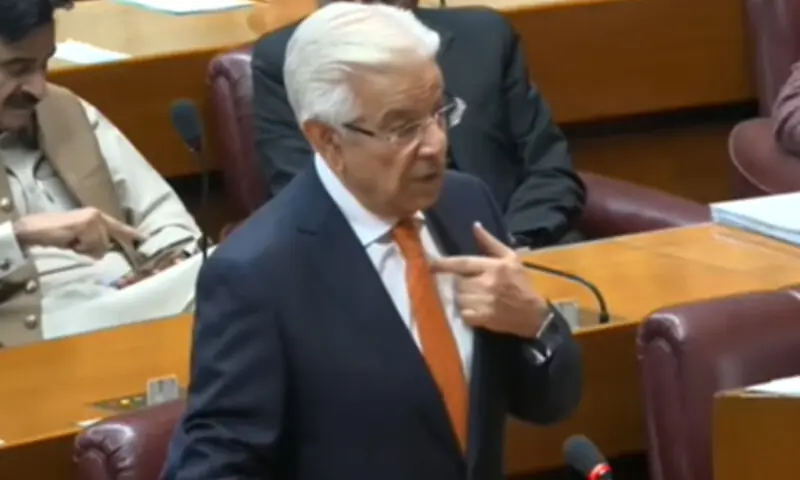

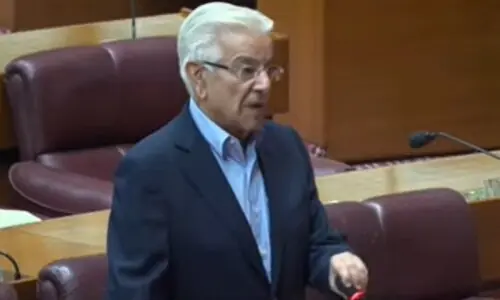
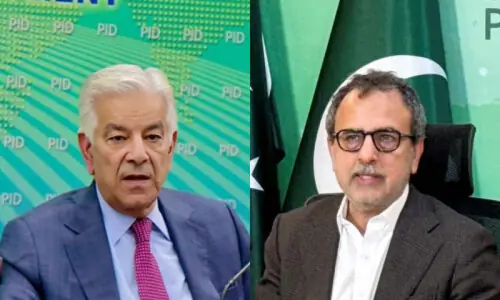
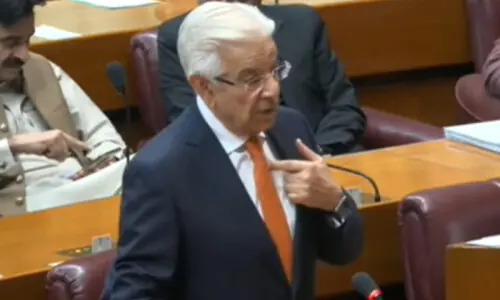
The PPP on Wednesday took exception to a “sweeping statement” by Defence Minister Khawaja Asif regarding the people of Azad Jammu and Kashmir (AJK).
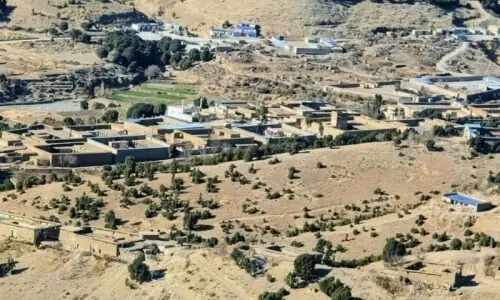
In an interview on a TV show, the minister had said that Rawalakot — which has been in the grip of protests by the Joint Awami Action Committee (JAAC) — is “not Kashmir” and that he did not consider people from there Kashmiris.
Asif had subsequently taken to X to clarify that “Kashmiriat is defined by the sacrifices and struggles waged over almost eight decades by Pakistanis, including Kashmiris and all others, not by birth certificates”.
Speaking in the National Assembly on Wednesday, PPP’s Raja Pervaiz Ashraf said that such a “sweeping statement” should not be given under any circumstances, especially from such a “senior” official.
He said that Asif’s remarks had hurt the sentiments of several people, adding that Azad Kashmir was a “sensitive area” and care needed to be taken before making remarks about it.
He said that “water needed to be poured onto the fire” to address the problems of the Kashmiris. He acknowledged that the government and establishment were trying their best to address the issues of the region.
He said that giving such “irresponsible remarks” was detrimental to the Kashmir cause. He tendered an apology on Asif’s behalf to the people of Rawalakot.
In his remarks, PPP Chairman Bilawal Bhutto-Zardari said that Prime Minister Shehbaz Sharif wanted to bring the country out of difficult situations by “positively engaging” with the coalition partners and the opposition, but some “ministers” were creating problems in the process.
Bilawal said that Pakistan and the region stood at a moment when things were happening “geopolitically”.
“I have voted for the prime minister twice. I acknowledge his work ethic, his efforts, his manners, his intention, the way he engages with the coalition partners and the opposition to bring the country out of difficulties by positively engaging with the coalition partners and the opposition,” he said.
“However, some ministers create issues for him. They always create hurdles in the work of the prime minister rather than helping him,” Bilawal said.
Bilawal acknowledged that the present government and all political parties had tried to resolve the issues in AJK politically.
“The coalition parties, the opposition, and every Pakistani should ask why a minister is still part of the [federal] cabinet after saying, without backing off, that the Kashmiris of Rawalakot are not Kashmiris.
“How is it possible to tolerate these words when they are uttered by a defence minister, let alone a senior minister?” Bilawal questioned.
“How do we justify that the minister is still in the position and has not agreed to tender an apology?” he asked.
“Apart from Kashmir’s endemic problems and political difficulties, is it not true that the minister’s statement was similar to igniting the fire already burning in Kashmir, instead of extinguishing it?”
He argued that such statements had paved the way for the protestors to create the prevailing conditions in AJK.
The former foreign minister accepted that the federal government and the PPP, since it has attained power in AJK, could be held responsible for the faults. However, he said that the time has come to extinguish the fire.
“Today, if Maulana Fazlur Rehman has taken an initiative and agreed to take the responsibility of the government’s incapability in AJK, he should be given the space,” Bilawal stressed.
“In the capacity of a coalition partner, I suggest that we all should give space to Maulana for the position he has been holding on the issue, to bring the conflict to a resolution by engaging with the federal and AJK government,” he said.
“We should also engage the people who are protesting … and should bring the issue to a kind of political resolution so that the Kashmiris do not have to protest time and again.”
The PPP chairman said that the prime minister should have the mandate and authority to control his team.
“If the prime minister can’t direct his minister to follow his policy, and every minister is speaking in a different direction, it will create more difficulties for the government instead of helping the situation,” he said.
Meanwhile, Prime Minister’s Adviser on Political Affairs Rana Sanaullah also addressed the House, drawing attention to the recent unrest in AJK.
He said that the JAAC’s recent protests were an attempt to stop the upcoming elections in July and held that only the AJK Legislative Assembly had the right to decide the status of the 12 refugee seats, as the issue cannot be decided through violent demonstrations.
He recalled that an all-parties conference as well as the AJK Supreme Court had endorsed the position, stressing that the matter should be debated by the next AJK Legislative Assembly.
Sanaullah said that at the moment, there were no demonstrations in AJK except in Rawalakot. He added that at present, the JAAC had eight demands, one of which included removing a clause from the oath in nomination papers which stated that “Kashmir will join Pakistan after the success of its freedom movement”.
He continued: “Besides this, the way they behaved with us during our meetings, I cannot explain. Their speeches on social media and the things they are saying. Is that not a crime and against the Kashmir freedom movement?”
The PML-N leader urged that JAAC should withdraw their demands and cancel protest plans and then “whoever they wish to speak with — whether Prime Minister Shehbaz Sharif or AJK Prime Minister Faisal Rathore — they can”.
Asif tells opposition to mend its ways
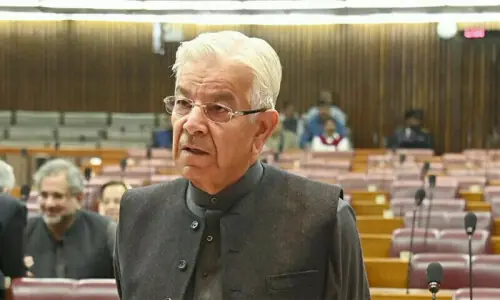
Separately, the defence minister told the opposition to examine its own past before criticising the government and to sign a Charter of Democracy with the government.
His remarks come a day after the opposition’s bitter criticism of the government during a tumultuous day in the National Assembly. The opposition leader, Mehmood Khan Achakzai, launched into a harsh diatribe, criticising the government, the judiciary and the establishment.
Speaking on the floor of the NA, Asif said, “Whenever I issue instructions or make any demand, I refer to this maxim: If you seek equity, you should come up with clean hands.
“When these people demand equity, they also check whether their hands are clean,” the defence minister said, pointing towards the opposition benches.
“What did not happen in this House during their time in power?” he asked.
“You (the speaker) are a witness, I am a witness … even the walls of this House know what happened. What did they not do to us when they were in government?” the PML-N leader asked.
Addressing the House, Asif told the opposition to correct its past and sign a Charter of Democracy with the government.
“We have also made mistakes … sign the Charter of Democracy … But us and them should not forget what we have done in the past.”
Referring to the political turmoil of the 1990s, the defence minister said that there was a lot of blame between the PPP and the PML-N — now coalition partners in the federal government.
“There was a lot of blame between us, but later, both parties … realised that we should take a break from these issues and sort things out among ourselves,” he said.
He said that both Benazir Bhutto and Nawaz Sharif decided that a proper code of conduct should be developed that maintains respect and dignity between the opposition and the ruling parties.
Criticising the former PTI government, Asif said, “Sitting in your chair (the speaker), 55 pieces of legislation were passed in just half an hour, after which they dissolved the assembly.
“It is a cardinal sin that, sitting in your chair, the former speaker takes such a step in favour of one party and dissolves the assembly,” Asif said, again urging the opposition to look at their past.
“Our past may not have been something to be proud of, but we (PPP and PML-N) tried to learn from it. We signed a document, learned from our past, and implemented reforms based on it, as a result of which even constitutional amendments came forward,” Asif said.
The defence minister said that in his opinion, there was still a need for constitutional amendments, because they “have not been implemented or worked as effectively as they should have”.
He said that yesterday, Prime Minister Shehbaz Sharif walked over to the opposition and talked to them.
“This was not even conceivable when Imran Khan was the premier,” he said. The defence minister said that when Imran was the prime minister, the PTI members didn’t even talk to the opposition lest he be “offended”.
He mentioned that, in the past, there was civility among the political parties and in political culture. However, the damage that the PTI founder had “inflicted on our parliamentary system and political culture over the past years” was “unmatched”, Asif said.
“No one else has caused such harm to our politics and democratic institutions,” the minister said.
Calling Achakzai his “brother”, Asif quipped that he seemed “out of place” sitting with the opposition.
“No political party can function on the whims of one man. There is no democracy in their party … how can they delete their past?” he asked.