ISLAMABAD: The fate of the controversial Pakistan Telecommunication (Re-organisation) (Amendment) bill appears to be in the doldrums, with PPP, a key component of the PML-N-led ruling coalition, making it clear that it will not support the bill with draconian clauses, in the Senate.
“PPP will not approve any legislation that is not thoroughly discussed in the Senate Standing Committee,” PPP parliamentary leader in Senate Senator Sherry Rehman said on Monday in a post on X.
She said the party stopped the bill in the upper house because it still contained draconian clauses that the PPP repeatedly asked to be removed, especially Section 27A. “Our NA members were told these had been removed when the bill was moved there. Some other unacceptable clauses were removed but all were still not deleted when the bill was transmitted to us in the Upper House. Which is why we insisted on sending it to Standing Committee in Senate,” she said.
Senator Rehman clarified that the PPP is certainly not against fibreisation in the country but it is refusing to pass the current bill due to existing encroachments on right of way, egregious penalties and even redressal mechanisms, which should not be in the hands of the executive.
Sherry Rehman says party will not pass bill that encroaches on right of way, imposes egregious penalties
She stressed that private property is protected as a fundamental right and that the PPP position on the right of way and private property remains unchanged.
“While I appreciate the constitution of a govt committee to look into its flaws, these should be brought to the Standing Committee once re-proposed. Our chair is fully briefed,” she added.
Senator Rehman said there is no hurry to push it through without satisfying us and other representatives and suggested a public hearing to give people confidence that they are being heard. “Our members will examine it there in the standing committee again. We will put the same amendments again... In the past we have given all amendments only to find key ones missing despite assurances they will be in the bill. I look forward to seeing the amended bill in Committee and Senate. That is the appropriate forum,” she said.
The standoff adds to the government’s legislative challenges in the Senate, where friends and foes are demanding greater scrutiny of bills affecting civil liberties.
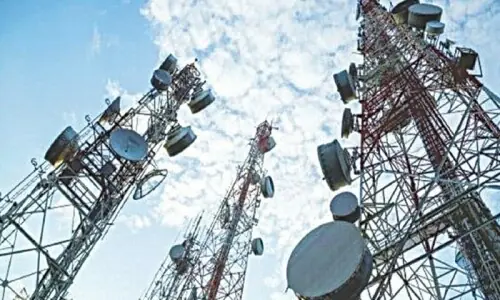
The controversial bill already passed by the National Assembly, if becomes a law in its present form, will give every telecom licensee the right to install, deploy, operate and maintain telecom systems, ICT infrastructure, towers and optical fibre cables on both public and private land, besides empowering the appropriate government to impose fines up to Rs50 million on any owner, tenant or entity that obstructs access.
It seeks to bar public authorities from charging fees for infrastructure access and bring the law in line with the State-Owned Enterprises (Governance and Management) Act, 2023, in a bid to speed up optical fibre and tower rollout across the country.
Key changes to right-of-way rules
No public authority can demand any “charges, fee, rent, of any nature whatsoever” for access. If a public authority does not respond within 30 days of a licensee’s request, even after a mandatory reminder, approval will be “deemed to have been granted”.
For private land, licensees must seek approval from owners/tenants by registered mail. No response within 30 days allows the licensee to refer the matter to the “appropriate government” for resolution. For housing societies, cooperative schemes and commercial estates, access will be deemed approved after 30 days of no response, though owners can impose conditions on timing/manner of work.
“Disputes must be settled within 45 days by an officer not below the rank of secretary,” the bill says. The bill defines “private access” to include individual ownership and collective ownership by housing societies, DHA, cantonments and similar bodies.
“Public authority” is defined to cover federal/provincial governments and local bodies. “Access by licensee” now explicitly covers telecom towers, optical fibre and related equipment.
The Statement of Objects and Reasons says the amendments are needed for “swift and coordinated deployment of telecommunication infrastructure” and to address right-of-way bottlenecks that delay fibre and 5G rollout.
Published in Dawn, June 23rd, 2026