PUNJAB BUDGET 2026-27 : Opposition raises questions over legality of Punjab budget
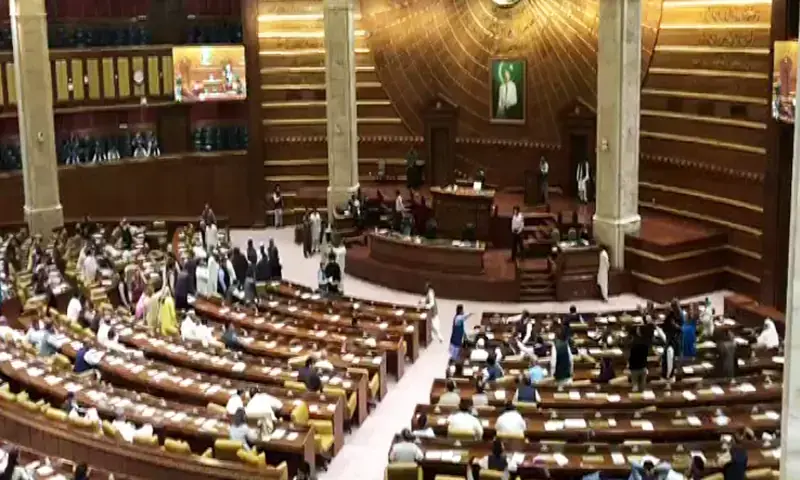

LAHORE: Opposition members in the Punjab Assembly have asked Speaker Malik Muhammad Ahmad Khan for a ruling on the legality of the provincial budget on two grounds. The first is the inclusion of unapproved schemes in the development programme while the second is the use of block allocations. Both, they say, go to the root of how the budget has been presented.
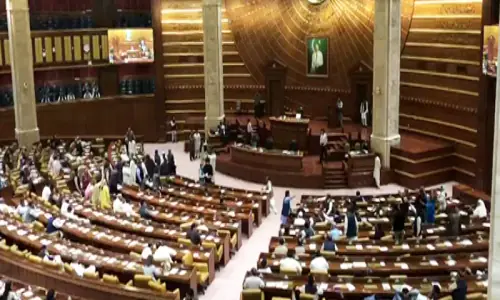
Rana Aftab Khan raised the matter on the floor of the House and formally sought a ruling from the chair. He was joined by Ahmar Bhatti who pressed for the ruling to be given during the budget session itself. He argued that the objection concerned the presentation of the budget and went to the very root of its legality. It could not, he said, be left for later.
The opposition’s case rests on the law. The Section 28 of the Punjab Public Financial Management Act, 2022, requires that every project in the development programme be appraised and approved before it is funded. The Planning and Development Board’s own ADP guidelines say that only approved schemes are to be included and that no block or bulk allocations shall be proposed.
On the first ground, the members say the budget books carry a large number of unapproved schemes. By their reading, around 313 such schemes appear in the two development volumes. Many carry real money, not a token sum. Two of them cross the Rs10bn threshold that requires clearance from the Executive Committee of the National Economic Council (ECNEC). Neither, the opposition says, has obtained that clearance.
Takes up issue of 313 unapproved schemes, block allocations
On the second ground, they point to block, umbrella and pool allocations. These are lump sums set aside without a specific approved scheme behind them. The money is voted first. The works it will pay for are decided afterwards. The members put at least 41 such lines in the budget, worth roughly Rs18.3bn.
Both practices, the opposition argues, weaken the assembly’s control over public funds. They say money is being voted for purposes that are not yet defined or approved. This, they contend, shifts the real spending decision to officials, after the House has voted. They tie the objection to the Assembly’s power of the purse under Articles 120 to 123 of the Constitution.
The ADP for 2026-27 is set at Rs752bn and it contains about 4,062 schemes.
The government maintains that placeholder allocations are allowed while approvals are completed. Officials have said earlier that planning documents for hundreds of new schemes, including a flagship laptop programme, would be finalised by the end of the month.
The speaker, who said he would give a ruling after studying the issue, is now expected to decide two questions. First, whether the objection is admissible. Second, whether it can be taken up within the budget session, as the opposition has demanded.
Political observers say the ruling could carry weight beyond this budget. It may shape how far the House can question the way development funds are approved, packaged and presented in the future.
Published in Dawn, June 23rd, 2026